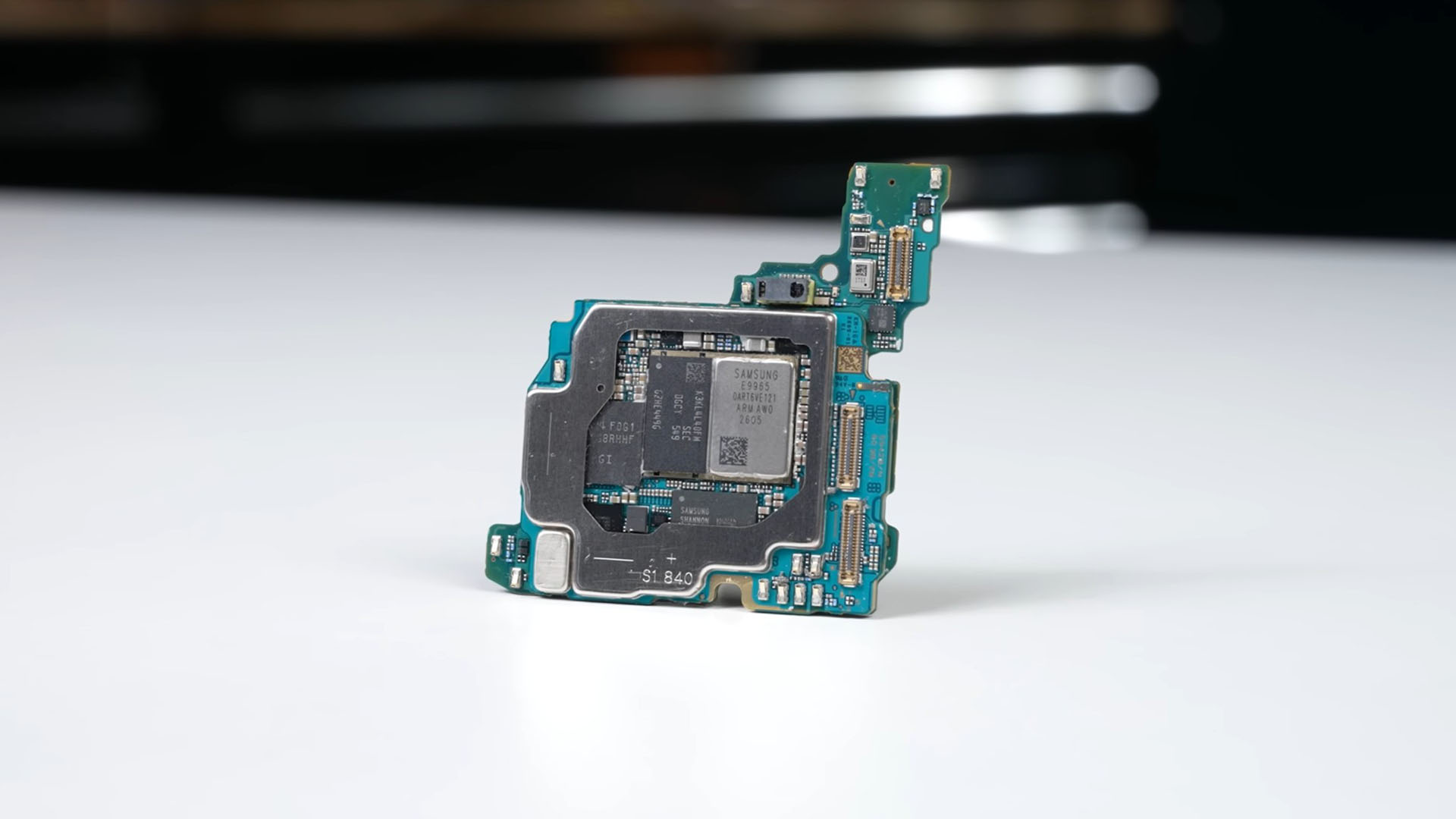
Samsung Exynos 2600 could introduce a major RAM packaging shift for future flagship phones
Samsung may be preparing one of the most important smartphone chip design changes in years with the Exynos 2600. As mobile processors continue to get faster, thinner, and more power-hungry, heat management has become one of the biggest challenges for flagship Android phones. The Exynos 2600 could address that problem with a new packaging approach that uses a much smaller LPDDR5X RAM module without reducing performance.
According to recent industry chatter, the LPDDR5X memory chip designed for the Exynos 2600 is around half the size of a standard module. Even with the smaller footprint, it is said to deliver the same level of performance. That matters because less physical space around the processor can allow for better thermal design, improved internal layout, and potentially more room for other components inside premium smartphones.
The biggest change appears to be Samsung’s move away from the traditional Package-on-Package design. In older smartphone chipsets, the RAM is stacked directly on top of the processor. This approach saves space, but it also creates thermal limitations because the heat generated by the SoC has fewer efficient escape routes.
Samsung’s newer Heat Path Block technology could change that. Instead of relying on the classic stacked layout, the Exynos 2600 is expected to use a design that improves heat transfer away from the 2nm chip. Images reportedly showing the new package suggest that the custom LPDDR5X RAM has 15 pins instead of the usual 18, helping reduce the memory module’s size while keeping performance intact.
This could be a major step forward for next-generation mobile processors. Smartphone chipsets are no longer limited only by raw speed or manufacturing node improvements. Even with advanced 2nm fabrication, heat remains a serious issue. If a processor cannot stay cool under sustained workloads, it will reduce performance to protect itself, a behavior commonly known as thermal throttling.
That is why improved packaging is becoming just as important as smaller transistors. A powerful chip is only useful if it can maintain performance during gaming, video editing, AI processing, camera workloads, and multitasking. Samsung’s Heat Path Block design may help flagship devices sustain higher performance for longer periods by improving how heat moves away from the processor.
The Exynos 2600 may not be the only chip to benefit from this approach. Qualcomm and MediaTek could eventually adopt similar packaging methods for their own high-end mobile processors. There is speculation that future Snapdragon flagship platforms may also use smaller LPDDR5X or LPDDR6 memory modules combined with improved heat dissipation structures. If that happens, Samsung’s new design could influence the wider smartphone industry.
There are also claims that custom DRAM chips may initially be made specifically for Samsung’s future Exynos processors. However, if the design proves successful, it would not be surprising to see similar memory packaging supplied to other chipset makers. The advantages are clear: smaller RAM modules, improved thermal management, and no apparent loss in memory performance.
Apple is also expected to move away from older memory packaging methods with its future 2nm mobile chip designs, though its approach will reportedly be different from Samsung’s. Instead of stacking the DRAM directly on top of the SoC, Apple is believed to be shifting memory to the side using a wafer-level multi-chip module design. While the technical execution differs, the reason is the same: traditional chip packaging is reaching its limits.
Modern flagship processors need more than advanced lithography to deliver meaningful improvements. They need smarter thermal paths, more efficient packaging, and layouts that allow heat to escape more effectively. Without those changes, even the most advanced silicon can be held back by sustained power limits and rising temperatures.
The Exynos 2600 could become a key example of where smartphone chip design is heading. If Samsung’s smaller LPDDR5X RAM module and Heat Path Block packaging perform as expected, future Galaxy devices may offer better sustained performance, improved efficiency, and stronger thermal control.
For users, this could translate into smoother gaming, faster AI features, better camera processing, and fewer slowdowns during demanding tasks. For the smartphone industry, it may mark the beginning of a new packaging era where performance is no longer judged only by CPU and GPU upgrades, but also by how intelligently the chip is built and cooled.