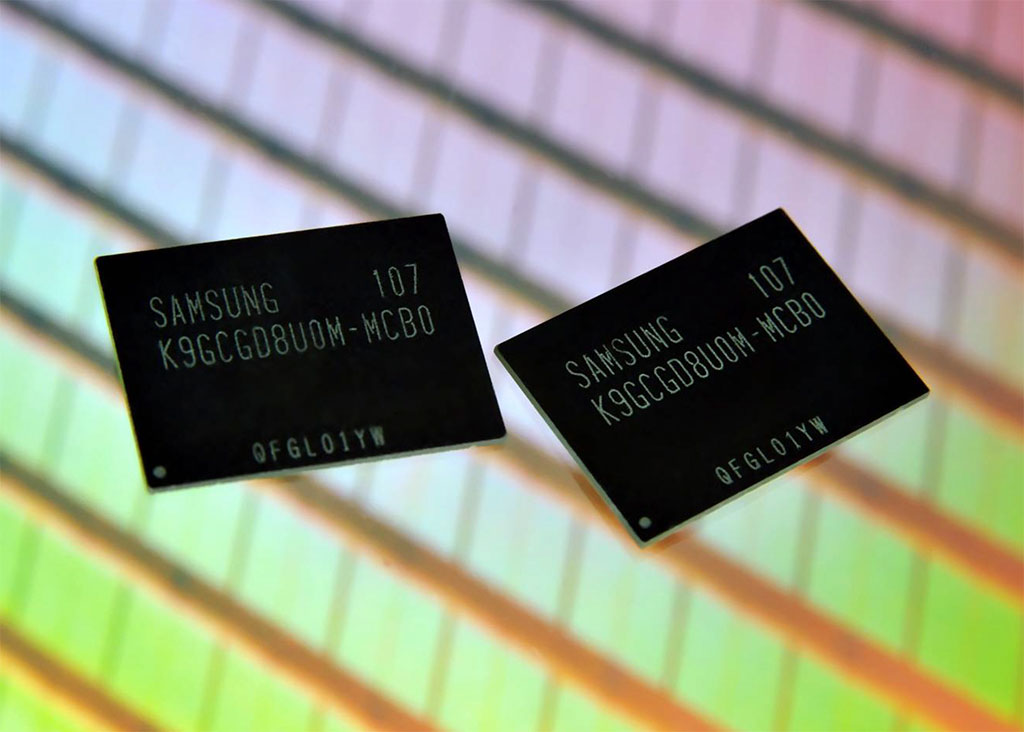
Samsung’s recent decision to step away from low-end NAND and DRAM products is reshaping the memory market—and it’s turning into a major win for manufacturers in Taiwan and China that are ready to meet demand left behind.
By moving away from older, lower-margin segments like LPDDR4 and LPDDR4X and putting more attention on higher-value LPDDR5 and LPDDR5X memory (increasingly sought after for AI-focused hardware), Samsung has also narrowed its NAND strategy. The company has reportedly discontinued its MLC NAND Flash business to prioritize more advanced, higher-end NAND products.
That shift briefly rattled entry-level storage and memory supply, but the gap didn’t stay open for long.
One of the biggest beneficiaries is Taiwan-based Macronix, which is leaning harder into NAND and seeing a dramatic jump in results—especially in MLC NAND. In Q1 2026, Macronix’s revenue share from MLC NAND reportedly rose from 21% to 30%. That’s a 90% increase compared to the previous quarter and a striking 382% jump compared to the same period a year earlier. As MLC NAND grew, Macronix’s NOR Flash share dropped to 58%, highlighting just how quickly NAND demand is accelerating.
Macronix is particularly strong in the 4Gb to 32Gb range, a segment commonly used across embedded devices and cost-sensitive platforms. With supply tightening, demand has also lifted related product lines. The company’s eMMC revenue reportedly surged 94% quarter-over-quarter and nearly 40 times year-over-year, signaling how quickly customers are shifting orders to available suppliers.
The broader NAND Flash market is still dealing with limited supply, and that scarcity is starting to show up in pricing. Macronix has already moved to raise prices on SLC NAND and NOR Flash products, and contract pricing for NOR and SLC NAND is expected to climb sharply—potentially doubling by Q2 2026—if current conditions persist.
On the technology side, Macronix is continuing to evolve its 3D NAND roadmap. The company currently produces 96-layer 3D NAND, has 192-layer NAND close to readiness, and is developing 300+ layer designs. This matters because as top-tier vendors prioritize advanced memory production for AI servers, high-performance computing, and next-generation devices, fewer manufacturing lines are being allocated to older, mainstream products. That creates an opening for specialists and second-tier suppliers to expand output and capture share.
In short, Samsung’s pivot toward premium memory and storage is accelerating a market reshuffle. And companies like Macronix are stepping in quickly—boosting MLC NAND and eMMC supply, adjusting pricing amid shortages, and expanding their 3D NAND capabilities to meet demand that larger players are increasingly reluctant to serve.