The global DRAM market has long been led by three heavyweights: Samsung, SK hynix, and Micron. Now, China’s ChangXin Memory Technologies (CXMT) is steadily gaining ground by expanding into newer memory technologies and positioning itself as a serious alternative for brands that need reliable supply at scale.
A major shift may be about to reshape the LPDDR4 and LPDDR4X landscape. Samsung is widely expected to step away from the LPDDR4/LPDDR4X business, reportedly honoring only existing commitments that are still pending shipment while declining new orders moving forward. The reason is simple: LPDDR4-class memory brings thinner margins, and Samsung would rather prioritize higher-profit LPDDR5 and LPDDR5X production.
That decision leaves a real gap in the market, especially for smartphone makers and chip suppliers that still depend on LPDDR4 and LPDDR4X for budget and mid-range devices. Many popular entry-level and mainstream processors continue to use LPDDR4/LPDDR4X because it keeps platform costs down and simplifies product planning. If supply tightens, manufacturers are forced to redesign around LPDDR5 or LPDDR5X—an upgrade that can require additional engineering time, validation work, and new sourcing plans.
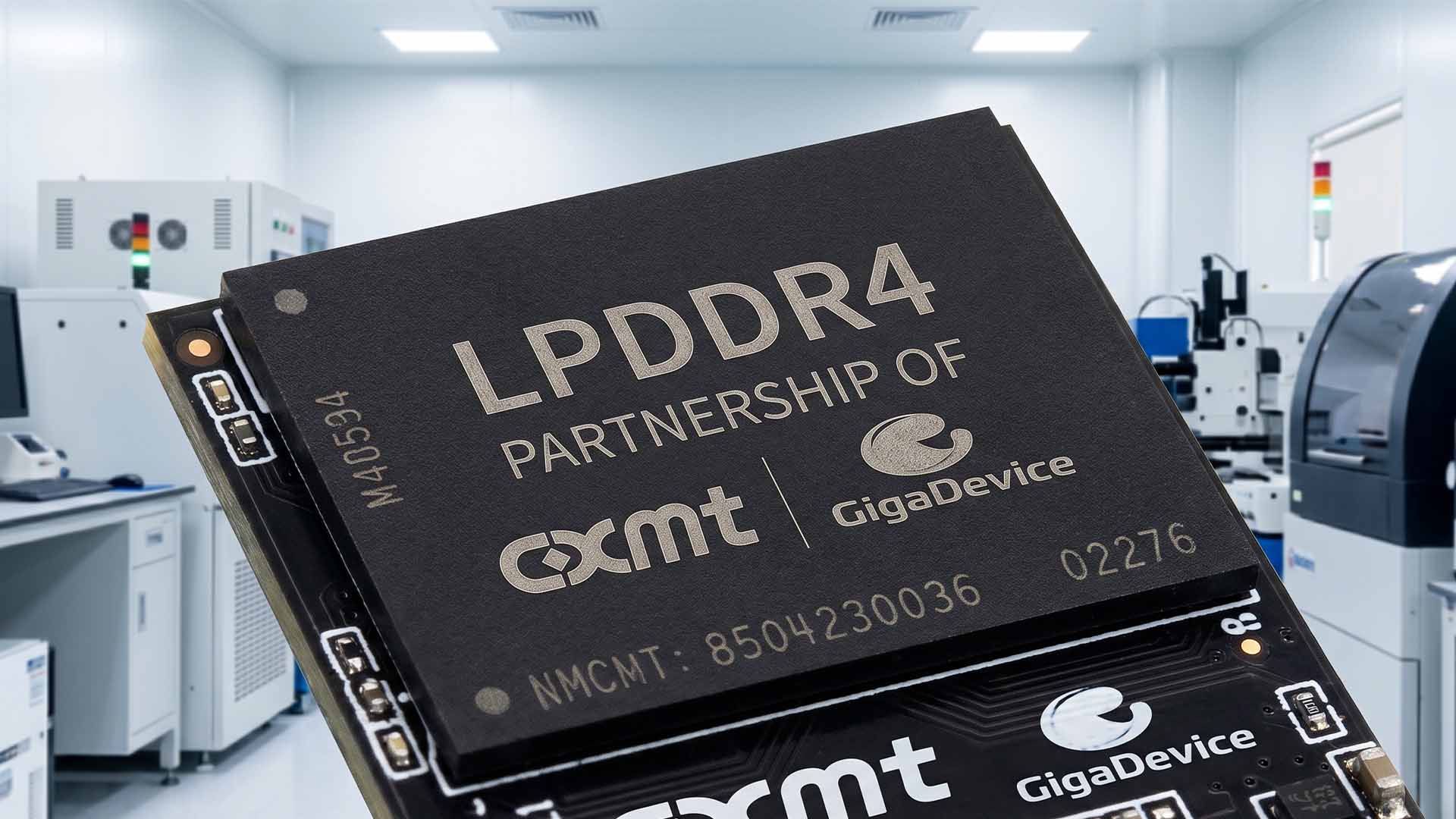
This is where CXMT could benefit from a timely domestic partnership. Reports indicate that Chinese flash and memory company GigaDevice is preparing to purchase roughly $825 million worth of DRAM from CXMT—about six times last year’s total of $173.2 million. Under the arrangement, CXMT would focus on manufacturing while GigaDevice would take the lead on distribution and product development. The pairing could significantly expand availability of DDR3, DDR4, and LPDDR4 products built on CXMT technology.
For customers that previously leaned on Samsung’s LPDDR4/LPDDR4X supply, this “tag-team” approach could be a welcome relief. It offers an alternative pipeline for memory used across value-focused smartphones, cost-sensitive computing hardware, and other mainstream electronics where LPDDR4X remains common.
If Samsung pushes the ecosystem to LPDDR5 and LPDDR5X more quickly, consumers may feel the impact too. Devices that once launched with LPDDR4X could transition to newer memory standards with higher bandwidth, but also higher component costs. Some buyers may not want to pay more for performance gains they don’t necessarily need—while others who already bought last year’s model could be frustrated watching a newer revision arrive with faster memory at a higher price point.
CXMT’s progress suggests it has the technical momentum to compete more directly than before. The company has reportedly supplied newer LPCAMM2 modules to Lenovo, and its domestically produced DDR5 has been cited as reaching data rates up to 8,000MT/s—figures that place it much closer to established DRAM leaders than many would have expected a few years ago.
Even if LPDDR4 and LPDDR4X aren’t the most profitable segments, stepping in while a major supplier exits can be strategically valuable. By serving customers that suddenly need a replacement, CXMT and GigaDevice could lock in long-term relationships that pay off later—especially as those customers plan future platforms and expand procurement beyond a single generation of memory. If the partnership scales successfully, it could also accelerate China’s broader push to become a more influential player in the global DRAM market.