Samsung SDI is strengthening its position in the global battery market with a dual-track strategy that targets both affordability and next-generation performance. The company is expanding its supply chain for lithium iron phosphate batteries, commonly known as LFP batteries, while also pushing forward with plans for all-solid-state battery technology.
The move highlights how major battery makers are adjusting to a rapidly changing electric vehicle and energy storage market. As automakers look for more cost-effective battery options, LFP batteries have become increasingly important due to their lower production costs, strong safety profile, and long cycle life. At the same time, solid-state batteries are seen as a future breakthrough because they could offer higher energy density, faster charging, and improved safety compared with today’s conventional lithium-ion batteries.
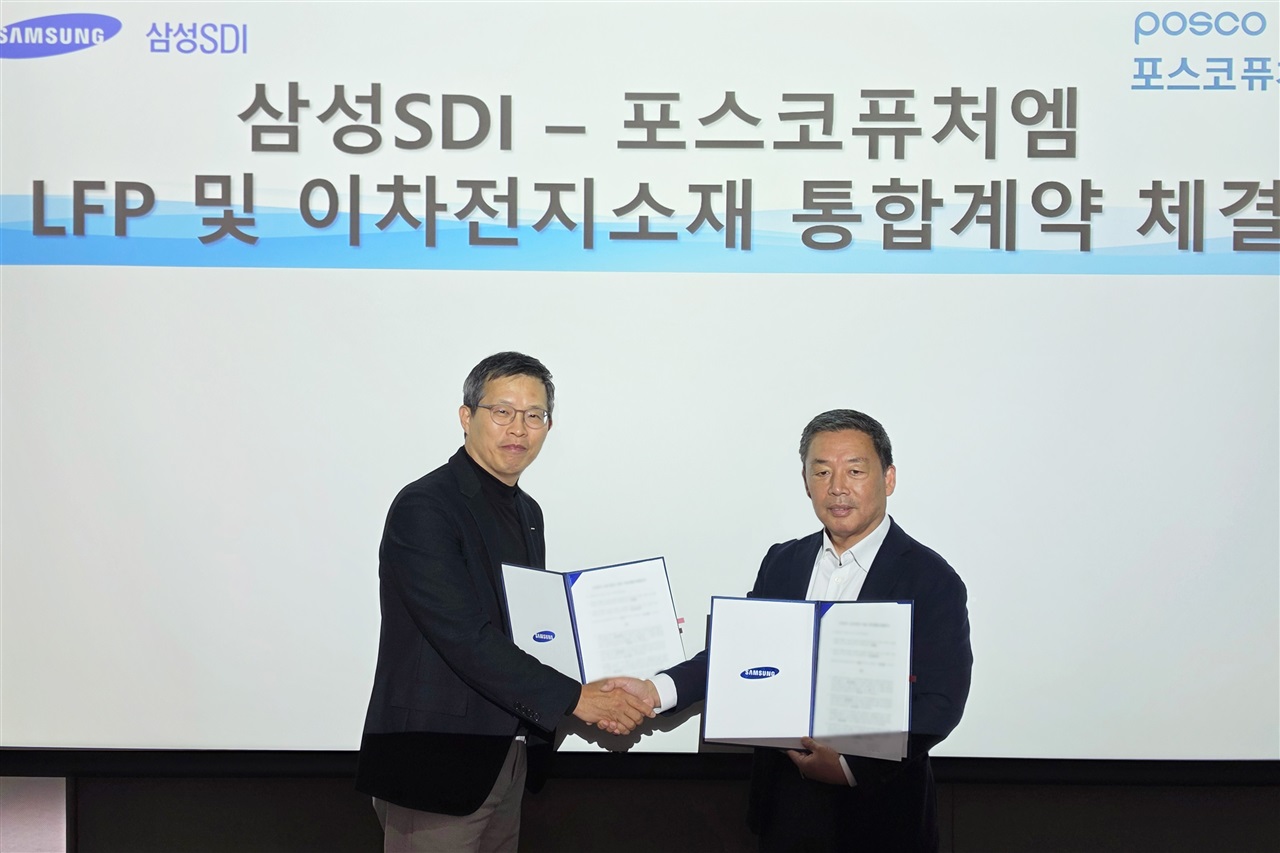
Samsung SDI has signed a battery materials supply agreement with POSCO Future M, reinforcing its access to key components needed for LFP battery production. The agreement supports Samsung SDI’s efforts to build a more competitive battery chemistry lineup as demand grows for affordable electric vehicles and energy storage systems.
By securing materials from POSCO Future M, Samsung SDI can better prepare for rising customer interest in LFP batteries. This chemistry has gained momentum in recent years, particularly among automakers seeking to reduce battery costs while maintaining reliable performance. LFP batteries are also widely used in stationary energy storage systems, where durability and safety are major priorities.
Alongside its LFP strategy, Samsung SDI is also working with EcoPro BM as part of its broader battery development roadmap. The partnership reflects the company’s commitment to next-generation battery materials and advanced cell technologies, including all-solid-state batteries.
All-solid-state batteries are viewed as one of the most promising technologies for the future of electric mobility. Unlike traditional lithium-ion batteries that use liquid electrolytes, solid-state batteries rely on solid electrolytes. This design could reduce fire risks, increase driving range, and allow electric vehicles to charge more quickly. While the technology is still moving toward mass commercialization, companies across the battery industry are racing to secure leadership in this field.
Samsung SDI’s strategy shows that the company is not betting on a single battery type. Instead, it is building a wider portfolio that can serve different segments of the market. LFP batteries can help address demand for lower-cost electric vehicles and grid storage, while solid-state batteries could power premium electric vehicles and advanced applications in the years ahead.
This balanced approach may become increasingly important as global battery demand continues to diversify. Automakers are no longer focused only on maximum range. Many are now prioritizing price, safety, battery lifespan, supply chain stability, and sustainability. By developing multiple battery chemistries at the same time, Samsung SDI is positioning itself to respond to shifting customer needs across the electric vehicle and energy storage industries.
The agreements with POSCO Future M and EcoPro BM also underline the growing importance of battery material partnerships. As competition intensifies, securing reliable access to critical materials has become essential for battery manufacturers. Strong supplier relationships can help companies manage costs, improve production stability, and accelerate the development of new technologies.
Samsung SDI’s latest moves reflect a clear plan: expand in the cost-sensitive LFP battery market while continuing to invest in advanced battery innovation. If successful, this strategy could help the company strengthen its role in the global transition to electric vehicles, renewable energy storage, and cleaner transportation technologies.