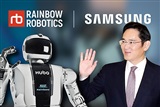
Samsung Electronics is taking a bigger step into the future of robotics by forming a new robotics business unit that reports directly to the company’s chief executive. The move signals a stronger push to accelerate robot development, improve internal coordination, and bring advanced humanoid robots closer to real-world commercial use.
The new CEO-led robotics division is designed to combine several key areas under one structure, including business strategy, technology development, data collection, and factory deployment. By organizing these efforts more closely, Samsung aims to move faster from research and testing to practical applications in manufacturing, services, and potentially consumer-facing environments.
This shift comes as global interest in humanoid robots continues to grow. Major technology companies are investing heavily in machines that can work alongside people, handle repetitive tasks, and support industrial operations. Samsung’s decision to place robotics under direct executive leadership suggests the company sees the field as a major long-term growth opportunity.
A more integrated robotics unit could help Samsung improve how it develops and trains robotic systems. Data collection is especially important for humanoid robots, as these machines need large amounts of real-world information to learn movement, object handling, navigation, and interaction with human environments. By connecting data, engineering, and deployment teams more closely, Samsung may be able to shorten development cycles and improve performance more quickly.
Factory deployment is also expected to play a major role in Samsung’s robotics plans. The company operates large-scale manufacturing facilities across semiconductors, displays, smartphones, and home appliances. These environments could serve as early testing grounds for robots designed to support production lines, logistics, inspection, and other industrial tasks.
Humanoid robots remain one of the most ambitious areas in robotics. Unlike traditional factory robots that usually perform fixed tasks, humanoid robots are being developed to operate in spaces built for people. This could eventually make them useful in warehouses, factories, offices, retail spaces, hospitals, and homes. However, creating reliable humanoid robots requires progress in artificial intelligence, sensors, motors, batteries, safety systems, and real-time decision-making.
Samsung’s new structure may help the company bring together its strengths in hardware, AI, semiconductors, sensors, and connected devices. These technologies are all essential for building robots that can move naturally, process information quickly, and operate safely around humans.
The creation of a dedicated robotics business unit also reflects a broader trend across the tech industry. Robotics is becoming increasingly important as companies look for ways to address labor shortages, improve productivity, and automate physically demanding work. With artificial intelligence advancing rapidly, robots are expected to become more capable and more adaptable over the next several years.
For Samsung, the new division could become an important part of its future business strategy. While the company is best known for smartphones, chips, TVs, and appliances, robotics may open new opportunities in industrial automation, smart factories, healthcare support, and AI-powered machines.
By placing robotics closer to top leadership, Samsung appears to be making a clear statement: robots are no longer just an experimental project. They are becoming a serious part of the company’s next stage of innovation.