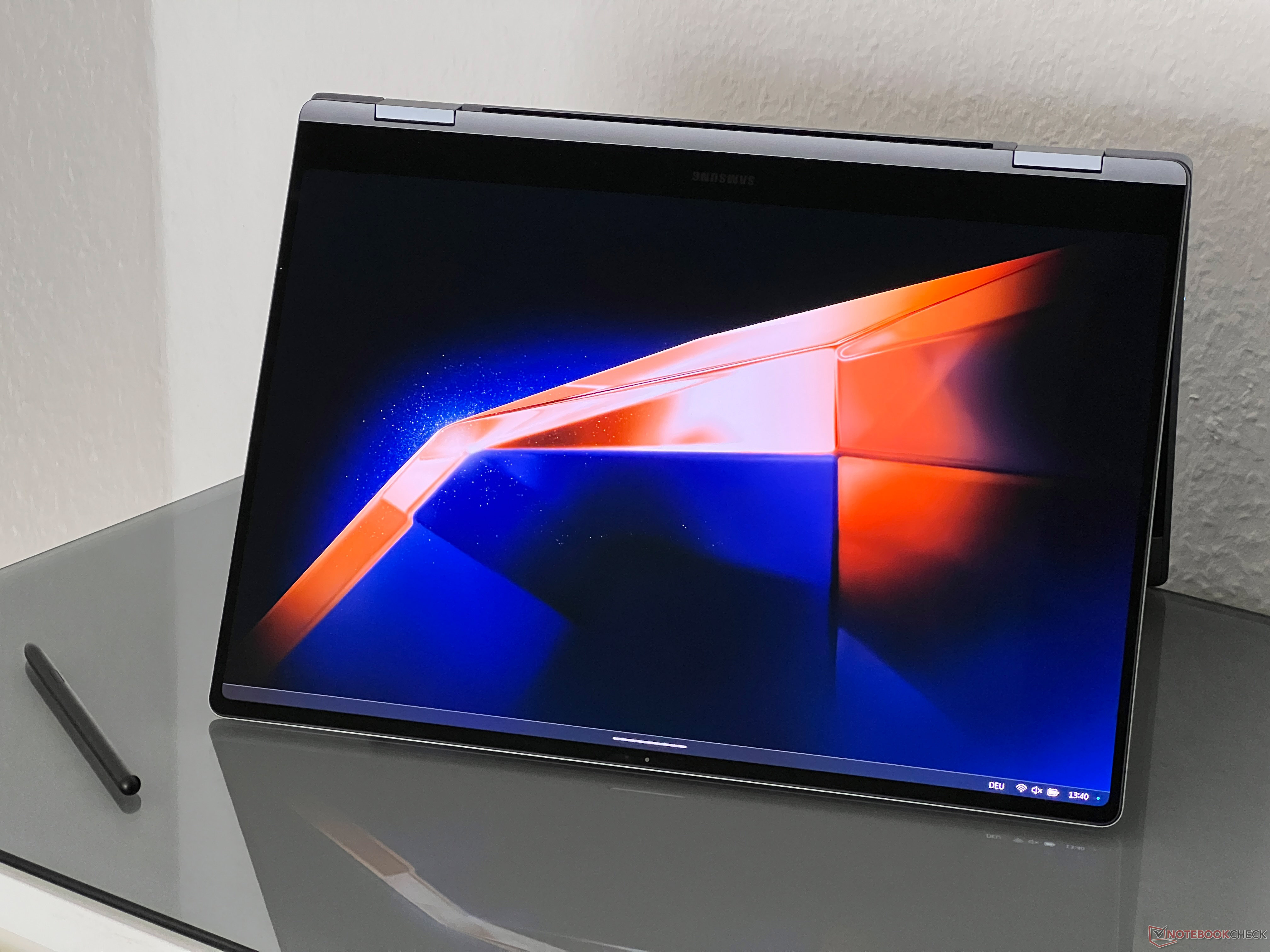
In the rapidly evolving world of 2-in-1 laptops, Samsung’s recent addition to its lineup, the Galaxy Book4 Pro 360, stands out as an ultra-slim and versatile device. This article delves into the specifications and performance of the Samsung Galaxy Book4 Pro 360, offering practical advice to potential users on what to expect from this sleek convertible machine.
The Galaxy Book4 Pro 360 features a 120Hz AMOLED display which brings crisp, vibrant visuals to the user experience, distilled across a smoothly responsive screen – an enticing feature for both creative professionals and everyday users looking for high-quality display technology.
Equipped with the powerful Core i5, and supported by a high-caliber PM9B1 512GB SSD (MZVL4512HBLU), the Galaxy Book4 Pro 360 delivers impressive performance metrics. When benchmarked, it shows an average sequential read and write speeds that are competitive with some of the best convertibles on the market.
For those considering storage performance, the Galaxy Book4 Pro 360’s SSD delivers consistent read speeds, outperforming several competitors in its class. Its minimum and maximum transfer rates maintain a solid performance, with average rates that keep up with industry standards for convertible devices. Users can expect reliable and swift performance when handling large files or running demanding applications.
The Samsung Galaxy Book4 Pro 360 also has an advantage when it comes to storage response times. This matters profoundly to those who frequently work with data-intensive tasks such as video editing or large-scale data processing. Fast storage means reduced waiting times and a smoother workflow, which allows users to maintain productivity.
In terms of comparative analysis, the SSD inside the Galaxy Book4 Pro 360 often outpaces other 2-in-1 devices like the Lenovo Yoga or the Dell Inspiron series in read and write tests. Such results display the potential of the Galaxy Book4 Pro 360 as a high-performing device that doesn’t sacrifice speed despite its slim form factor.
However, buyers should also consider their unique use cases. For heavy-duty tasks, the difference in read and write speeds, while significant in synthetic benchmarks, may not be as perceivable in everyday usage, so weighing one’s specific needs against the performance metrics is essential.
Moreover, recent trends in the 2-in-1 laptop segment have shown an increased focus on providing all-day battery life, connectivity options — including Wi-Fi 6E and LTE or 5G capabilities — and enhanced pen experiences with ultra-low latency. Users looking to leverage the Galaxy Book4 Pro 360 for productivity and creative workflows should explore how these features integrate with the laptop’s hefty performance capabilities.
For professionals in the creative industry or individuals who crave a high-performance laptop that can double as a tablet, the Galaxy Book4 Pro 360 is a compelling choice. While researching your options, consider the strong display, top-tier processing power, and fast storage, along with additional features that might complement your daily operations, such as stylus integration or its 2-in-1 design.
In conclusion, as potential buyers evaluate their choices, it is advised to look at current user reviews, reliability scores, and post-purchase support options. This detailed insight into the Samsung Galaxy Book4 Pro 360 highlights an attractive package for both performance and flexibility. Whether for work or play, this slim 2-in-1 convertible offers a balanced blend of power and elegance, setting a benchmark for others in its category.When it comes to selecting the ideal convertible laptop, storage performance is a key factor to consider. Performance metrics for solid-state drives (SSDs) within these versatile devices can significantly affect the overall user experience. The Samsung PM9B1 512GB MZVL4512HBLU, a prevalent SSD in many high-profile convertibles, serves as an interesting reference point for comparison against other models in its class over the last two years.
Firstly, it’s noteworthy to mention the variety of convertibles that incorporate SSDs like the Samsung PM9B1, as this insight can guide consumers towards making informed decisions. Examples include the Samsung Galaxy Book3 Pro 360, the LG Gram 2in1 16, Lenovo’s Yoga series, the HP Spectre x360, and Dell’s Inspiron 16 7635 2-in-1, among others. These devices are designed to offer a seamless experience transitioning from traditional laptop use to a tablet-like interface, and the SSD’s performance plays a pivotal role in that transformation.
The Samsung PM9B1 512GB SSD demonstrates average read and write speeds that compete well against contemporaries within the category. The typical metrics considered when evaluating SSD performance include sequential read and write speeds, input/output operations per second (IOPS), and overall data transfer rates. For example, average read and write speeds for the PM9B1 are within the thousands, signifying a strong capability for handling large files and multitasking demands.
Convertible laptops that feature SSDs, like the Samsung PM9A1 or Kioxia BG5 series, are known to provide different ranges of performance based on capacities and configurations. These variations account for the diversified demands of users, from those who require modest storage for everyday tasks to power users who seek top-tier speed for professional workloads.
It’s interesting to consider the differences between models when analyzing such devices. The Samsung Galaxy Book3 Pro 360 with an Intel Core i5-1340P and WD PC SN740 256GB SSD, for example, may exhibit different performance characteristics compared to another model with a different SSD, even within the same device family like the Galaxy Book4 Pro 360.
When choosing a convertible, prospective buyers should consider the importance of SSD performance, balancing it with other key specifications such as CPU capabilities, memory, and battery life. The average performance data of SSDs in convertible laptops, as represented by the Samsung PM9B1 series, provide a snapshot of what users can expect in terms of responsiveness and efficiency.
In conclusion, consumers looking to invest in a convertible laptop should consider the performance of the built-in SSD. With devices such as the Samsung Galaxy Book series, the LG Gram 2in1, the Lenovo Yoga lineup, and others, there’s a wide array of options available, each offering a unique blend of portability, power, and performance. A careful examination of SSD specifications and benchmarks can lead to a choice that best matches individual needs and preferences, thereby enhancing the flexible computing experience that convertibles are designed to offer.