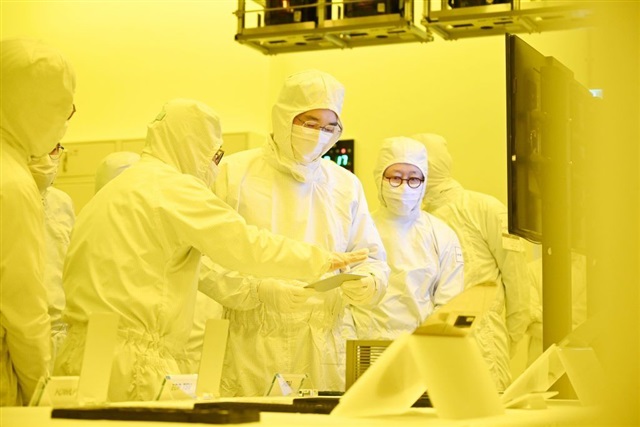
AI is igniting the next big memory boom, and it could be bigger than anything the industry saw in 2017–2018. Surging demand for advanced memory to power generative AI, coupled with OpenAI’s partnerships with Korean manufacturers, is accelerating a new super cycle led by Samsung Electronics and SK Hynix. Both companies are fast-tracking construction of new semiconductor plants and scaling production to keep pace with orders from data center operators and AI platform providers.
What makes this cycle different is the profile of the demand. Training and running large AI models require massive amounts of high-performance memory, particularly high-bandwidth memory for training workloads and next-generation DRAM for inference. That shift is pushing suppliers to prioritize premium products, retool production lines, and invest aggressively in capacity. Long-term supply agreements tied to AI roadmaps are also adding more visibility and urgency to expansion plans.
The previous memory upcycle was driven largely by smartphones and cloud computing. Today, AI is setting an even steeper trajectory. Every major AI advancement—from model training in hyperscale data centers to edge inference—consumes more memory bandwidth and capacity. That means more wafers, more advanced packaging, and tighter coordination across the supply chain. With OpenAI aligning closely with Korean memory leaders, the industry is seeing clear signals that demand will stay elevated, not just quarter to quarter but across multiple years.
For Samsung and SK Hynix, accelerating plant construction is about seizing a leadership moment. Both companies dominate the DRAM landscape and are pouring resources into high-bandwidth memory and cutting-edge DRAM like DDR5 to meet AI-first requirements. Pulling forward buildouts helps lock in future capacity, reduce lead times, and position their product mixes where demand is hottest. It also supports the transition to more complex manufacturing processes, including advanced stacking and through-silicon via technologies that define modern AI memory.
This super cycle has far-reaching implications:
– Supply-demand balance: Premium memory is likely to remain tight as AI buildouts continue, which can support firmer pricing and faster product transitions.
– Product mix shift: Investment is centered on high-bandwidth memory and next-gen DRAM rather than legacy nodes, accelerating the sunset of older technologies.
– Capex ripple effects: Equipment makers, materials suppliers, and packaging specialists will benefit as Korean fabs scale up and introduce more advanced process steps.
– Competitive dynamics: Speed to ramp and yield improvements will determine who captures the most AI wallet share in 2025 and beyond.
There are also risks to watch. Rapid capacity additions must be matched with sustained end-demand to avoid future gluts. Execution is critical: advanced memory carries tighter tolerances, and any yield bottlenecks can limit output. Geopolitical factors, export controls, and energy constraints may add complexity to timelines and costs. But for now, momentum is clearly with AI, and commitments from top-tier buyers suggest demand visibility that outstrips typical semiconductor cycles.
Key signals to monitor in the months ahead include the pace of new plant milestones in Korea, shipment growth of high-bandwidth memory and DDR5, pricing trends in premium memory tiers, and updates on multi-year supply agreements tied to AI compute roadmaps. Continued partnerships between AI leaders and memory suppliers will be a bellwether for how fast this cycle scales—and whether it ultimately eclipses the 2017–2018 peak.
Bottom line: The AI era is rewriting the memory market playbook. With OpenAI forging closer ties to Korea’s top manufacturers and Samsung and SK Hynix racing to expand capacity, the stage is set for a memory super cycle that could surpass the last boom in both size and duration. For the broader tech ecosystem, this means faster innovation, tighter supply chains, and a premium on cutting-edge memory that powers the next wave of artificial intelligence.