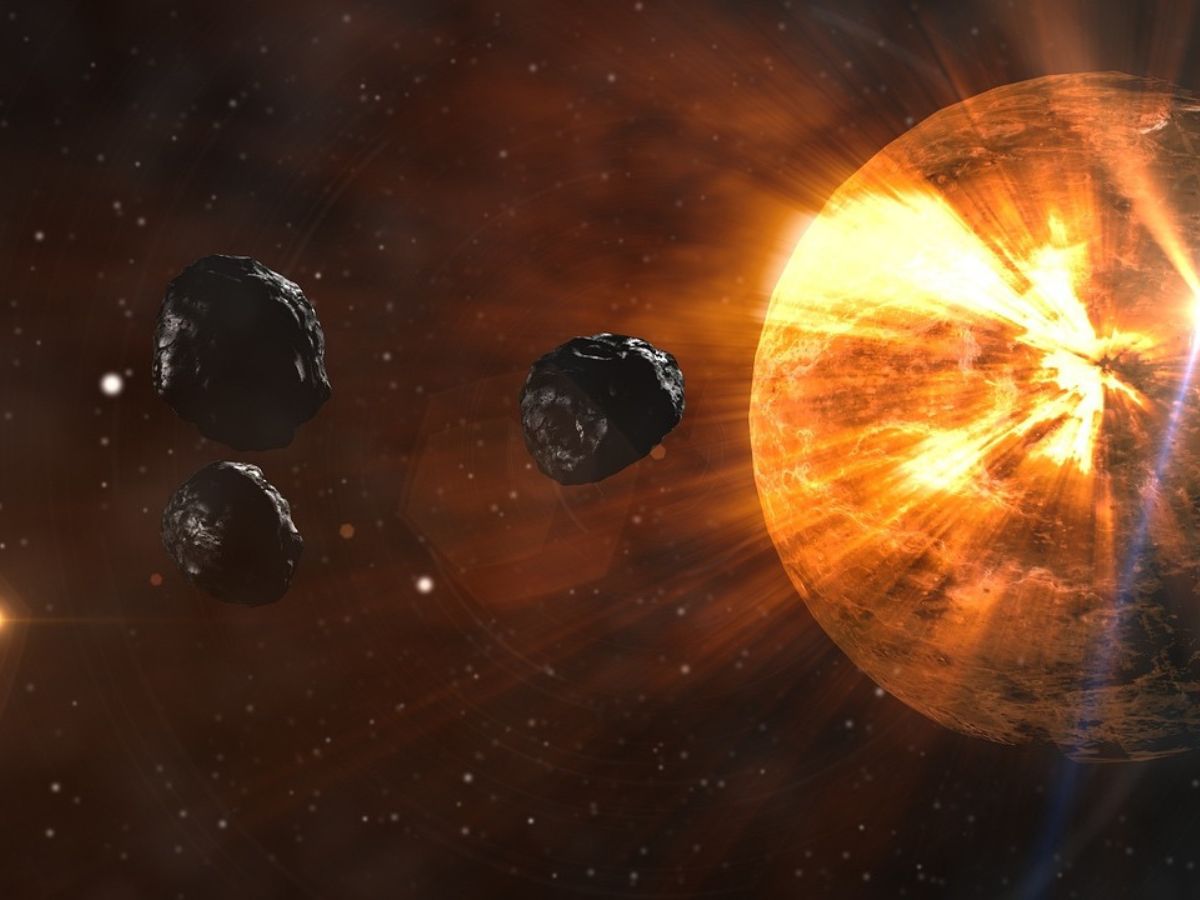
The universe is packed with surprises, and a new one has just come from the Vera C. Rubin Observatory: astronomers have identified an asteroid that spins at a record-breaking pace, raising fresh questions about how such objects form and survive.
Since beginning observations last June, the observatory has already tracked more than 2,000 newly identified asteroids. Within that growing list, researchers flagged 19 “superfast rotators,” meaning they complete a full spin in less than 2.2 hours. One object, however, stands out dramatically from the rest.
The asteroid, called 2025 MN45, orbits in the main asteroid belt between Mars and Jupiter. It’s also surprisingly large for something rotating so quickly—about 710 meters wide. What makes 2025 MN45 extraordinary is its rotation period: it completes a full turn in just 1.88 minutes. That makes it the fastest-spinning asteroid ever found that’s larger than 500 meters in diameter.
Naturally, that kind of speed leads to a big mystery: how can a body this large stay intact? Astronomers suspect the asteroid may be the product of a powerful collision long ago, possibly leaving behind a dense, unusually resilient remnant. Even so, its true composition hasn’t been confirmed. One researcher involved with the findings, Sarah Greenstreet of NSF NOIRLab, noted that the object must be made of extremely strong material to avoid breaking apart while spinning so rapidly—hinting that it may be solid rock rather than a looser “pile” of rubble held together by gravity.
While there are asteroids that spin even faster, those tend to be much smaller objects—some rotating in under a minute. That’s why 2025 MN45 is such a standout in asteroid research: its combination of size and extreme rotation makes it a rare find, and a prime target for follow-up studies aimed at understanding its structure, strength, and history.
As observations continue, 2025 MN45 could help scientists better understand what happens when asteroids collide, how their internal makeup affects their stability, and what unusual objects might still be waiting to be discovered in our solar system.