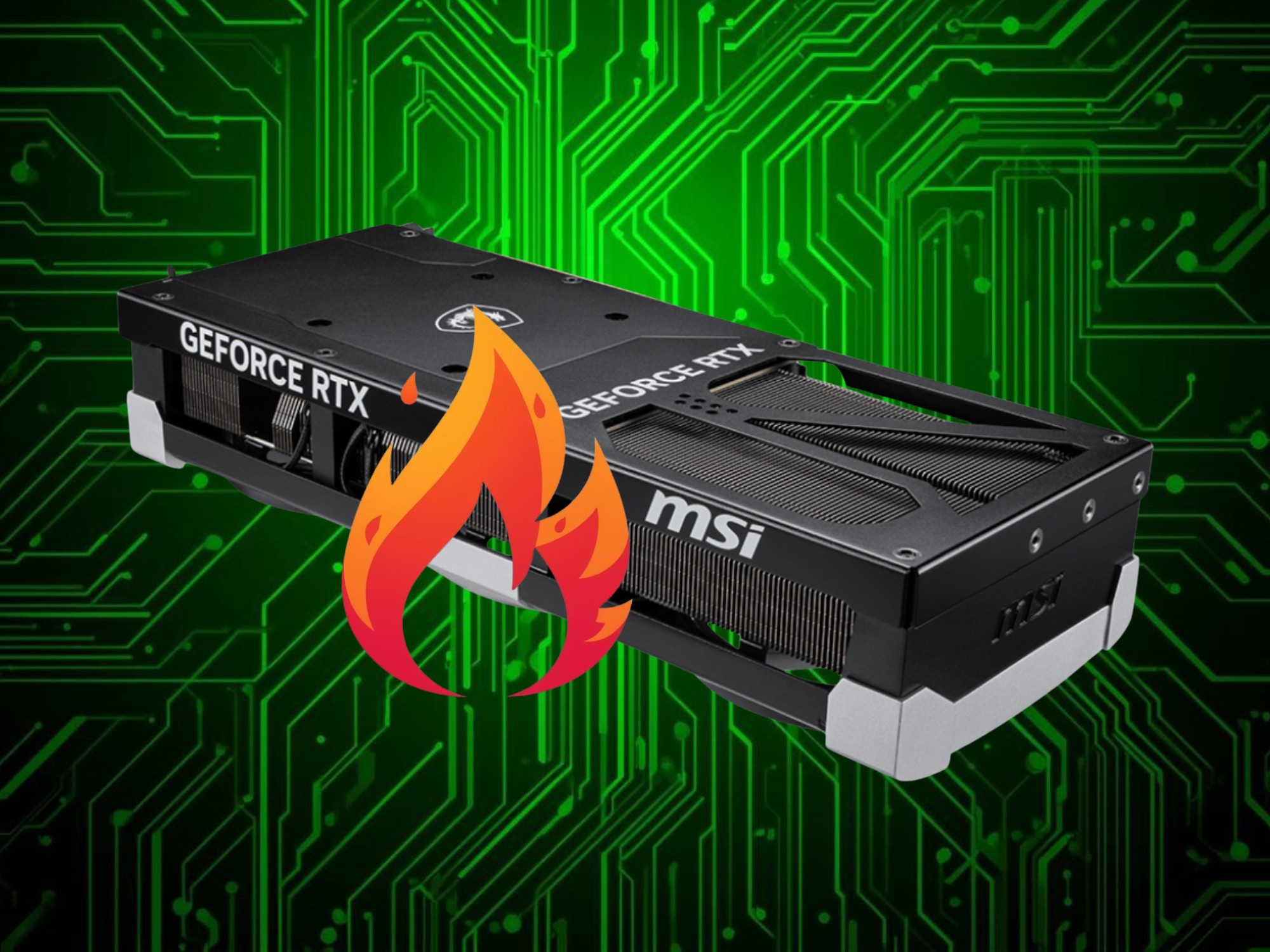
An Nvidia GeForce RTX 5090 is the kind of graphics card many PC gamers save up for, promising top-tier performance from the Blackwell generation. But alongside the excitement, a growing number of owners are paying close attention to a more worrying trend: reports of overheating and burned power connectors. A new account shared by a gamer highlights just how serious these failures can get, after a 16‑pin power cable reportedly caught fire and left both the cable and the GPU connector visibly damaged.
The incident involves an MSI RTX 5090 32G VENTUS 3X OC, and the photos described show a severely burned 12V‑2×6 power connection. According to the owner, the card had been running for about nine months before the failure happened suddenly. The fire appears to have focused around the power cable itself, with the outer coating stripped away and parts of the wiring badly damaged. The user also noted that the power connector on the graphics card shows damage, and they hadn’t yet tried to pull the cable out of the GPU.
The good news is that the damage seemed to stay localized. The flames reportedly didn’t spread across the entire PC, and other core components like the motherboard were still working afterward, including onboard display output. The owner also mentioned having a protection plan through the retailer Micro Center, which could help with reimbursement or replacement depending on the claim outcome.
What caused the RTX 5090 power connector to burn? That’s where the discussion gets heated. The owner said they were using the power cable that shipped with the power supply, which typically rules out cheap third‑party adapters but doesn’t eliminate other risks. Some commenters focused on whether the ATX 3.1 power supply itself could have played a role. Others argue the bigger issue is the 12V‑2×6 connector standard and whether it consistently holds up under the extreme power draw of today’s flagship GPUs.
One detail drawing attention is the power supply model identified in the discussion: a Cooler Master MWE Gold 1050 V2. While 1050W may sound like plenty on paper, RTX 5090 builds can be brutally demanding depending on the CPU, overclocking, cooling setup, and overall system load. Many enthusiasts consider 1050W “borderline” for a high-end RTX 5090 system, especially if the PSU isn’t among the most highly regarded units for handling transient spikes. In a well-designed setup, a power supply’s protections should cut power long before a visible fire starts—which raises more questions about whether the event was caused by a connector issue, a PSU issue, a cable issue, or a combination of factors.
This isn’t a brand-new concern. Power connector overheating stories date back to the RTX 4090 era, when melting connectors became a widely discussed problem in the PC hardware community. Nvidia shifted to the newer 12V‑2×6 connector with the goal of improving reliability, and the company has often pointed to improperly seated cables as a major cause of failures. In this latest case, the owner insists the cable was connected securely.
Meanwhile, GPU makers have been taking their own steps to reduce risk. Some manufacturers have revised cable designs to make proper insertion and alignment easier and more foolproof. Others have added monitoring features intended to detect early warning signs, such as abnormal behavior on individual power pins, before heat buildup becomes catastrophic.
For anyone planning an RTX 5090 build, this story is another reminder that power delivery matters as much as performance. Choosing a high-quality ATX 3.1 (or newer) power supply with sufficient wattage headroom, using the correct native cable, fully seating the connector, and avoiding sharp bends near the plug can all help reduce risk. Even then, as these reports suggest, the RTX 5090’s power connector situation remains a point of concern for buyers investing in one of the most power-hungry consumer GPUs ever made.


