NVIDIA GeForce RTX 5090 16-Pin Connector Failure Raises Fresh Concerns After Severe Burn Damage
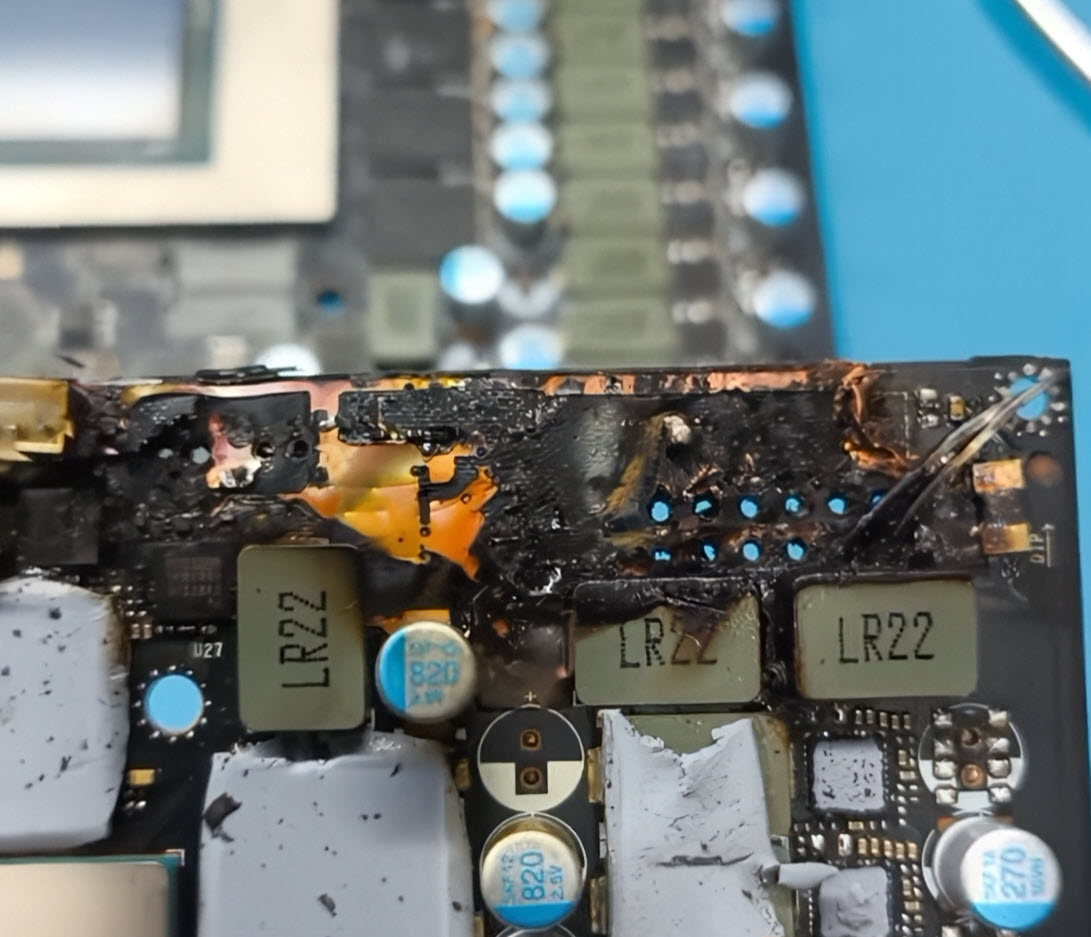
NVIDIA’s GeForce RTX 5090 is once again at the center of growing concern over 16-pin power connector failures. A new repair case has surfaced showing extreme damage to an RTX 5090 graphics card, with the power connector area so badly burned that the connector itself was no longer intact.
The issue is not entirely new. Since the arrival of NVIDIA’s RTX 40 series, reports of melted or burned 16-pin connectors have appeared repeatedly, especially on power-hungry flagship GPUs such as the GeForce RTX 4090. Now, with the RTX 5090 pushing even higher levels of performance and power consumption, similar problems are being reported again.
High-end graphics cards like the RTX 4090 and RTX 5090 can draw roughly 450W to 600W, placing heavy stress on power delivery hardware. However, concerns around the 16-pin connector are not limited to NVIDIA’s most power-demanding models. Similar connector-related incidents have also appeared on some AMD Radeon RX 9070 XT variants, despite those cards generally consuming less power than NVIDIA’s flagship offerings. That has led many PC enthusiasts to question whether the connector design still has unresolved reliability risks.
Over the past few years, updated standards have been introduced to improve safety. The newer 12V-2×6 connector and ATX 3.1 power supplies were designed to offer better protection and reduce the chance of improper seating, overheating, and failure. Power supply manufacturers, GPU makers, and cable vendors have all released updated hardware intended to address the problem.
Even so, failures continue to appear. Recent reports have shown that even premium 16-pin cables are not immune, with some users experiencing melting or burning despite using newer equipment.
The latest case comes from a GPU repair shop in Vietnam, where two GeForce RTX 5090 cards were reportedly sent in for repair. One card had signs of previous tampering and suffered from power loss and detection issues. It was also missing a VRAM chip. According to the repair report, that card was eventually restored to working condition.
The second RTX 5090, however, was in far worse shape.
Its 16-pin power connector area was completely destroyed. The damage was so severe that the physical connector was no longer visible, and the surrounding PCB section had suffered extensive burning. The repair report also claimed that the damage spread to the GPU core and VRAM, leaving major components dead.
Images of the damaged card reportedly showed exposed copper layers within the PCB, suggesting an unusually intense electrical failure. While melted connectors have been seen before, this case appears to be among the most severe examples linked to a 16-pin connector on a modern graphics card.
At this stage, there is no clear information about the exact system configuration used with the damaged RTX 5090. Important details such as the power supply model, cable type, adapter usage, case airflow, cable bend angle, and whether the connector was fully seated have not been confirmed. Without that information, it is difficult to determine whether the failure was caused by user installation, cable quality, connector design, excessive current, manufacturing defects, or a combination of factors.
Still, the case adds more fuel to an ongoing debate in the PC hardware community. Many users remain cautious about 16-pin GPU power connectors, especially when used with expensive flagship cards that draw large amounts of power.
The biggest concern is that there still does not appear to be a single guaranteed fix. Updated cables and newer connector standards may reduce risk, but they have not completely eliminated failures. In many cases, users may be eligible for warranty replacement, but that process can vary by region, retailer, and manufacturer. Severe physical damage can also complicate warranty claims, particularly if there is any sign of improper installation or third-party cable use.
Recent cases involving GeForce RTX 5090 Founders Edition cards have also pointed again to the 16-pin connector as the likely failure point. For buyers of high-end GPUs, this makes proper installation more important than ever.
Anyone using a modern graphics card with a 16-pin connector should take extra care when connecting the power cable. The plug should be fully inserted with no visible gap, and users should avoid sharply bending the cable near the connector. It is also recommended to use high-quality cables from trusted manufacturers and, where possible, avoid unnecessary adapters or extensions. Ensuring good case airflow and regularly checking the connector area for signs of heat, discoloration, or looseness may also help reduce risk.
The GeForce RTX 5090 is one of the most powerful graphics cards available, but cases like this show that power delivery remains a major concern for next-generation GPUs. As graphics cards continue to demand more energy, the industry may need to rethink how flagship GPUs are powered to prevent connector failures from becoming a recurring problem.