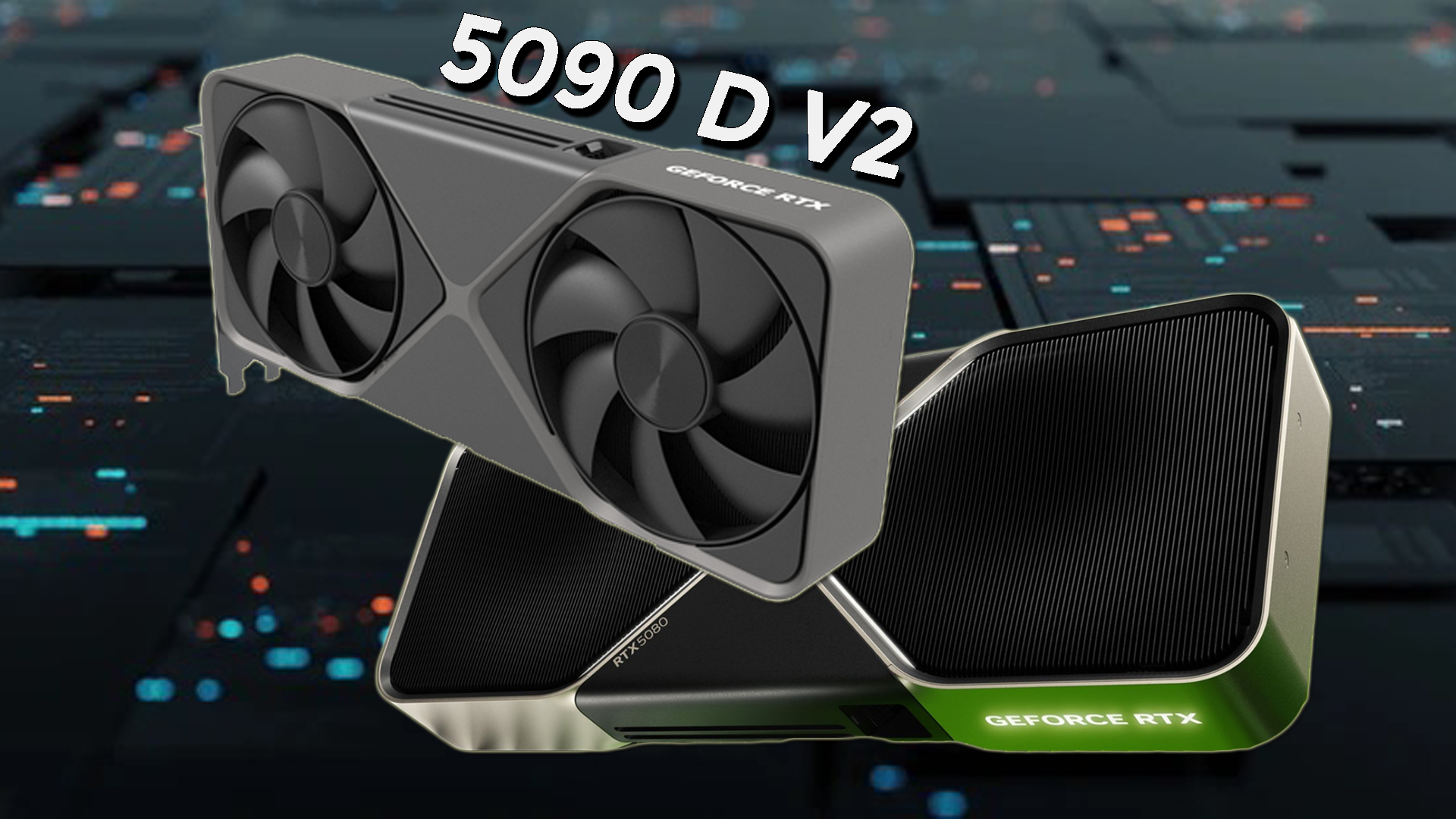
The release of NVIDIA’s RTX 5090 variant in China has sparked excitement among tech enthusiasts, especially gamers. According to new benchmarks, this powerhouse matches the performance of the RTX 5090 D in gaming and synthetic tests, but there’s a catch.
The RTX 5090 D V2 competes closely with its predecessor in gaming arenas, showing only a minor 1-2% difference. Gamers can rejoice, as it delivers exceptional performance even at 4K resolutions. However, the reduced VRAM capacity, now at 24 GB, significantly impacts productivity and AI tasks.
In productivity tests like Blender and V-Ray, the RTX 5090 D V2 shows a noticeable dip, lagging up to 19% in some scenarios compared to the RTX 5090 D. It struggles particularly in complex rendering tasks, falling behind in both CUDA and RTX benchmarks.
Moreover, the card demonstrates a performance decline in AI tests, with up to a 10% drop in various assessments. The reduced VRAM seems to be a limiting factor here, marking a challenge for those focused on AI workloads.
Despite these limitations, the RTX 5090 D V2 remains an attractive option for gamers, especially if found at its official price of around 16,499 Yuan (about $2,295). While it may not be the best choice for intensive productivity or AI tasks, its gaming prowess offers serious value for enthusiasts prioritizing high-resolution gameplay.


