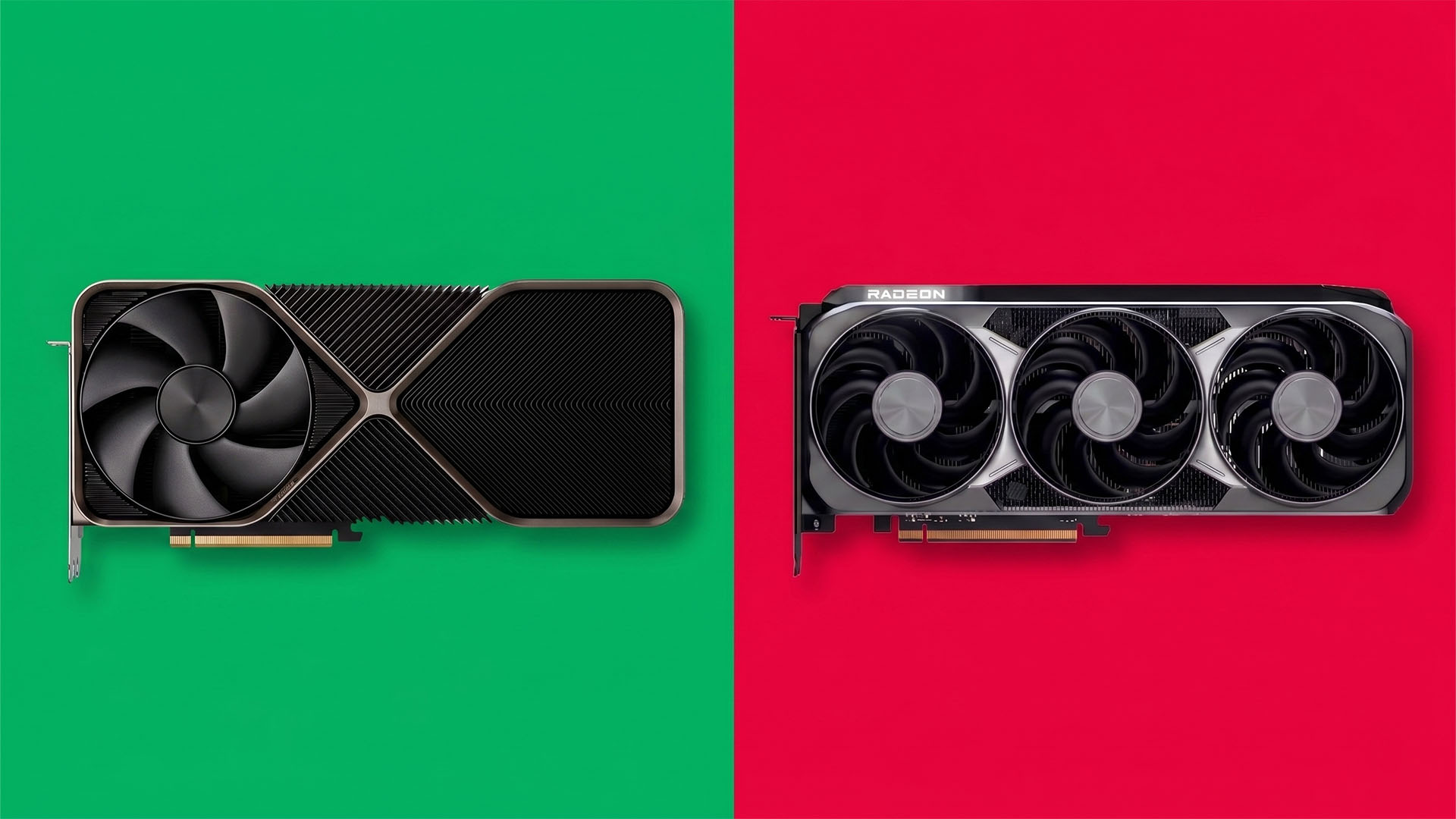
The NVIDIA GeForce RTX 4090 may no longer be the newest flagship in the spotlight, especially with the RTX 5090 now attracting attention, but calling it outdated is a stretch. Even today, the RTX 4090 remains one of the most powerful graphics cards ever released, delivering exceptional 4K gaming, ray tracing, AI performance, and content creation capabilities.
That is why a recent claim from a Reddit user has stirred up a major debate among PC gaming enthusiasts. The user argued that AMD’s Radeon RX 9070 XT could be a better choice than the RTX 4090 in path tracing, while also criticizing NVIDIA’s DLSS and Frame Generation technologies.
According to the user, the RTX 4090 still holds up technologically, but DLSS appears blurry, Frame Generation adds too much input lag, and the card’s 24GB of VRAM is unnecessary unless someone is doing heavy rendering work. The user also praised the RX 9070 XT’s rasterization efficiency and suggested that it might beat the RTX 4090 in path tracing if AMD’s FSR 4 performs as well as some expect.
Unsurprisingly, that opinion did not go over quietly.
For most PC gamers and hardware enthusiasts, the idea that the RX 9070 XT could outperform the RTX 4090 in path tracing is difficult to accept. The RTX 4090 remains far ahead in raw performance, particularly in demanding ray tracing and path tracing workloads. NVIDIA’s dedicated RT cores and Tensor cores give the card a major advantage in advanced lighting, AI upscaling, and frame generation features.
Even when looking at traditional rasterization performance, the RTX 4090 is still significantly faster than most competing GPUs. It was built as an enthusiast-class graphics card, and its performance headroom remains enormous for modern PC games at high resolutions.
The criticism of DLSS also depends heavily on how the feature is being used. DLSS image quality can vary depending on the game, resolution, performance mode, and display setup. For example, using an aggressive upscaling mode at 4K can introduce visual softness because the game is rendering internally at a much lower resolution before being upscaled. However, in Quality or Balanced mode, DLSS often provides excellent image quality while improving frame rates.
In many games, DLSS is still widely considered stronger than AMD’s FSR, especially when it comes to preserving fine detail, reducing shimmering, and maintaining stability in motion. FSR has improved over time, and future versions may narrow the gap, but NVIDIA’s AI-driven upscaling remains a major selling point for RTX GPUs.
The same applies to Frame Generation. If a game is already running at a low base frame rate, enabling frame generation can make motion appear smoother, but it will not magically fix input latency. Frame generation works best when the native frame rate is already reasonably high. If someone starts from 30 frames per second and expects the technology to feel like true high-refresh gameplay, disappointment is likely.
Without knowing the user’s display resolution, DLSS settings, base frame rate, game choice, or latency setup, it is hard to judge whether the complaint is based on a real bad experience or simply an attempt to provoke a reaction.
The RTX 4090’s 24GB of VRAM also should not be dismissed too quickly. While many gamers may not fully use that memory today, it can be valuable for 4K gaming with high-resolution texture packs, heavy ray tracing, AI workloads, 3D rendering, video editing, and future games that demand more memory. In a market affected by memory supply constraints, owning a high-end GPU with that much VRAM is still a major advantage.
The RX 9070 XT may be an exciting graphics card for gamers looking for strong performance and good efficiency, especially if AMD delivers meaningful improvements with FSR and ray tracing. Competition is always good for the PC gaming market, and AMD’s progress continues to push the industry forward.
Still, based on what is currently known, the RTX 4090 remains the stronger GPU overall, particularly for path tracing, ray tracing, AI upscaling, and high-end 4K gaming. The claim that the RX 9070 XT is better than the RTX 4090 in path tracing appears more like a controversial hot take than a performance-based conclusion.
In the end, the discussion highlights how passionate the GPU community can be. Gamers care deeply about image quality, input latency, frame rates, pricing, and brand features. But when comparing the RTX 4090 and RX 9070 XT, the RTX 4090 still stands as a powerhouse that is far from obsolete.