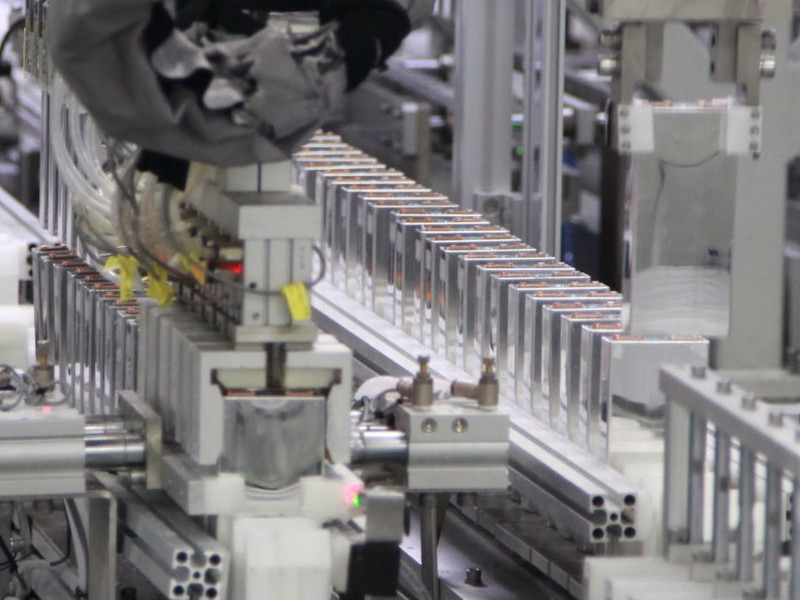
Electric vehicles (EVs) are poised for a game-changing leap with the introduction of innovative batteries that significantly reduce charging time while offering substantial travel range. Among these innovations is the “G-Current” battery, which stands out with its capacity to charge from zero to 80% in less than 10 minutes. Impressively, within 15 minutes, the battery reaches 90% charge, allowing drivers the convenience of a quick stop comparable to refueling a conventional vehicle – enabling them to cover a distance of 300 to 400 kilometers (200 to 250 miles).
This remarkable charging speed is facilitated by the battery’s ability to handle an output of 400 kW, thanks to enhanced design features that effectively dissipate heat outward during rapid charging. This development promises to transform the convenience of EVs, aligning it more closely with the refueling experience of traditional gasoline vehicles.
Another breakthrough comes from the “Stellary” battery, which offers some unique advantages. This nickel-rich battery foregoes the standard liquid electrolyte in favor of cylindrical cells, and while it doesn’t charge quite as fast as the G-Current, it’s still impressive. It can recharge 60% of its capacity in just 9 minutes. This speed enables drivers to regain enough power to travel 350 kilometers (220 miles) in just 5 minutes and 600 kilometers (400 miles) after a mere 10-minute charge.
The “Gemstone” battery adds to these exciting developments by combining a high energy density of 350 watt-hours per kilogram with extraordinary durability, especially in harsh conditions. Amazingly, it has been tested to withstand and charge efficiently in temperatures as high as 200 °C (400 °F). Its solid composition allows a 100 kilowatt-hour battery to weigh in at just under 300 kilograms, substantially lighter than other batteries with similar capacities.
In the quest to further refine these battery technologies, Europe is set to play a critical role. While the Gemstone has only been announced, the G-Current and Stellary models have already gone into production. There are plans afoot to build auxiliary energy storage facilities in Spain, aiming to bolster the region’s capabilities in this field. Additionally, Spain will host the development of novel materials critical to this burgeoning industry.
This battery technology uplift is not just a boon for the pioneering brand, Seat; it will likely impact the entire Volkswagen Group, which holds a significant stake in battery producer Gotion. Included in this strategic alignment is a manufacturing site located in Göttingen, Germany, already active in cell production.
With continuous advancement on the horizon, these innovative batteries are set to revolutionize the EV market, delivering on the promise of a greener, more efficient mobility future while maintaining the comfort and convenience motorists are accustomed to. As we stand on the brink of this electric renaissance, it is evident that the EV infrastructure and user experience will immensely benefit from such technological strides.


