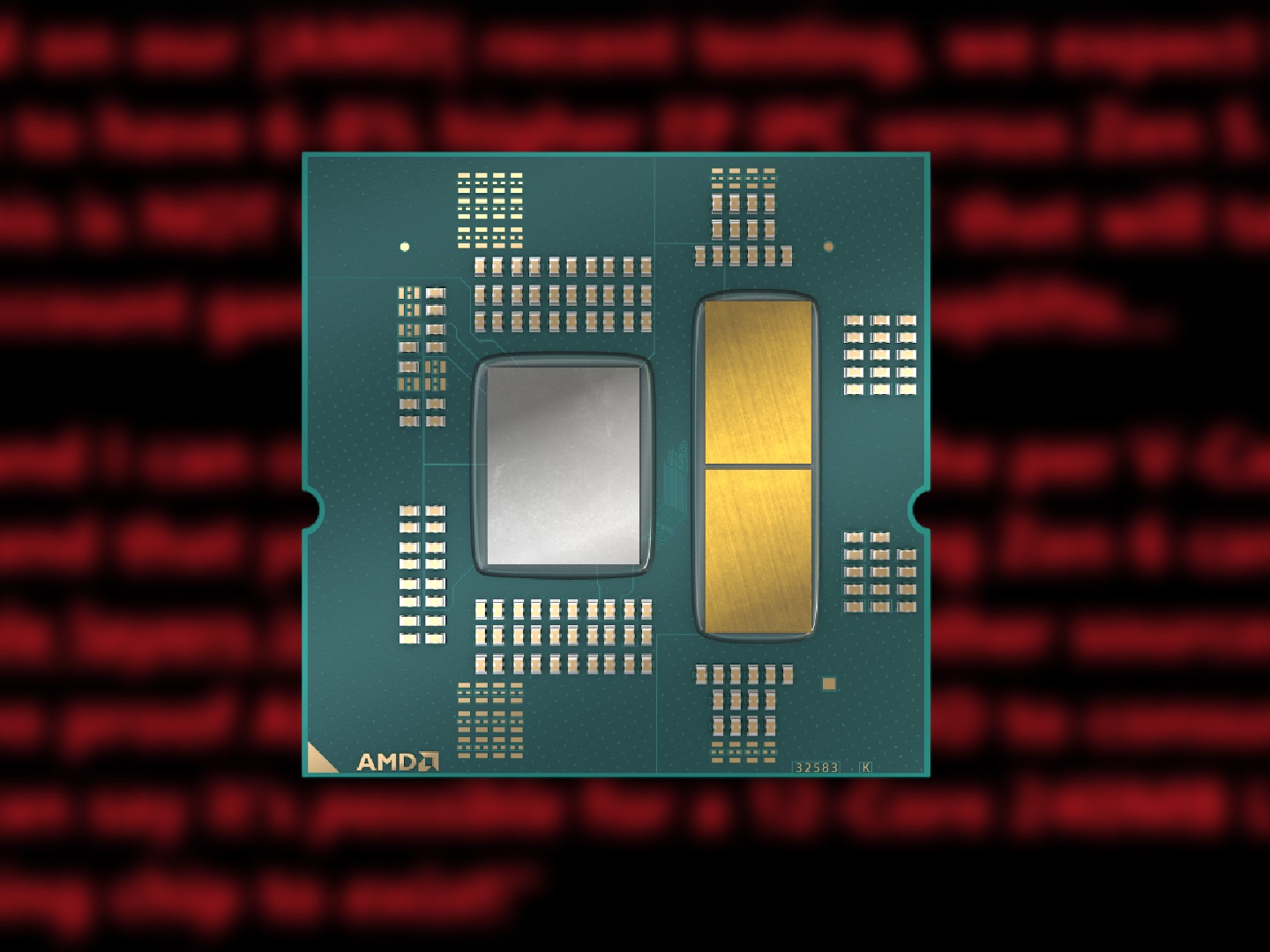
Exciting developments are on the horizon for tech enthusiasts as we look ahead to 2026, when AMD’s Zen 6 and Intel’s Nova Lake are poised to redefine the landscape of desktop CPUs. Intel’s Nova Lake is rumored to feature a groundbreaking design with up to 56 cores, incorporating innovative P/E cores and a pioneering low-power core setup. Meanwhile, AMD’s Zen 6 promises remarkable advancements, showcasing blistering boost clocks, increased core counts, and leveraging a state-of-the-art TSMC manufacturing process.
Recent revelations from industry insiders have given us a glimpse into what Zen 6 might offer. An anticipated 7 to 9% uplift in Floating Point IPC over Zen 5 suggests significant performance gains. However, this preliminary figure may not fully capture the conceivable benefits in gaming and other performance metrics, which could bring the total improvement to around 10%.
Zen 6 isn’t just about raw power; it’s also set to introduce enhanced 3D V-Cache capabilities. Previously reported features hinted at the inclusion of 12-core CCDs, but now there’s confirmation of 96 MB of 3D V-Cache in the new architecture. This could potentially expand to a staggering 240 MB of L3 cache when leveraging multiple layers of 3D V-Cache, providing a substantial boost for gaming and high-demand applications.
Focused intently on the gaming community, Zen 6 aims to deliver, with projected boost clocks exceeding 6 GHz and expanded cache layers aligning perfectly with AMD’s performance goals. This should bring a noticeable generation-on-generation uplift for gamers seeking the latest in CPU technology.
As these developments are still unfolding, it’s important to note that these details are not officially confirmed and will remain speculative until AMD makes an official announcement. Nonetheless, the anticipation continues to build as we await groundbreaking innovations from both AMD and Intel in the coming years.