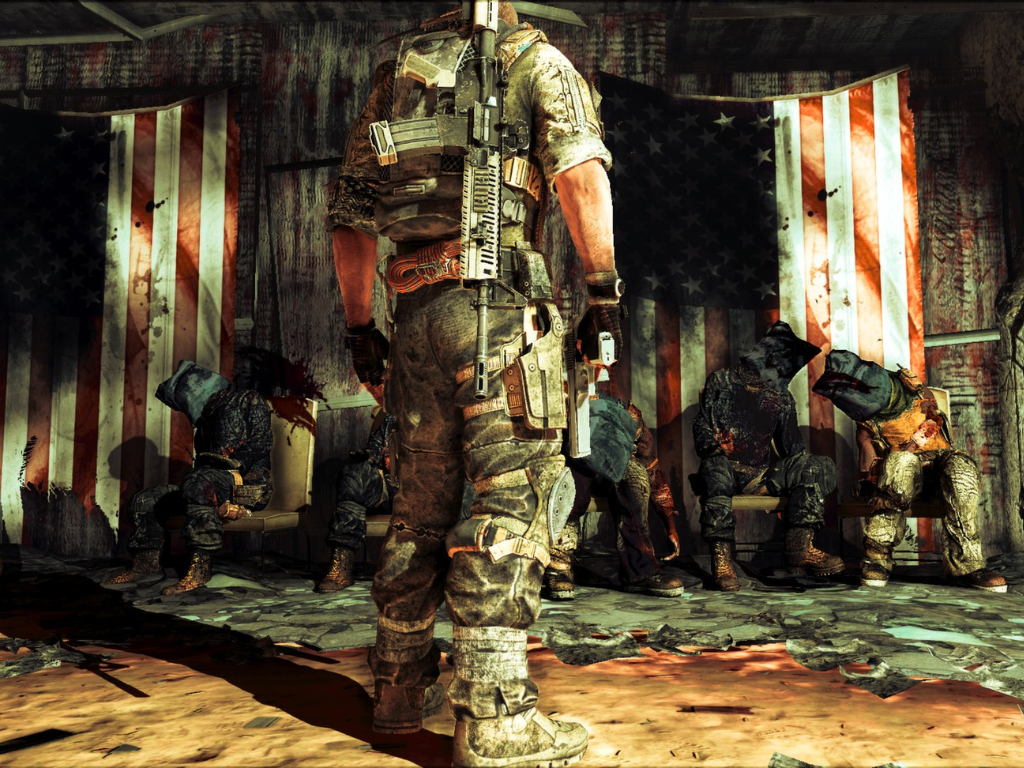
In the crowded realm of military shooters, 2012’s Spec Ops: The Line emerged as an unexpected game-changer. At first glance, it resembled the typical offerings of the genre, but beneath its surface lay a story that deeply challenged players’ morality and perceptions of violence in gaming.
Released during a year packed with heavyweights like Call of Duty: Black Ops II and Far Cry 3, Spec Ops initially appeared destined for obscurity. Yet, it stood apart, not aiming to provide the usual thrills and instead turning the genre on its head. This game beckoned players to wrestle with their decisions, highlighting the impact of their actions in ways most games rarely dare to explore.
You step into the role of Captain Martin Walker, leading a Delta Force team into a sandstorm-ravaged Dubai to find a rogue colonel. While it starts like a standard cover-based shooter, the narrative soon takes a darker turn. As Walker’s mission spirals out of control, players are confronted with choices that leave lasting impressions, including a haunting sequence involving white phosphorus.
The magic of Spec Ops: The Line lies in its ability to unsettle. Unlike typical shooters that glorify violence, this game asks why the player continues to fight when the situation clearly demands reconsideration. It challenges the very notion of following orders as justification, both in gaming and reality.
Critical responses were mixed at launch. While some praised its storytelling, others criticized its mechanics and visuals. Over time, however, its uncompromising approach has earned it a place in discussions about narrative innovation in video games. Retrospectives and analyses abound, lauding its subversion of genre conventions.
The game’s setting in Dubai presents a strikingly bleak landscape, with broken skyscrapers and a dismal color palette enhancing the atmosphere. The soundtrack mixes haunting tracks with classic rock to amplify the unsettling mood. Nolan North’s portrayal of Walker also adds depth, showcasing his transformation through a powerful vocal performance.
Despite its merits, Spec Ops: The Line didn’t achieve commercial success and was eventually delisted from digital platforms, diminishing its availability to new audiences. While not without its flaws, the game is memorable for its ability to provoke thought long after the campaign concludes. It remains a singular experience that defies the label of just another shooter, underlining its significance over a decade later.