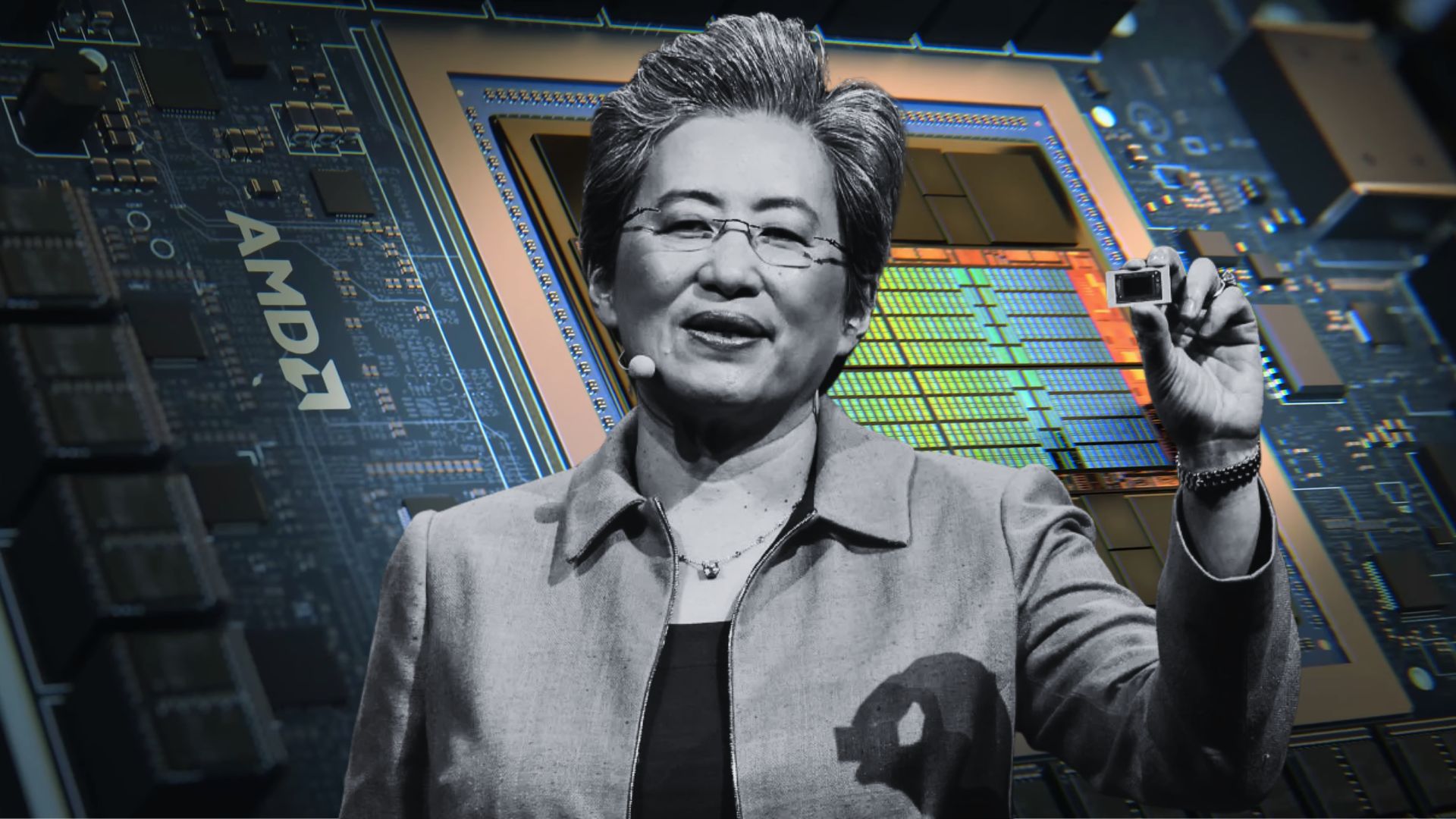
NVIDIA has been the frontrunner in the AI market since its rise in 2022. But the landscape is shifting as AMD aggressively expands its AI lineup under the leadership of Lisa Su, signaling tougher competition ahead.
In 2022, NVIDIA capitalized on AI’s potential by being among the first to deliver market-ready AI chips, while rivals like AMD and Intel were still focused on CPUs and GPUs. The release of ChatGPT highlighted the growing demand for AI, prompting AMD to pivot towards AI in 2023. By then, NVIDIA had already established dominance with its Ampere and Hopper solutions and a powerful software ecosystem, creating a challenging entry for AMD.
This status quo wasn’t easy to challenge, as major tech companies were heavily reliant on NVIDIA’s AI chips. NVIDIA’s proprietary ecosystem, reinforced by technologies like CUDA, made it difficult for competitors to break in. Even though AMD introduced its Instinct MI300X AI accelerators boasting twice the memory of NVIDIA’s counterparts, the challenge was more than just outperforming a single product—it was about competing with an entire established ecosystem.
NVIDIA’s ecosystem has been a significant hurdle for AMD, which lacks the same level of developer tools and AI frameworks. This stronghold makes NVIDIA the default choice for AI, relegating AMD to the role of challenger. Transitioning to AMD proved costlier for big tech firms despite AMD offering greater capabilities, as NVIDIA’s solutions had become synonymous with reliability and performance.
While hype and investor perception have also played vital roles—favoring NVIDIA due to mentions in big tech PR—AMD has remained committed to competing. Under Lisa Su’s leadership, AMD is moving towards achieving parity with NVIDIA by introducing competitive products and offering them to major tech players at attractive prices. AMD’s Instinct MI300 series is noted for being 20%-30% cheaper than NVIDIA’s, with a better price-to-performance ratio, gaining traction with companies like Microsoft and OpenAI.
Despite these gains, AMD’s investments from prominent tech firms are still dwarfed by NVIDIA’s spotlight. However, recent announcements, including the upcoming Instinct MI400 series featuring cutting-edge technology, indicate AMD’s readiness to challenge NVIDIA’s market position. AMD is also focusing on rack-scale solutions with upcoming innovations like the ‘Helios’ AI server rack, aligning itself as a formidable competitor.
AMD isn’t necessarily aiming to replace NVIDIA but to coexist, much like it does in the consumer GPU market. As AMD prepares to report its Q2 earnings, the outcomes will be telling of its trajectory in the AI sector. Expectations are set for increased revenue from AI adoption, pointing to a positive outlook, though overtaking NVIDIA remains a challenging feat.