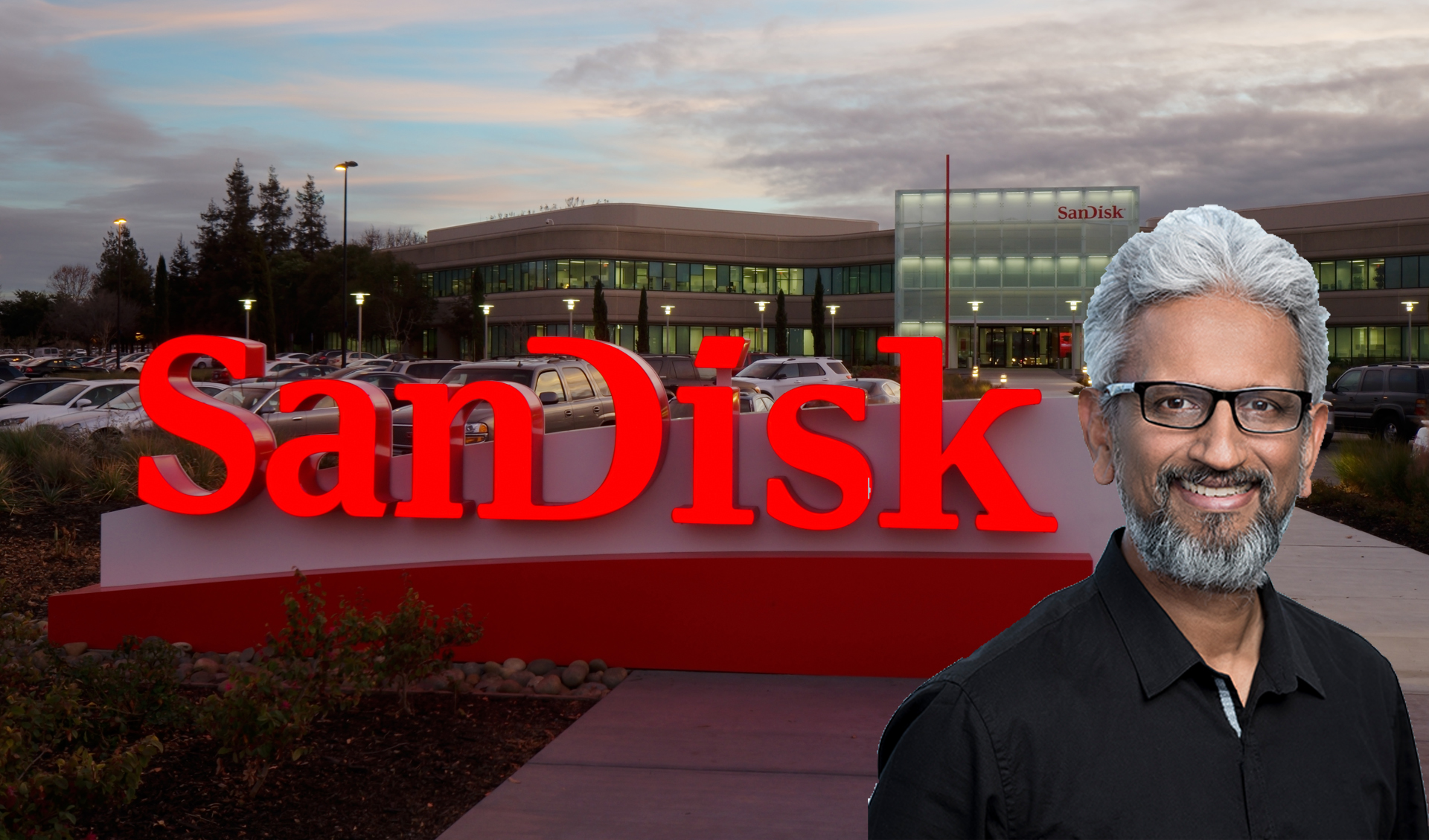
Raja Koduri has embarked on a new journey to transform memory capacity in AI GPUs by joining SanDisk’s HBF Memory Advisory Board. After leaving his role as Chief Architect of Intel’s Graphics department in 2023, Raja is now focused on tackling the limitations of traditional HBM (High Bandwidth Memory), which struggles with capacity constraints.
In this new position, Raja will guide SanDisk in developing High Bandwidth Flash (HBF) memory technology aimed at significantly increasing VRAM capacity for AI-intensive applications. His extensive experience in GPU architecture development aligns seamlessly with SanDisk’s mission to overcome existing bottlenecks and achieve breakthrough memory solutions.
SanDisk has announced the launch of a Technical Advisory Team, with Raja at the forefront, to address these challenges. The HBF technology promises to deliver several times the memory capacity of HBM while maintaining the same bandwidth, thanks to advancements like Through-Silicon Vias technology. This could lead to the potential of achieving up to 4 TB of VRAM with a single system employing multiple HBF stacks, far exceeding current HBM capabilities.
While HBM has rapidly advanced AI superchips, it’s not keeping pace with growing AI demands. In contrast, HBF aims to prioritize increased memory capacity and bandwidth, essential for AI tasks like inference and large-scale model development, where raw latency is less critical.
SanDisk is committed to establishing HBF as an open-standard, encouraging industry-wide adoption. Raja’s expertise in building networks and fostering collaborations with GPU vendors will be key to promoting this innovative memory solution.
This move is set to revolutionize edge AI, offering devices the memory capacity and bandwidth needed to support complex models running locally in real time—a shift that will transform how AI inference is performed and pave the way for advanced intelligent edge applications.