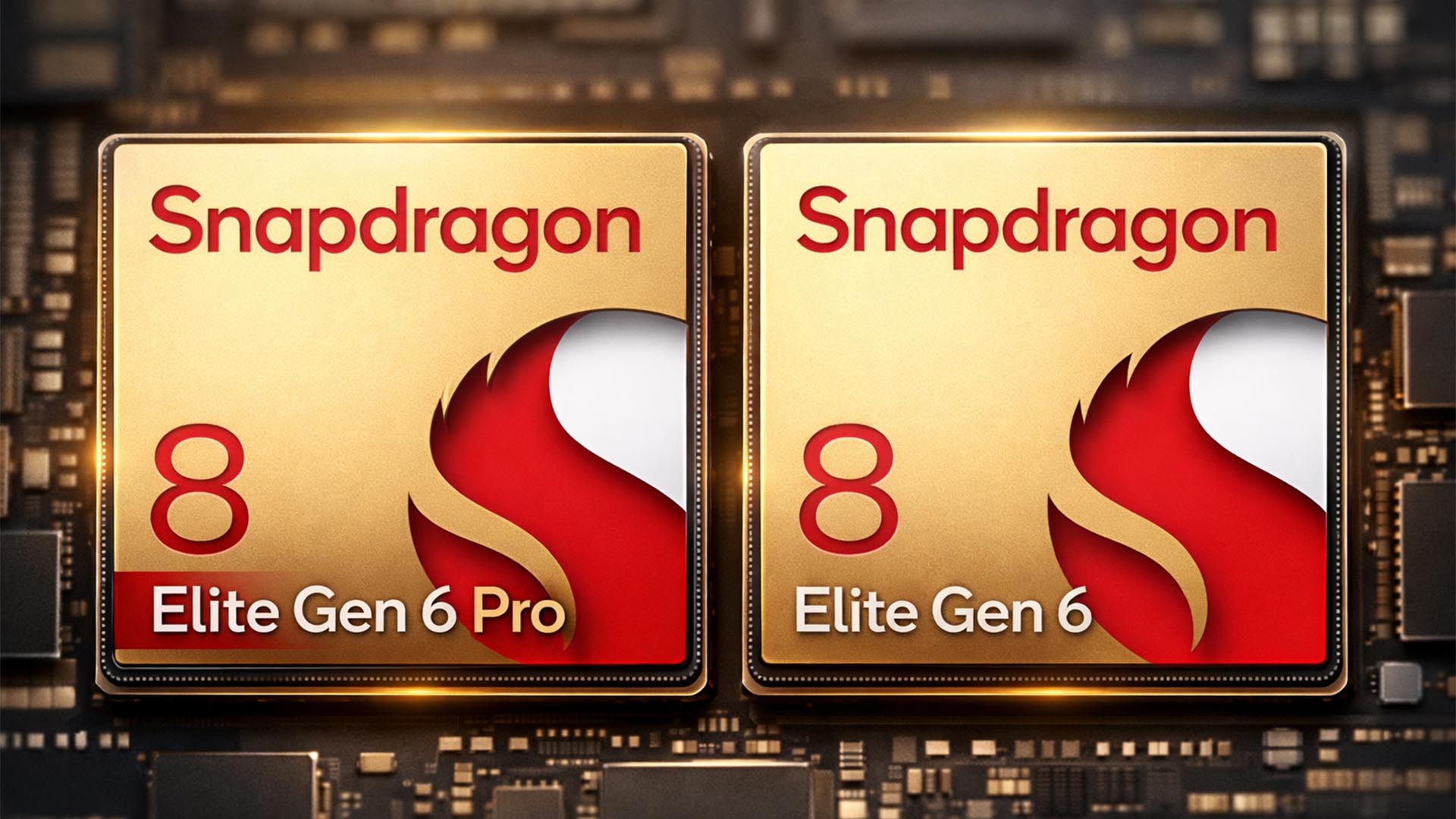
Qualcomm’s next flagship mobile platform, Snapdragon 8 Elite Gen 6, is shaping up to be so capable in its standard form that it could undercut the need for a pricier “Pro” version. If a new leak is accurate, Qualcomm may be taking a notably different approach from the common industry tactic of intentionally limiting base models to push buyers toward premium tiers.
A well-known Weibo tipster, Digital Chat Station, says the Snapdragon 8 Elite Gen 6 (model SM8950) will be built on TSMC’s 2nm process and will bring a new-generation Oryon CPU design using a 2+3+3 core configuration. The key takeaway is that the “vanilla” chip doesn’t sound like a compromised option. Instead, it appears designed to deliver true flagship-class performance for a wide range of smartphones, especially upper mid-range and high-end devices.
According to the leaked details, the standard Snapdragon 8 Elite Gen 6 is expected to include a sizable 16MB L2 cache and support fast memory and storage, pairing LPDDR5X RAM with UFS 5.0. On the graphics side, it reportedly uses an Adreno 845 GPU with six slices, along with a dedicated 12MB graphics memory cache (GMEM). The leak also mentions system-level cache (SLC), reinforcing the idea that Qualcomm is leaning hard into cache and memory optimizations to boost real-world speed and efficiency.
So what’s left for the Snapdragon 8 Elite Gen 6 Pro to offer?
Digital Chat Station suggests the Pro variant will reduce the gap mainly through “some cache and peripheral specifications,” rather than major architectural differences. In other words, both versions may share the same overall CPU layout and core strategy, while the Pro model likely increases cache allocations and upgrades certain platform capabilities. One of the biggest expected differentiators is memory: while the standard chip is said to support LPDDR5X, the Pro variant is widely expected to step up to LPDDR6. There’s also talk that the Pro model could feature a larger graphics cache, with previous claims pointing to as much as 18MB GMEM.
That leads to an important conclusion for phone makers and buyers alike: the performance difference between Snapdragon 8 Elite Gen 6 and Snapdragon 8 Elite Gen 6 Pro may look meaningful on a spec sheet, but could be relatively modest in everyday use. If that’s the case, many Android OEMs may prefer the standard Snapdragon 8 Elite Gen 6 to keep costs in check without sacrificing flagship-level responsiveness, gaming capability, or efficiency.
The GPU story is especially interesting this generation. Qualcomm’s recent GPU direction splits the graphics engine into separate “slices,” each with its own characteristics such as clocking and functional blocks. If the upcoming Adreno 845 truly scales to six slices in the standard Gen 6 chip, that alone signals a substantial leap over prior designs. More slices generally point to higher throughput and improved scalability, which can translate into better sustained gaming performance, smoother high-refresh-rate experiences, and stronger graphics features in demanding apps. Even if the Pro model adds more cache on top, the baseline configuration already sounds formidable.
If these leaked specifications hold up, Snapdragon 8 Elite Gen 6 could become the go-to flagship chipset for 2026 Android phones, while the Pro version becomes a more niche option reserved for ultra-premium models chasing small but marketable advantages. For consumers, that’s potentially good news: more phones could deliver near-top-tier performance without needing the absolute most expensive silicon tier to do it.