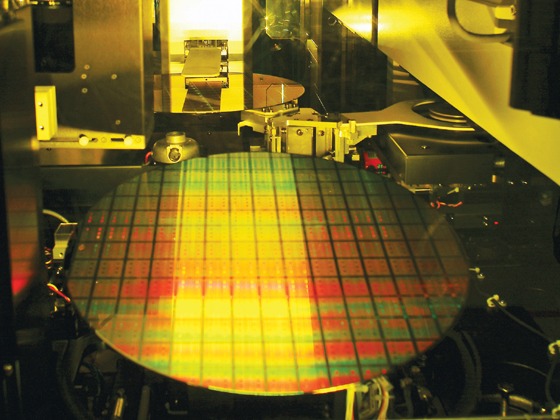
Global foundry revenue surged to an all-time high of $41.7 billion in Q2 2025, up 14.6 percent quarter over quarter, according to TrendForce. The upswing was fueled by China’s consumer subsidy program and early component stocking ahead of second-half launches across smartphones, notebooks/PCs, and servers. Momentum is expected to carry into Q3 on seasonal product cycles, though growth should moderate from Q2’s breakneck pace.
TSMC extended its lead with record quarterly revenue of $30.24 billion and a commanding 70.2 percent market share. The company’s advantage rests on scale at advanced nodes and in advanced packaging. Roughly three-quarters of TSMC’s revenue now comes from 7nm and below, with about one-quarter attributed to 3nm. Demand was driven by high-performance chips such as Nvidia’s Blackwell GPUs, AMD’s Zen 5 CPUs, and Apple’s latest M‑series Macs. Robust ramps in both HPC and mobile, coupled with capacity for advanced packaging, pushed shipments and average selling prices higher.
Samsung Foundry held second place with $3.16 billion in revenue, up 9.2 percent quarter over quarter for a 7.3 percent share. SMIC ranked third at $2.21 billion and 5.1 percent share, slipping 1.7 percent as issues at advanced nodes led to shipment delays and pressured pricing. UMC posted $1.9 billion, up 8.2 percent for a 4.4 percent share, while GlobalFoundries grew 6.5 percent to $1.69 billion for 3.9 percent. Intel Foundry remained much smaller by revenue despite ongoing investment.
Tier-2 foundries also benefited from stronger orders for peripheral ICs tied to mature nodes. HuaHong Group reached approximately $1.06 billion (2.5 percent share), followed by Vanguard at $379 million, Tower at $372 million, Nexchip at $363 million, and PSMC at $345 million.
Looking ahead to Q3, TrendForce expects:
– Advanced nodes to gain from flagship smartphone and PC/server chips
– Mature nodes to ride continued demand for peripheral and connectivity ICs
– Orders to rise sequentially, but at a slower pace than Q2’s surge
Supply conditions are improving this year, yet cost pressures remain elevated. TSMC’s upcoming 2nm node is expected to command a premium, and GPU vendors are already nudging prices to help offset higher wafer costs.
Key takeaways for the semiconductor industry:
– Q2 2025 was a record-setting quarter for the global foundry market
– TSMC’s dominance is rooted in leading-edge process technology and packaging capacity
– Samsung and UMC gained sequentially; SMIC faced headwinds at advanced nodes
– Peripheral IC demand continues to support Tier-2 foundries
– Costs are likely to stay high even as supply loosens, with next-gen nodes carrying premium pricing
With AI accelerators, next-gen CPUs, and flagship mobile chips ramping into the back half of the year, advanced-node capacity and packaging will remain the competitive battleground—and a key driver of foundry revenue through 2025.