AI’s breakout moment is rewriting the hardware playbook. As generative AI workloads surge, the AI server market is expanding at a blistering pace, and the spotlight has shifted to advanced packaging—especially CoWoS, or chip-on-wafer-on-substrate—as a decisive battleground for GPU makers and custom silicon teams. The problem: the supply chain for CoWoS is only as strong as its most constrained materials, and shortages in critical upstream inputs for IC substrates are threatening to slow the whole ecosystem.
Why CoWoS is now mission-critical
CoWoS is the connective tissue for today’s most powerful AI accelerators. By tightly integrating compute dies with high-bandwidth memory on large, complex organic substrates, it delivers the bandwidth and energy efficiency modern AI models demand. But these advanced substrates require ultra-fine line/space capabilities and exceptional dimensional stability—qualities that hinge on specialized materials at the very start of the chain. When those materials run short, everything from substrate output to final GPU shipments falls behind.
The squeeze in IC substrate materials
The bottleneck begins upstream. IC substrates used in CoWoS rely on high-grade glass fiber fabrics and advanced resins to form the cores that enable tight design rules and low warpage. These materials aren’t interchangeable commodities; they require exacting specs and lengthy qualification. As orders for AI accelerators have spiked, so has demand for these materials, outpacing the industry’s ability to add capacity quickly. The result is longer lead times, price pressures, and delayed ramps for next-gen AI platforms.
A pivotal move in Fukushima
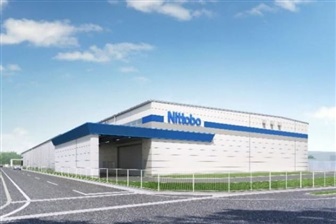
Against this backdrop, a strategic bet on new capacity is drawing attention. A major glass fiber supplier is expanding production in Fukushima, positioning itself to ease pressure on the glass cloth used in advanced ABF-class substrates. This move is more than a routine capacity add—it signals a reshaping of the competitive landscape and a push to de-risk a fragile link in the CoWoS chain.
For downstream players—from substrate makers to packaging houses and chip designers—additional glass fiber supply could be the difference between sustained growth and persistent allocation. It also introduces a stronger counterweight to existing incumbents, including Taiwan-based suppliers, potentially improving bargaining power and supply assurance across the ecosystem.
What this means for AI hardware roadmaps
– Smoother substrate output: With more high-spec glass fiber available, substrate vendors can better support the larger formats and tighter tolerances required by CoWoS builds for AI accelerators.
– Reduced lead times over time: While near-term tightness is likely to persist, incremental capacity and parallel qualifications can begin to normalize delivery windows.
– More resilient supply chain: Greater geographic and vendor diversity at the material level reduces single-point-of-failure risks that have dogged advanced packaging throughout the AI upcycle.
– Pricing stabilization: As supply catches up, cost volatility for substrates and final packaged parts should moderate, supporting more predictable AI server build plans.
Not an instant fix, but a meaningful shift
Ramping new material lines isn’t plug-and-play. Each supplier must pass stringent reliability and performance qualifications with substrate makers and their end customers. This process takes time, and complex AI packages have little tolerance for variability. Still, the Fukushima expansion marks a clear signal: the industry is moving upstream to address the root causes of CoWoS bottlenecks, rather than relying solely on downstream tweaks.
Why this matters now
– AI demand remains non-linear, with training and inference both accelerating.
– CoWoS has become the default path for top-tier AI silicon, concentrating demand on a narrow set of substrate technologies and materials.
– Every efficiency gained upstream compounds downstream, unlocking more GPUs and accelerators for cloud builds and on-prem AI deployments.
What to watch next
– Qualification milestones for new glass fiber output and how quickly it converts into substrate capacity.
– The pace of additional investments by other material suppliers as they respond to AI-driven demand.
– The emergence of alternative core materials and next-gen packaging approaches that could complement or pressure CoWoS in the medium term.
Bottom line
Generative AI has made CoWoS the front line of semiconductor innovation—and supply constraints at the materials level are the key choke point. A bold capacity play in Fukushima suggests relief is on the way and could rebalance competition with established Taiwan-based suppliers. If successful, it will ripple through the entire AI hardware stack, accelerating time-to-market for the next wave of AI servers and helping the industry keep pace with insatiable demand.