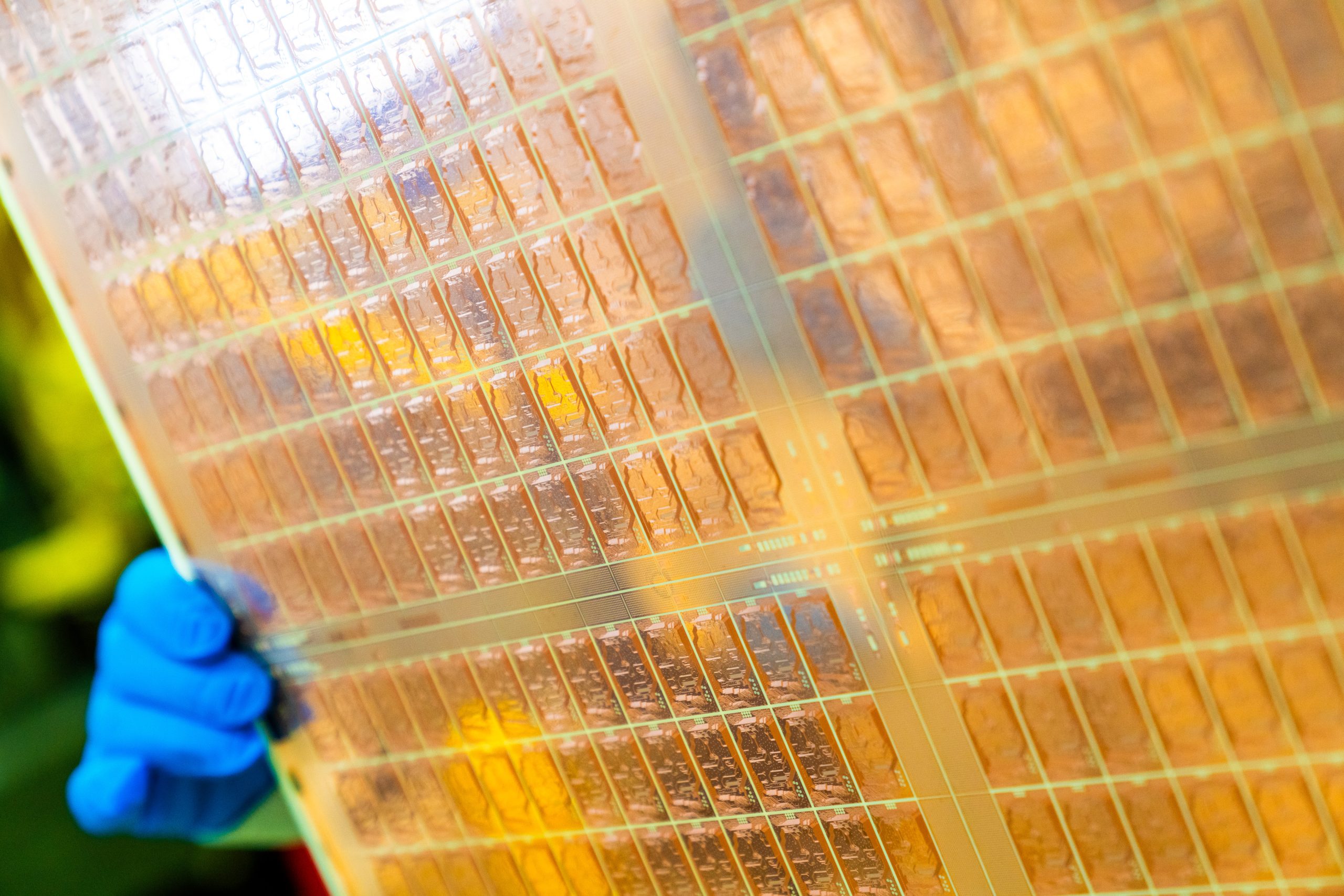
Apple and Tesla are reportedly exploring glass substrates for future chips, signaling a potential shift in how next‑generation processors are built. The move highlights growing industry momentum behind glass as a replacement for traditional organic substrates in advanced, chiplet-based packaging.
Why glass substrates are drawing attention
Glass substrates act as the base layer in advanced chip packages. Instead of relying on an organic core, manufacturers build multiple redistribution layers (RDL) on glass to route power and high-speed signals between separate chiplets or dies. The payoff is density. Because glass supports tighter routing, it allows more signals per layer and can reduce the total number of layers required. That translates into the ability to pack more chiplets into a single package and to build larger, denser multi-die systems—exactly what’s needed for increasingly complex AI, automotive, and consumer computing workloads.
Where Apple and Tesla could use them
Discussions are said to be underway with suppliers, with each company eyeing specific use cases:
– Tesla: Future Full Self‑Driving (FSD) chips, where bandwidth, power delivery, and package size all matter.
– Apple: In‑house ASICs and broader silicon roadmaps, potentially touching products like the iPhone and MacBook.
Both companies appear to view glass substrates as a key enabler for the next wave of performance and integration, especially as chiplet architectures become more common across premium devices and high-performance computing.
The benefits at a glance
– Higher routing density: More signals per layer enables tighter integration of multiple dies.
– Fewer layers or more chiplets: Designers can either simplify the stack or scale up complexity within the same footprint.
– Larger multi-die packages: Glass can support bigger, denser packages that push performance without ballooning size.
Not ready for mass deployment—yet
Despite the upside, glass substrates haven’t fully crossed the threshold into broad mass production. Two hurdles stand out:
– Handling and manufacturing complexity: Glass panels demand careful handling throughout the supply chain, raising costs and yield risk.
– TGV drilling: Creating through‑glass vias (TGVs) at scale remains a technical and economic challenge, adding overhead to production.
These barriers are why most consumer devices still lean on organic substrates today. However, renewed interest from major brands suggests the industry is investing to solve these problems.
Industry momentum and what’s changed
Glass substrates have been discussed for years, but tangible progress is becoming more visible across the ecosystem. For example, test units have been showcased in large chipmakers’ assembly and test facilities, highlighting the technology’s potential for high‑density packages. Some companies slowed or reshaped their research and development around glass in 2023, and long‑term plans were left uncertain. Even so, the reemergence of customer interest—especially from companies with massive silicon roadmaps—could accelerate the timeline for viable, cost‑effective production.
What to watch next
– Supplier partnerships: Which equipment and materials vendors secure early design wins for glass-based packages.
– Pilot production: Limited runs for automotive and premium computing could arrive before broader consumer rollout.
– Packaging breakthroughs: Advances in TGV drilling, panel handling, and yield improvement will dictate when glass becomes mainstream.
Bottom line
Glass substrates promise higher-density interconnects and larger, more capable multi-die packages—benefits that align with the ambitions of companies building cutting-edge chips. Apple and Tesla’s reported talks with manufacturers underscore how pivotal packaging innovation has become to performance gains. While scaling the tech for mass adoption still requires solving complex manufacturing challenges, the direction is clear: as glass substrate processes mature, they’re poised to play a defining role in the next generation of silicon for cars, phones, and PCs.


