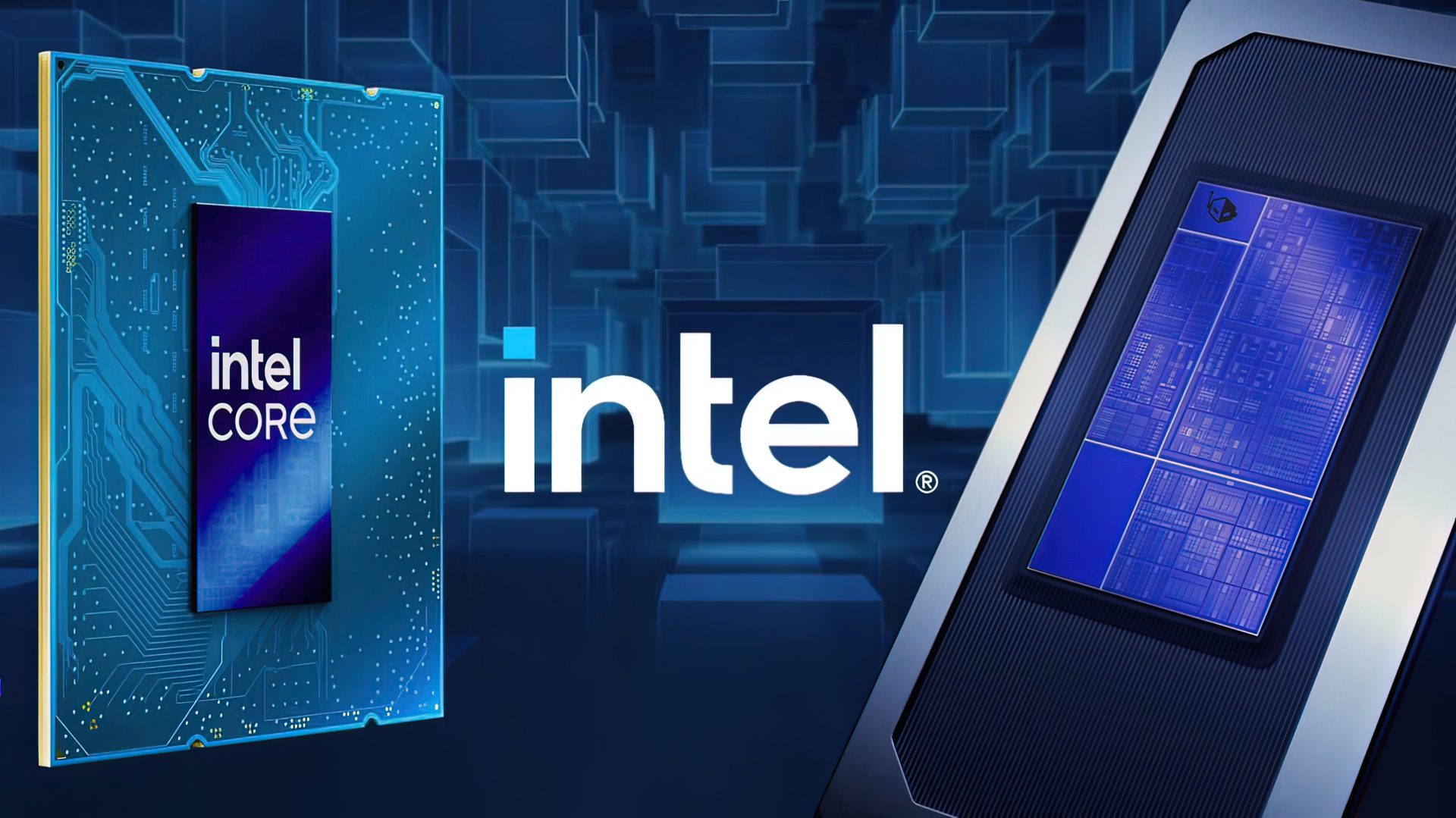
Intel is making a bigger push into Edge AI with two fresh CPU families built to handle modern AI workloads closer to where data is created and processed. The company has now introduced Core Series 2 “Bartlett Lake” and Core Ultra Series 3 “Panther Lake,” targeting everything from compact commercial desktops to mobile and embedded Edge deployments.
Bartlett Lake is the lineup meant for desktop-class Edge and commercial systems, and it brings one standout change that will grab the attention of performance-focused buyers: up to 12 Performance cores. That’s a notable jump from the usual ceiling of 8 P-cores seen in recent mainstream Intel desktop parts, and it positions Bartlett Lake-S as Intel’s highest P-core configuration for desktop-focused Edge solutions.
Bartlett Lake-S is built on Intel 7 process technology and shares much of its DNA with the Raptor Lake era, but the emphasis here is clear—more high-performance cores, with no Efficiency cores at all. These chips rely on hyper-threading to deliver up to 24 threads on the top models, making them especially appealing for multi-threaded workloads that benefit from consistent high-performance cores, such as industrial automation, AI inference on the CPU, vision processing pipelines, and latency-sensitive Edge computing tasks.
Intel says Bartlett Lake can deliver up to 50% higher multi-threaded performance compared with the prior generation. The platform comes in configurations spanning 45W, 65W, and up to 125W, allowing system builders and OEMs to tune for power efficiency, thermals, or maximum throughput depending on the deployment environment.
A major practical advantage is compatibility. Bartlett Lake-S supports the LGA 1700 socket and works with Q/H/B series motherboards, which can simplify upgrades for commercial fleets and embedded desktop deployments that want to reuse existing infrastructure. Intel is also positioning these chips for AI enablement with support for widely used AI and deployment frameworks, including Intel OpenVINO, PyTorch, ONNX Runtime, and WinML. On top of that, the CPUs are described as Windows Server ready, and Intel is backing the platform with a 10-year availability plan alongside LTSC OS support—an important point for industrial, medical, retail, and other long-lifecycle systems.
At launch, Intel says there are 11 Bartlett Lake-S desktop CPUs ready to ship, spanning 8-core, 10-core, and 12-core options (again, all P-cores). The flagship is the Core 9 273PQE, featuring 12 P-cores and 24 threads, boosting up to 5.9 GHz with a 5.3 GHz all-core frequency and a 125W TDP. Intel also highlighted two other 12-core variants: the 65W Core 9 273PE with up to 5.7 GHz boost, and the 45W Core 9 273PTE boosting up to 5.5 GHz, giving OEMs flexibility across performance and power envelopes.
Across the full family, Bartlett Lake-S supports up to 192 GB of memory with ECC support and DDR5-5600 speeds. Expansion and connectivity are also strong for Edge and commercial workloads, with up to 16 PCIe Gen5 lanes plus 4 PCIe Gen4 lanes. Intel notes support for driving up to 4K displays, and the chips include integrated graphics, which is useful for space-constrained systems or deployments that don’t need a discrete GPU.
Intel also shared performance comparisons aimed at the commercial Edge audience. Using a 65W Core 9 273PE, Intel claims advantages versus a 65W AMD Ryzen 7 9700X, including up to 3.8x better deterministic chip performance, up to 2.5x higher response time, and up to 4.4x lower maximum PCIe latency. Intel’s comparison highlights how core counts and power classes differ at 65W, noting that AMD’s 65W lineup tops out at 8 cores while higher-core options often move into higher power ranges.
On the mobile and embedded side of Edge AI, Intel is also rolling out Core Ultra Series 3 “Panther Lake.” Here the messaging is centered on AI acceleration and total platform efficiency. Intel claims Panther Lake can deliver up to 4.5x improvement in AI tasks compared with an NVIDIA Jetson AGX Orin 64 GB solution, while also presenting performance leadership claims versus competing AMD and Qualcomm offerings in the same general space.
Beyond raw performance, Intel is framing Panther Lake as a cost-saving move for Edge deployments. According to the company, switching from a dual-system setup to a Panther Lake-based solution can provide up to 5.8x higher total cost of ownership benefit, translating to claimed savings of $5,549 USD in the scenario it presented. For organizations deploying fleets of Edge devices—where power, space, maintenance, and hardware footprint all matter—TCO can be just as important as benchmark wins.
As for release timing, Intel says both Core Series 2 Bartlett Lake and Core Ultra Series 3 Panther Lake are available now. One key detail for buyers: Bartlett Lake-S is not aimed at DIY retail channels. Instead, it will be sold through OEMs for commercial systems and Edge-focused deployments, reinforcing that this launch is primarily about business, industrial, and embedded use rather than the typical consumer upgrade market.