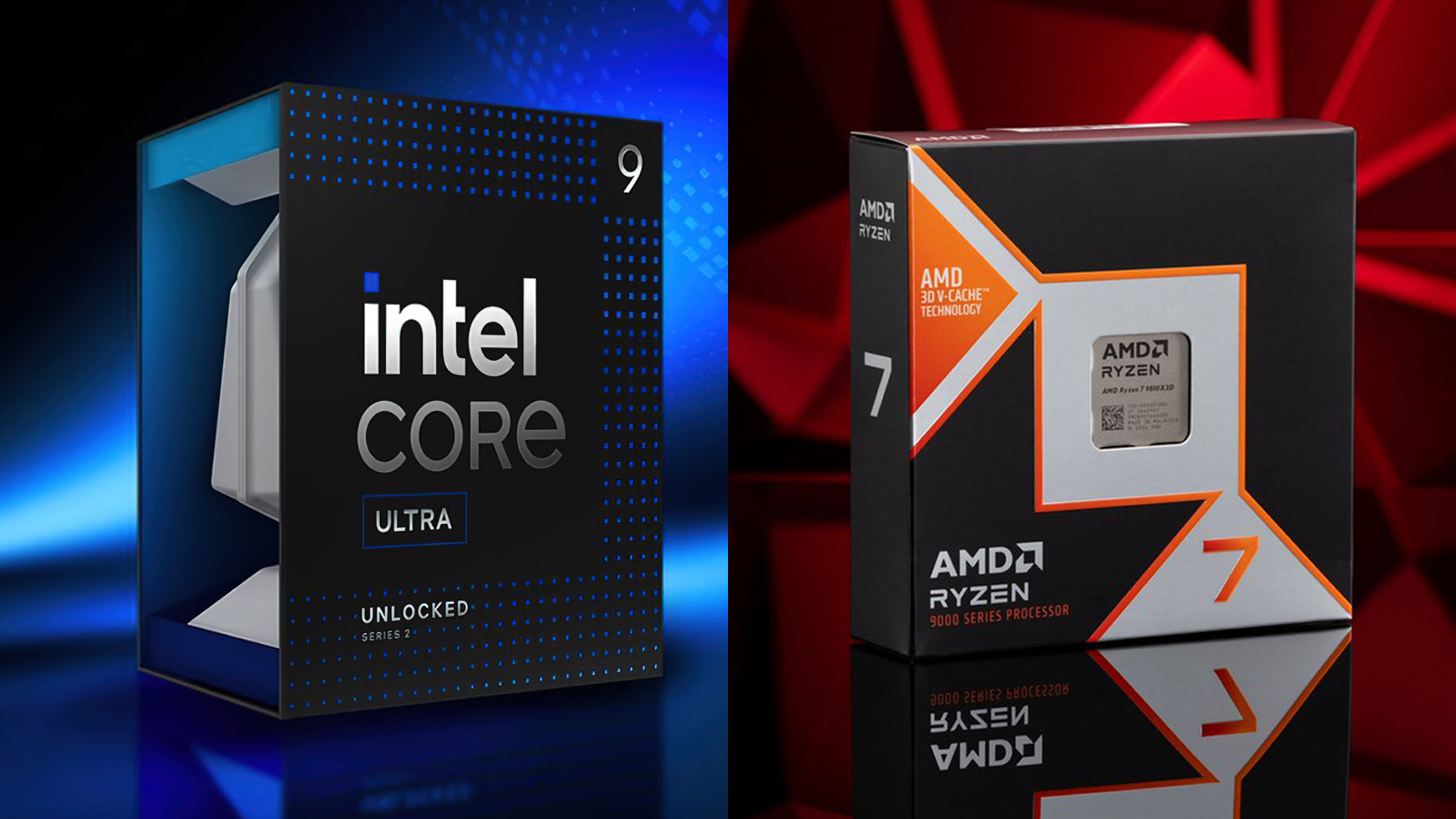
Fresh reliability numbers from Puget Systems suggest that the newest AMD and Intel desktop processors are far closer in dependability than online chatter might lead you to believe. After tracking failures across its own workstation builds and customer systems over the past 12 months, Puget reports nearly identical CPU failure rates for both platforms—an important data point for anyone planning a new PC build, workstation upgrade, or CPU swap in 2025.
According to Puget Systems’ tracking, AMD’s Ryzen 9000 series posted a 2.52% failure rate over the last year. Intel’s Core Ultra 200 series came in almost the same at 2.49%. In other words, based on this dataset, the latest AMD and Intel CPUs appear equally reliable overall.
There’s also a standout on Intel’s side. Puget’s data shows the Core Ultra 7 265K as the most reliable chip in the Core Ultra 200 lineup, with a notably low failure rate of just 0.77%. Puget didn’t specify whether it’s also the top-selling model in its records, but the CPU has been widely seen as one of the more popular Arrow Lake options—something that can matter when interpreting reliability stats, since higher sales often lead to more reported failures.
One of the more unexpected takeaways involves AMD’s Ryzen X3D processors. These chips are frequently discussed online when users report sudden failures, and the Ryzen 9800X3D is often mentioned in those conversations. However, Puget Systems’ numbers paint a different picture: Ryzen X3D models showed a lower failure rate than non-X3D Ryzen 9000 CPUs. In 2025, Puget reports Ryzen X3D chips at a 1.51% failure rate, and most of those cases came from Puget’s own in-house builds rather than customer machines.
That doesn’t automatically mean X3D chips are “safer” in every scenario, though. Popular CPUs can generate a lot of attention, and more attention can create a perception problem—especially when failure posts circulate widely. Meanwhile, non-X3D Ryzen 9000 processors may not get the same spotlight, even if problems are occurring at similar or higher rates.
Puget’s figures also line up with a recent uptick in reports involving non-X3D Ryzen 9000 failures. Over the last month alone, at least four separate cases of dead Ryzen 5 9600X processors have been noted, adding more visibility to an issue that may have been under-discussed compared to the high-profile X3D reports.
It’s worth keeping expectations realistic: Puget Systems’ tracking isn’t a complete picture of the entire PC hardware market. Their data reflects the systems they build and support, which can differ from the broader mix of DIY gaming PCs, mass-market prebuilts, and global sales trends. Still, when a respected system integrator sees AMD and Intel landing at almost the same failure rate across a full year, it’s a strong indicator that modern desktop CPUs from both brands are comparably reliable for most users.
For buyers trying to choose between Ryzen 9000 and Core Ultra 200, the big message here is simple: reliability alone probably shouldn’t be the deciding factor, because the numbers are extremely close. Performance needs, platform features, pricing, and workload fit are still likely to matter more—especially when the latest data suggests neither side has a clear reliability disadvantage.