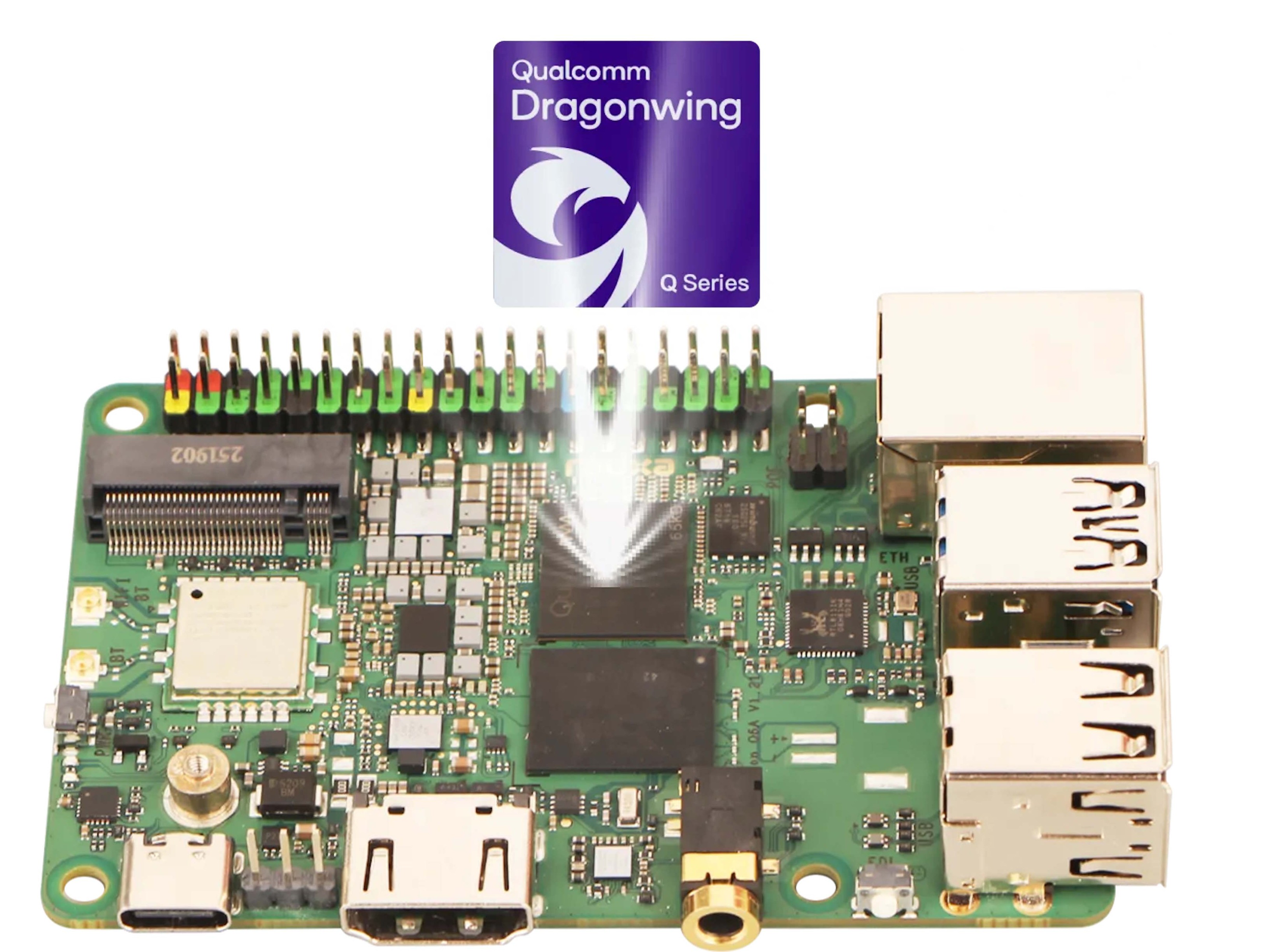
Radxa has introduced a compelling new Raspberry Pi alternative for makers, developers, and anyone building compact embedded projects: the Radxa Dragon Q6A. Designed as a versatile single-board computer with modern connectivity and expansion options, it pairs a Qualcomm-based platform with a ready-to-use selection of ports that suit everything from DIY smart home builds to edge computing and robotics.
Preorders are now open through Arace Tech, with pricing starting at $76 / €66 for the base configuration with 4GB of RAM. Buyers can step up to 6GB, 8GB, or 12GB RAM options, with the highest configuration currently listed at $129 / €112. That range makes the Dragon Q6A an interesting choice for users who want more flexibility than many entry-level SBCs, without moving into the cost bracket of full mini PCs.
At the heart of the Radxa Dragon Q6A is the Qualcomm Dragonwing QCS6490 system-on-chip. It features an eight-core CPU with clocks up to 2.7GHz, aiming to deliver strong everyday performance for common Linux-based workloads, media handling, and connected device tasks. Radxa also positions the board as a solid option for AI at the edge, citing up to 12 TOPS of local AI acceleration while keeping power consumption low—an appealing mix for on-device inference, smart cameras, and automation projects where efficiency matters.
Connectivity and display support are where the Dragon Q6A really leans into “modern SBC” expectations. You get HDMI out plus a four-lane MIPI DSI interface for attaching a second display, which is useful for kiosk setups, control panels, or dual-screen development rigs. Camera support is similarly flexible: you can connect imaging hardware via USB 3.1 or use MIPI CSI, a dedicated camera interface commonly used in embedded vision builds.
For hardware tinkering and prototyping, the board includes a color-coded 40-pin GPIO header. That familiar format makes it easier to integrate sensors, relays, motors, and other add-ons typically used in electronics projects, robotics, and home automation.
On the storage side, the Dragon Q6A uses soldered LPDDR5 memory, but storage remains customizable. Users can expand with eMMC, and there’s also a microSD card slot, meaning you can get started quickly without mandatory upgrades while still having an upgrade path for faster, more durable storage later.
Power and networking options round out the board nicely. The Radxa Dragon Q6A can be powered via USB-C, and it also supports Power over Ethernet (PoE) when paired with a compatible expansion board—handy for clean, single-cable deployments in offices, labs, or ceiling/wall-mounted installations. For connectivity, it includes Gigabit Ethernet for stable wired networking, along with Wi‑Fi 6 and Bluetooth 5.4 for fast wireless connections and modern peripheral support.
With a Qualcomm SoC, AI acceleration claims, and a strong mix of HDMI, MIPI, USB, GPIO, and next-gen wireless, the Radxa Dragon Q6A shapes up as a practical Raspberry Pi-style single-board computer for users who want robust connectivity and a platform suited for both experimentation and real deployments.