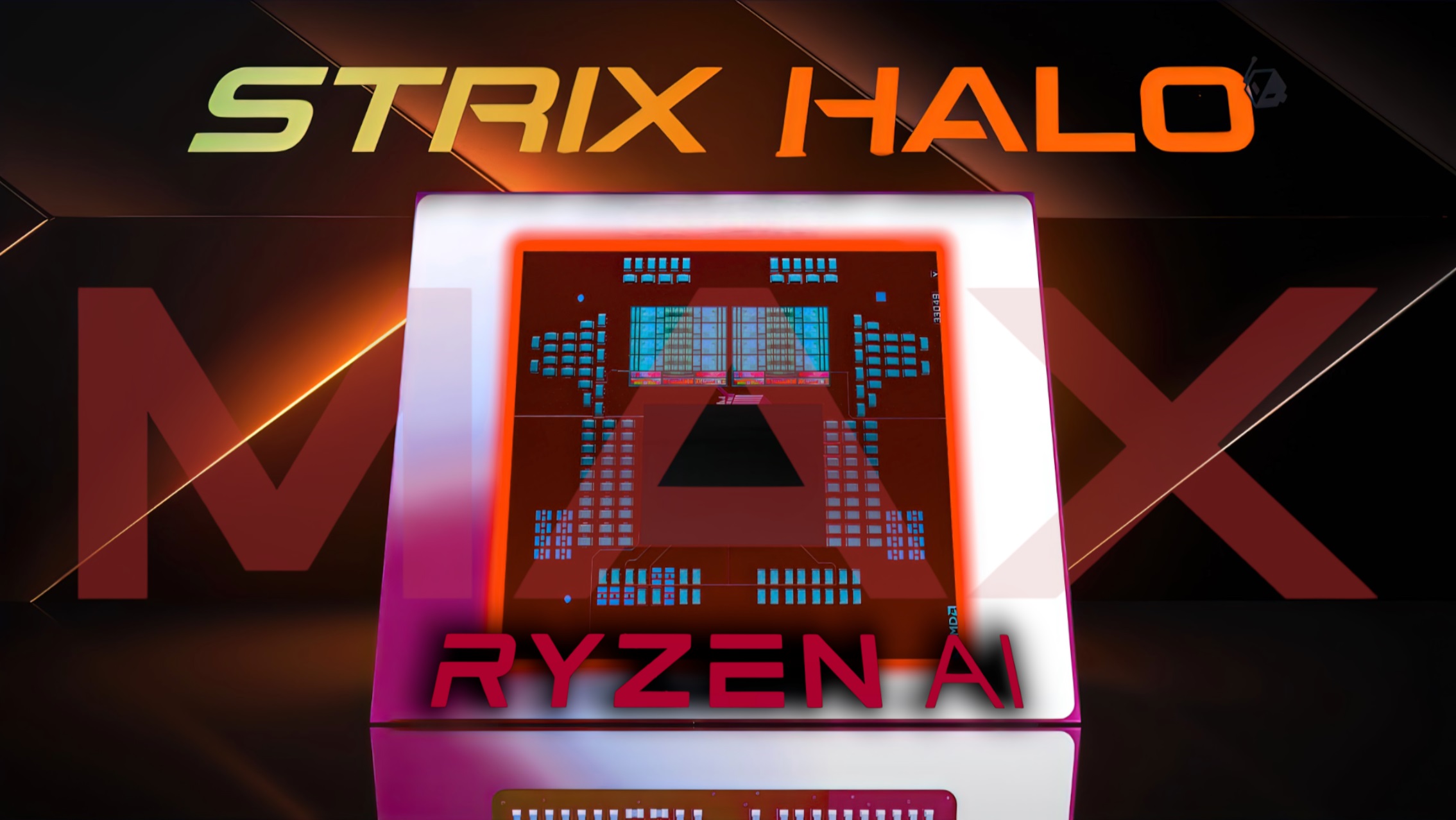
AMD’s latest Strix Halo CPUs are poised to redefine the landscape of computing performance, thanks to intriguing advances revealed in its die design. One of the standout features is the potential integration of additional L3 cache through 3D V-Cache technology, which suggests that AMD is not resting on its laurels despite already making significant strides over competitors like Intel.
As AMD rolls out the Strix Halo series, the company continues to assert its dominance, particularly in integrated graphics performance. Competitors like Intel are attempting to keep pace with their own innovations, including Arrow Lake-H and Lunar Lake, yet the benchmark set by AMD’s latest offerings remains formidable.
The design of the Strix Halo, highlighted by insights from ASUS China, hints at a roadmap for remarkable performance enhancements. Notably, the presence of TSVs (Through-Silicon Vias) in the die design suggests that AMD could soon introduce a 3D V-Cache chiplet to sit directly atop the L3 cache nestled between Zen 5 cores. This addition may significantly boost CPU performance in selected tasks, paving the way for future Strix Halo X3D processors.
Another fascinating aspect of the Strix Halo is its innovative interconnect design. While traditional desktop Zen 5 Ryzen 9000 CPUs utilize the SERDES system for data exchanges, the Strix Halo employs a more space-efficient interconnect. The new design reduces the overall footprint by an impressive 42.3%, consequently shrinking the die size by 0.34mm. This “sea of wires” approach not only diminishes the footprint but also enhances latency and efficiency, ensuring lower power consumption.
This innovation offers a glimpse into the future with Zen 6, already manifesting in the promising Strix Halo lineup. The Strix Halo processors, such as the Ryzen AI Max+ 395, are already distinguished by their capacity for handling computationally intensive tasks. Remarkably, the integrated Radeon 8060S delivers outstanding performance that rivals even the GeForce RTX 4070 laptop GPU, allowing the Strix Halo laptops to smoothly play games at ultra settings without requiring a separate GPU.
The advancement seen in AMD’s Strix Halo CPUs certainly makes for an exciting time in technology, setting a new standard for both enthusiasts and professionals who demand high-performance computing. With next-generation advancements on the horizon, the future of processing power looks brighter than ever.