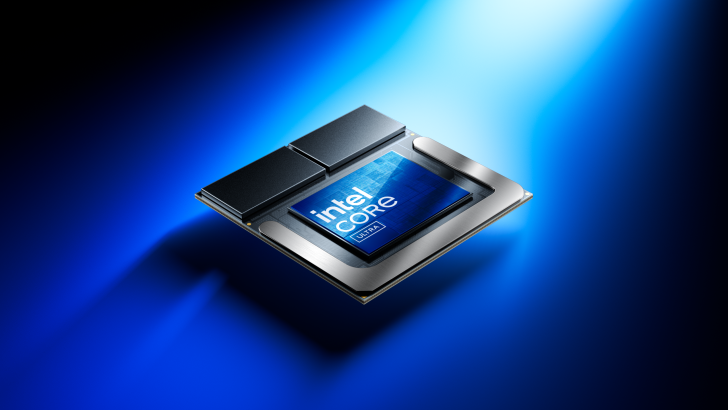
Intel has unleashed a powerhouse in its new Lunar Lake CPUs, heralded under the Core Ultra 200V lineup. Specifically engineered for thin and light platforms, these processors promise a historical leap in CPU, GPU, and AI performance, positioning themselves as formidable competitors against offerings from both Qualcomm and AMD.
Unveiling the Lunar Lake CPUs, Intel highlights their designation as Core Ultra Processors Series 2, or Core Ultra 200V. This innovation isn’t just about maintaining low power; it marks a paradigm shift in the definition of performance and efficiency for lightweight, ultra-portable devices. Intel’s approach diverges significantly from merely scaling down traditional chips—Lunar Lake represents a purpose-built architecture brimming with new technologies catering to gaming, creation, and AI computing segments.
One cornerstone of Lunar Lake’s efficiency is the myriad of energy innovations, including:
– On-package memory resulting in up to 40% reduction in PHY power
– Enhanced power management integration via Thread Director
– Advanced E-Core clusters
– A new power delivery architecture for superior control and power utilization
– An 8MB memory-side cache to efficiently support memory-intensive tasks
With cores finely tuned for optimal performance and energy conservation, Lunar Lake CPUs leverage Lion Cove P-Cores for performance and Skymont E-Cores for efficiency. These E-Cores, designated LP-E, inhabit a dedicated low-power island, doubling the core count from previous generations to four and featuring enhanced cache capacities.
Employing sophisticated power management techniques, including the Thread Director, Lunar Lake CPUs deliver substantial efficiency gains, outstripping Qualcomm’s X1E80100 and surpassing Intel’s own Meteor Lake Core Ultra 7 165H by delivering 7% better performance and up to 2.29 times greater performance per watt. Moreover, these processors operate at almost half the package power of their predecessors.
The efficiency extends beyond CPU cores, with the integrated Xe2 graphics architecture delivering up to twice the performance per watt in various gaming titles. For instance, in Cyberpunk 2077, Lunar Lake GPUs run 44% faster while consuming 22% less power, showcasing the significant strides made in gaming performance.
In terms of overall power consumption, Lunar Lake CPUs exhibit up to 50% lower package power compared to Meteor Lake, including the memory’s power usage. This monumental leap is evident even with systems equipped with 32GB of LPDDR5X-8533 memory.
Battery life, another critical metric, sees substantial improvements with Intel’s latest chips. Compared to systems with the AMD Ryzen AI 9 HX 370 and Qualcomm’s X1E-78-100, Lunar Lake CPUs deliver up to 14 hours of battery life in UL Procyon and up to 9.9 hours in Microsoft Teams, marking a 39% and 47% improvement, respectively. Further comparisons underscore the prowess of Lunar Lake, boasting up to 20.1 hours of battery life, reaffirming its efficiency edge.
Highlighting the prowess of Lion Cove P-Cores, which Intel touts as “The Fastest Cores. Period.”, Lunar Lake CPUs incorporate a low-latency fabric that dramatically reduces inter-core and DRAM latency. This reduction is crucial for handling dynamic workloads efficiently, prioritizing E-Cores for single-threaded tasks before engaging P-Cores for more demanding operations. Consequently, performance metrics show the Lion Cove P-Cores outperforming Qualcomm and AMD offerings by significant margins across various benchmarks.
In the realm of integrated graphics, the Xe2 architecture within Lunar Lake CPUs stands tall, leaving Qualcomm’s Adreno behind and offering substantial performance improvements over Intel’s previous Xe1 GPUs. Significantly enhanced ray tracing units and better GPU core utilization underscore the generational leap, with Xe2 GPUs delivering a 31% performance uplift in several gaming scenarios and a staggering 68% increase compared to Qualcomm’s Adreno GPUs. The comprehensive suite of games tested revealed Qualcomm’s GPU’s limitations, as it struggled to run numerous titles, starkly contrasting the robust performance of Intel’s Xe2.
These advancements underline Intel’s commitment to pushing the envelope in performance and efficiency, ensuring that the Lunar Lake CPUs not only meet but redefine standards for thin and light platforms. By offering cutting-edge technology and unmatched efficiency, Intel sets the stage for a new era of ultra-portable computing, delivering a seamless blend of power and practicality.Prepare to be amazed by the latest in gaming, media, and AI technology with AMD’s 800M series and Intel’s cutting-edge announcements!
AMD’s RDNA 3.5 architecture is taking center stage with outstanding gaming performance and efficiency. In a head-to-head comparison, Intel’s Xe2 GPU claims a 16% speed advantage. During various gaming tests, AMD’s Radeon 890M iGPU and Intel’s Arc 140V matched, and occasionally surpassed, the RDNA 3.5 chipset, despite the RDNA 3.5 boasting 12 Compute Units (CUs) versus Xe2’s 8 cores on Lunar Lake chips.
When it comes to software, Intel’s graphics division has stepped up its game. The Xe2 architecture will launch with support for over 120 games enhanced with XeSS, promising faster performance and better upscaling thanks to XMX hardware. Performance uplifts of up to 62% can be achieved with upscaling in Performance Mode, while those already enjoying high framerates (80-100 FPS) can opt for Quality Mode to further enhance visual fidelity.
Ray Tracing capabilities of the Xe2 architecture are another highlight, offering up to 30% faster Ray Tracing (RT) performance and consistently maintaining over 30 FPS in the 99th percentile. The RT engine operates seamlessly via the DirectX12 Ultimate API, setting a new standard for graphic fidelity and smooth gameplay.
Intel’s new Media Engine in the Core Ultra 200V SoCs supports powerful media decoding and encoding capabilities, including formats like AV1, H.265, and VVC. Engineered to handle up to 8k60 10-bit HDR, media playback is smoother and faster, rivaling other top-tier chips with superior transcode performance.
AI integration in Intel’s tech lineup is another game-changer. Intel’s Lunar Lake “Core Ultra 200V” CPUs boast the most AI Tera Operations Per Second (TOPS) for thin and light SoCs, hitting an impressive 120 TOPS, including contributions from the GPU, NPU, and CPU. These AI engines are fine-tuned for diverse tasks, ranging from gaming and creative processes to virtual assistants.
Comparative performance tests demonstrate Intel’s AI prowess. In Stable Diffusion, Intel’s Core Ultra 200V SoCs completed runs significantly faster than Qualcomm’s competitors. In comprehensive AI computing tests such as UL Procyon AI, Lunar Lake SoCs showed superior performance, with over double the FP16 performance compared to AMD’s offerings.
Intel’s AI ecosystem is continually evolving, supported by a robust software platform with 300+ features and compatibility with a wide array of applications. Collaborative efforts with software developers ensure that Lunar Lake’s capabilities will be fully utilized and continuously improved. Look for notable efficiency gains, such as:
– An 86% boost versus Qualcomm in Adobe Photoroom.
– A 145% improvement versus Qualcomm in Adobe Lightroom.
Intel is also enabling its hardware with OpenVINO frameworks, enhancing AI-driven features in various applications, from video editing in MAGIX to data protection services via AI collaboration with TREND.
The Lunar Lake “Core Ultra 200V” lineup boasts nine unique chips, each designed with different configurations, speeds, and capacities, ensuring a perfect fit for every need. The flagship Core Ultra 9 288V features an impressive setup with a blend of P-Cores, LP-E cores, 32 GB of LPDDR5X memory, and a robust Arc 140V iGPU. Lower-tier models aren’t left behind, offering competitive specs and lower power consumption.
As Intel gears up to launch these CPUs globally on September 24th, pre-orders are now open with platforms from top manufacturers ensuring you can choose from a wide range of innovative devices. Additionally, Intel promises future updates—like the Copilot+ PC features coming in November—cementing its commitment to continuous improvement and user satisfaction.
The Intel EVO platform champions exceptional performance with long battery life, an immersive gaming experience, and innovative connectivity options like Wi-Fi 7 and Thunderbolt 4. It also boasts robust security and sustainable design, achieving EPEAT Gold certification.
With the forward-thinking technology from AMD and Intel now rolling out, there has never been a better time to enhance your tech arsenal! Get ready for incredible performance boosts, smarter AI integration, and an overall top-notch computing experience.