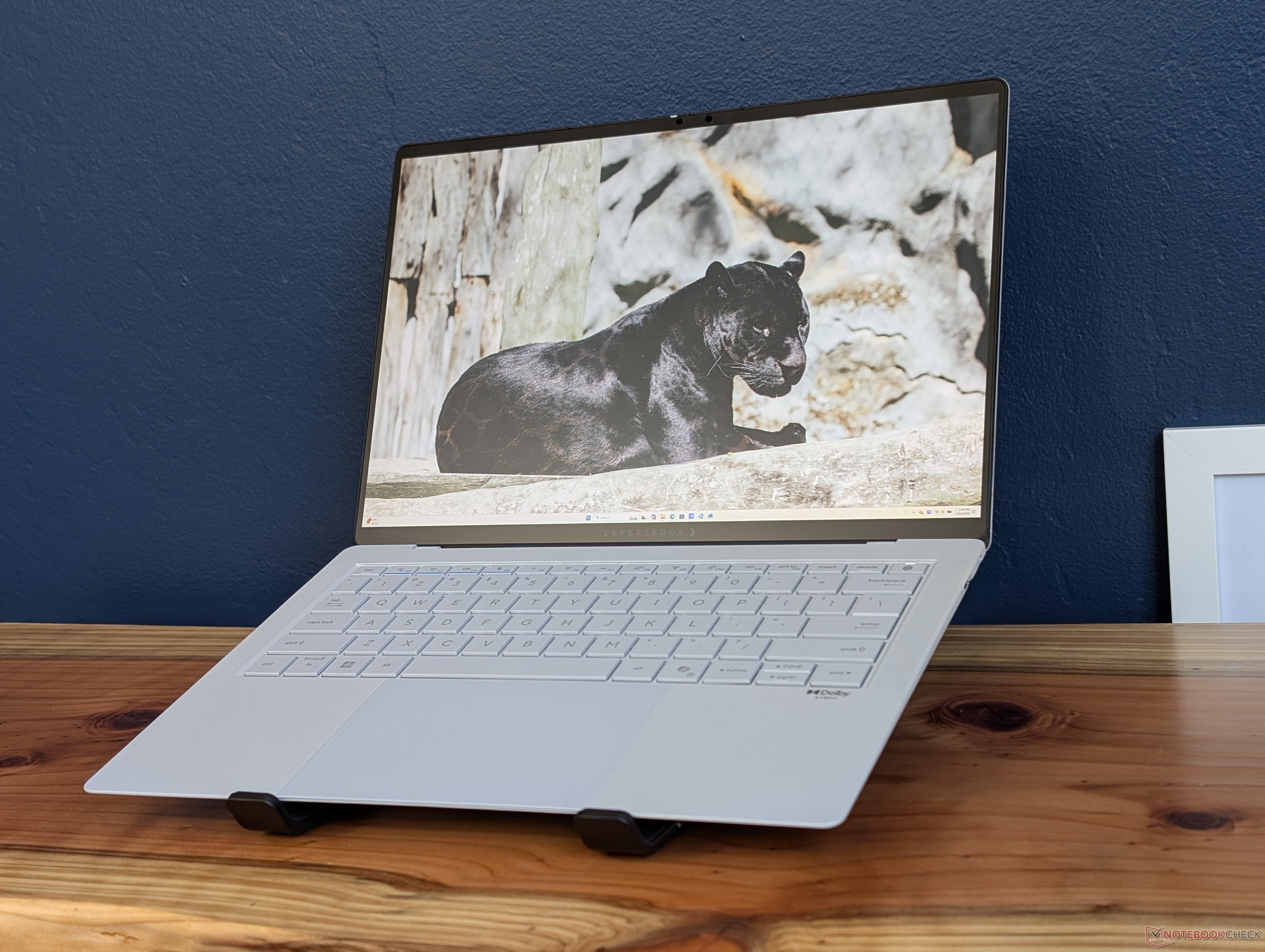
Intel’s next wave of Panther Lake processors is starting to step into the spotlight after its CES 2026 unveiling, and early performance numbers are already turning heads. Even though these CPUs aren’t expected to arrive in stores until Q2 2026, the first real-world testing is giving a clearer picture of what to expect—especially from Intel’s latest integrated graphics.
One of the most interesting early platforms is the Asus ExpertBook Ultra, configured with the Core Ultra X7 358H. On paper, it’s a thin, efficiency-focused laptop operating within a modest 60W to 70W total power envelope. In practice, its integrated Intel Arc B390 GPU is proving to be far more capable than many would assume from an iGPU—so much so that it’s beginning to blur the line between “integrated graphics” and “entry-level gaming laptop.”
In synthetic performance testing, the ExpertBook Ultra’s graphics results land ahead of several laptops built around the NVIDIA GeForce RTX 3050, including popular thin-and-light style gaming models. The gap isn’t minor either—these early benchmarks suggest a performance advantage large enough that the Arc B390 can sometimes inch into the territory typically associated with RTX 4050-class systems, at least in certain test workloads.
Of course, benchmark charts aren’t the same as actual gameplay. When moving from synthetic tests to real games, the picture becomes more nuanced—but still impressive for an integrated solution. In many modern titles, the ExpertBook Ultra continues to outperform RTX 3050 laptops, though by smaller margins than the synthetic results suggest. Some older games can still favor NVIDIA’s older dedicated GPU. Titles like GTA V or DOTA 2 Reborn may run faster on the RTX 3050 in certain scenarios, while newer and more demanding games such as Baldur’s Gate 3 and Cyberpunk 2077 tend to run better on Intel’s Arc B390 even before turning on AI upscaling or frame generation features.
That said, software support remains part of the story. Intel’s XeSS ecosystem and frame generation support still trails what’s commonly available on competing solutions. For example, Arc Raiders currently offers frame generation support for other GPU vendors rather than Intel, and enabling XeSS in Forza Horizon 5 may lead to performance issues based on early hands-on experience. For gamers who rely heavily on upscaling and frame generation to hit higher frame rates, these compatibility and optimization gaps could matter just as much as raw hardware performance.
Even with those caveats, the bigger takeaway is hard to ignore: the Asus ExpertBook Ultra delivers strong graphics performance without needing a dedicated GPU at all. That translates to meaningful real-world benefits—lighter designs, improved efficiency, and less reliance on power-hungry discrete graphics hardware—while still being competitive with the budget end of dedicated gaming laptops.
As Panther Lake approaches its expected Q2 2026 window, more systems and deeper comparisons should clarify whether this level of integrated graphics performance becomes the norm. For now, these early results suggest Intel’s next-generation iGPU performance is no longer just “good enough for casual gaming”—it’s starting to challenge entry-level gaming laptop graphics in a way that could reshape expectations for thin-and-light laptops.