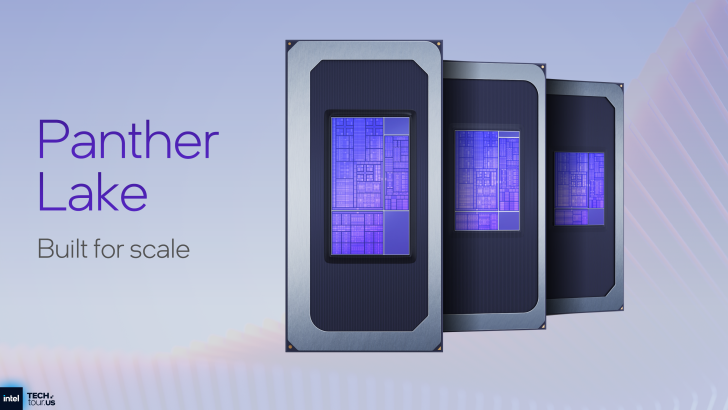
Intel is betting that its upcoming Panther Lake platform will push the “AI PC” concept into the mainstream much faster than many expect. According to Intel’s outlook, AI-focused computers could account for roughly half of new PC purchases in the near future, turning what’s currently seen as a premium category into an everyday standard.
A big reason for Intel’s confidence is the AI performance jump coming with Panther Lake. These processors are expected to integrate fifth-generation NPUs (neural processing units) capable of delivering up to 50 TOPS of AI compute. That matters because the NPU is designed to handle AI tasks efficiently on the device itself, without constantly leaning on the cloud or the main CPU and GPU. The promise is straightforward: stronger on-device AI performance, better responsiveness for AI features, and improved power efficiency that can translate into longer battery life.
Even with that hardware momentum, Intel acknowledges a key reality about today’s market: most people aren’t buying an “AI PC” specifically to run AI features. Right now, the reasons are more practical—overall performance improvements and battery life benefits, particularly when AI-capable silicon helps offload workloads in a way that saves power. In other words, the label may be “AI PC,” but the buying decision is still shaped by the same things that have always sold laptops and desktops.
So why push the AI PC message so hard? Intel’s view is that the next step is making AI capabilities feel necessary rather than optional. That means moving beyond novelty features and building software experiences that are clearly useful in daily life. PC makers are already experimenting with AI-driven services that aim to tie multiple devices together and provide personalized assistance, hinting at a future where your computer doesn’t just run apps—it actively helps manage your work, files, and routines across devices.
For a while, one of the biggest roadblocks to more ambitious on-device AI has been limited local compute. Many compelling AI experiences have depended on cloud processing, which introduces latency, privacy concerns, and recurring costs. Intel believes Panther Lake’s stronger NPU performance helps remove that bottleneck, making it more realistic for AI workloads to run locally—faster, more privately, and at lower ongoing cost.
Intel’s goal is to quickly normalize the category: AI PCs shouldn’t be viewed as expensive, high-end machines reserved for enthusiasts. The company wants AI-capable hardware to become the default, while encouraging a wider range of AI applications built to take advantage of NPUs. The endgame is a market where people choose an AI PC because they genuinely want the AI experiences it enables—not just because it happens to be the newest model with better specs.
Of course, consumer skepticism is still there. Many users currently see AI features on PCs as more hype than help, with limited real-world value. But as “agentic AI” and more capable on-device processing continue to evolve, the industry expects AI to become more integrated into everyday computing. Intel is positioning Panther Lake as a turning point in that shift—one that could make AI features feel less like a gimmick and more like a natural part of what a modern PC does.