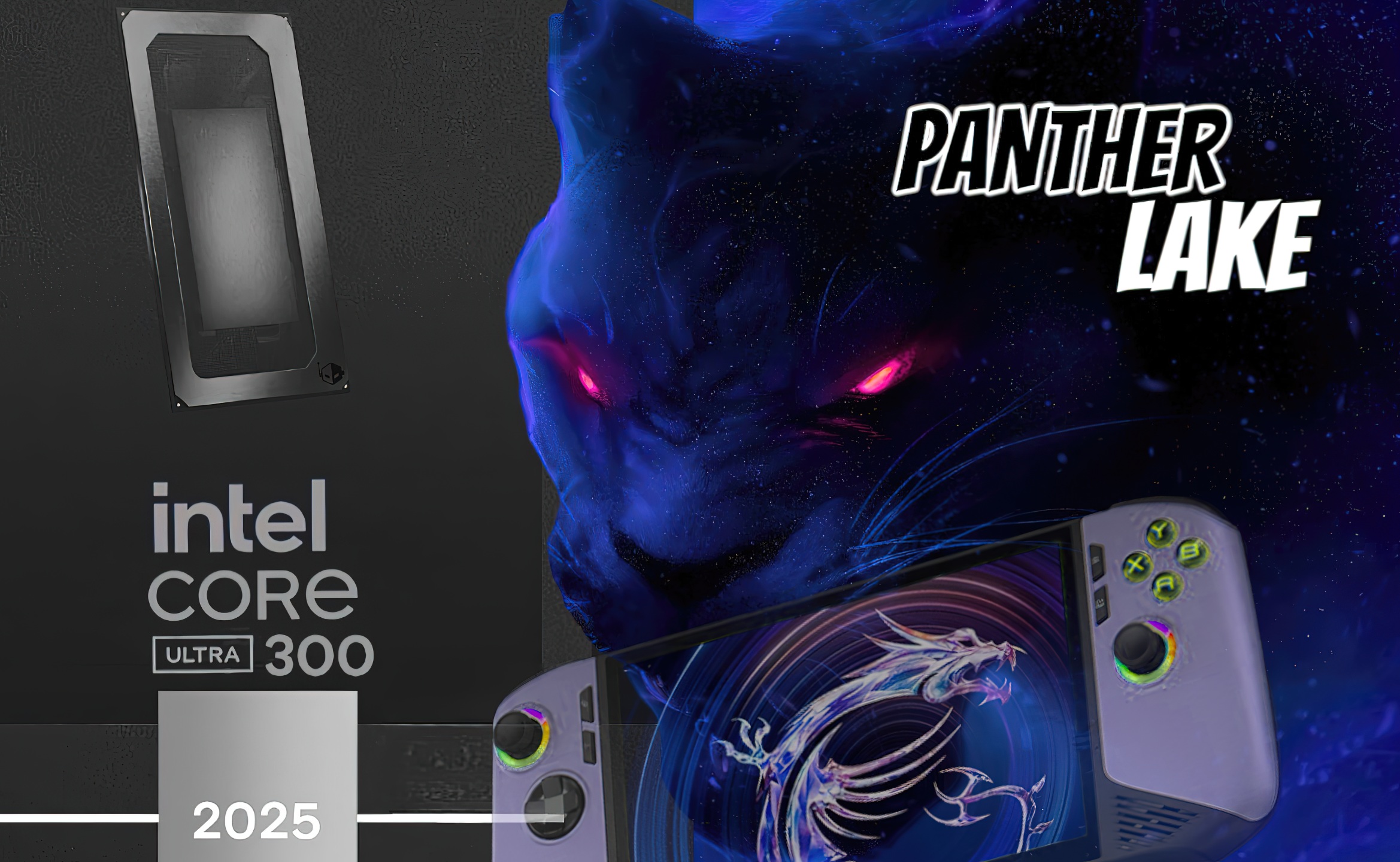
New rumors suggest Intel’s Panther Lake chips made specifically for gaming handhelds may take longer to arrive than previously expected. If the latest report turns out to be accurate, people waiting for the next wave of Intel-powered handheld gaming PCs could be looking at a Q2 2026 launch window instead of something sooner.
Not too long ago, Intel executive Robert Hallock indicated that dedicated Panther Lake SoCs for handheld gaming devices were still planned, giving many fans hope that the new platform would land on schedule. However, well-known leaker Golden Pig Upgrade has been tracking the timeline closely and now claims the rollout has slipped. Earlier chatter pointed to a late Q1 2026 debut, or possibly the very start of Q2. The newest update suggests the launch is now pushed back further into Q2 2026—though still expected to happen by the end of that quarter, meaning it would likely arrive before June.
Alongside the timing talk, the leak also points to two different Panther Lake handheld chip options in development. The higher-end model is said to feature integrated graphics with up to 12 Xe3 cores, while a second version would use a 10 Xe3-core iGPU. On the CPU side, prior speculation mentions a 16-core layout, described as a 4+8+4 configuration, which lines up with configurations seen in Intel’s broader Panther Lake lineup. None of these specifications have been officially confirmed by Intel, so they should be treated as educated guesswork rather than final details.
Even so, the rumored configurations sound plausible if Intel is building custom handheld-focused SoCs derived from existing Panther Lake parts. The idea is that Intel could take proven designs from its upcoming mobile chips and tailor them for the unique needs of handheld systems—tight power limits, sustained gaming loads, and small cooling solutions—while still delivering a noticeable performance jump.
If Panther Lake does land in handhelds in 2026, it could shake up a market where AMD’s latest Zen 5-based handheld chips have been setting the pace. Intel’s newer Arc-based integrated graphics have already shown meaningful improvements, and early signs point to Panther Lake iGPUs delivering strong performance in modern games without sacrificing efficiency—an especially important factor for handheld battery life and thermals.
One of the biggest question marks is how many handheld manufacturers will actually adopt Panther Lake once it’s available. Some brands have historically been quick to experiment with new Intel silicon, and MSI in particular has been aggressive about bringing the latest Intel chips to its Claw handheld lineup. If Intel can deliver stable drivers, strong performance-per-watt, and competitive pricing, Panther Lake could become a serious option for the next generation of portable gaming PCs.
For now, the key takeaway is simple: Panther Lake handheld chips may be running behind schedule, and the most likely window being discussed is Q2 2026. Until Intel shares official dates and final specs, everything beyond that remains rumor—but it’s a rumor that handheld gaming fans will be watching closely.


