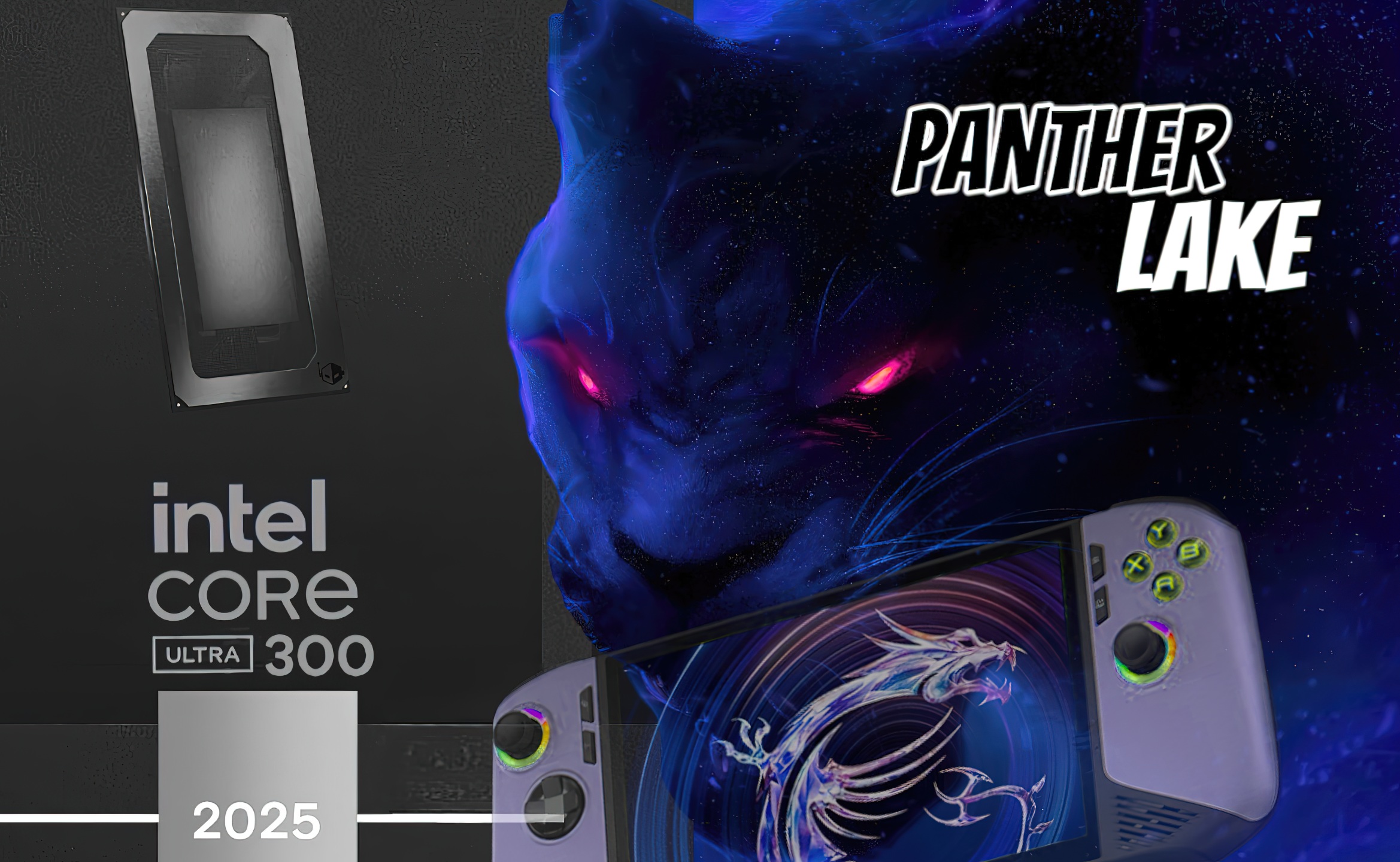
Exciting news is buzzing in the tech world as Intel confirms its ambitious plans to revolutionize the gaming handheld market with their upcoming CPUs, Arrow Lake-H and Panther Lake. Intel’s Vice President and General Manager, Robert Hallock, recently revealed in an interview that Intel is not done innovating after the launch of Lunar Lake. Their strategy is not only focused on expanding its lineup of mobile chips for laptops but also dedicating serious efforts to gaming handhelds.
Intel’s commitment to the gaming handheld segment is evident as they bolster their support network for manufacturers. Presently, the market features Meteor Lake and Lunar Lake CPU series within the MSI Claw series gaming handhelds. However, Intel is gearing up to introduce the mightier Arrow Lake-H processors, which promise enhanced gaming capabilities with discrete GPUs—proving to be a significant upgrade over the Lunar Lake chips.
Looking ahead, Intel’s Panther Lake is set to make a significant impact by 2025. The company has already started testing these groundbreaking chips, aiming to equip gaming handhelds with faster, more efficient processors. This move marks a direct successor to Lunar Lake’s capabilities, but with a unique twist—Panther Lake allows manufacturers the flexibility to customize memory, offering unprecedented control over speed and configuration.
“Arrow Lake H boasts comparable graphics performance to Lunar Lake,” Hallock stated, emphasizing its seamless integration into the handheld form factor while scaling up to 30 watts. Additionally, Intel plans to provide game developers with developmental kits, aiding in the smooth transition to these next-gen processors.
The potential of Panther Lake doesn’t end there. By eliminating the built-in memory tile, Intel empowers handheld vendors to enhance memory capacity, all while preserving power with alternative tech solutions. This innovation lays the groundwork for handheld devices tailored to specific performance needs.
As Intel continues its push into the handheld market, it poses a formidable challenge to AMD, which has long dominated the APU market with customized chips for handheld devices. With Intel’s strategic collaborations and technological advancements, the future of gaming handhelds is poised for significant evolution. Enthusiasts and developers alike can anticipate a new wave of powerful, personalized gaming experiences.