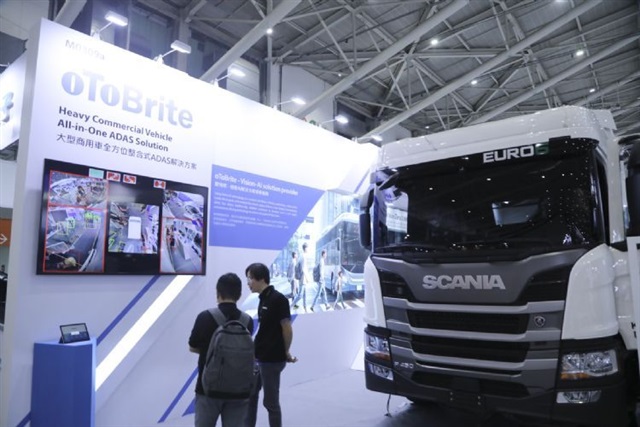
As autonomous driving, edge computing, and in-vehicle intelligence accelerate, oToBrite Electronics is making a clear strategic move: upgrading from a company known primarily for automotive sensing hardware into a provider of full-domain visual AI solutions. Instead of focusing only on the camera module itself, oToBrite is expanding its value across the entire visual pipeline—capturing, processing, and interpreting road and cabin environments to help vehicles “see” more accurately and respond faster.
This shift reflects where the automotive market is headed. Carmakers and Tier 1 suppliers increasingly want integrated vision systems that pair automotive-grade cameras with on-device AI, efficient computing, and software-ready outputs. The goal is dependable perception at the edge—right inside the vehicle—so critical decisions can be made with low latency, reduced reliance on cloud connectivity, and higher overall safety.
At the center of oToBrite’s expansion is a product lineup built around automotive-grade camera solutions, designed to support modern ADAS and autonomous driving requirements. Automotive-grade camera modules typically demand strict reliability, durability, and performance under harsh conditions such as heat, vibration, low light, glare, rain, and rapid environmental changes. By strengthening its camera foundation while moving up the stack into visual AI, oToBrite is positioning itself to serve broader vehicle applications—from exterior perception to in-cabin monitoring—through a more complete, solution-driven approach.
What “full-domain visual AI” means in practice is coverage across multiple sensing scenarios and computing needs. Rather than offering a single-purpose component, the approach supports a wide range of use cases that can include forward-facing perception, surround-view awareness, object detection, lane and traffic understanding, and other real-time vision tasks that vehicles increasingly rely on. As edge computing becomes more capable, this also opens the door to doing more AI inference directly on the vehicle hardware, improving response times and helping systems operate more consistently even when network conditions are limited.
This evolution also signals an important competitive advantage in a crowded automotive technology landscape. Suppliers that can deliver both automotive-grade imaging hardware and scalable AI capabilities are better aligned with how modern vehicle platforms are designed—modular, upgradeable, and software-defined. For manufacturers, that can translate into faster integration cycles, clearer validation paths, and more flexibility to deploy vision features across different vehicle trims and markets.
In short, oToBrite Electronics is moving beyond being “just a camera hardware provider” and toward becoming a full-solution partner for next-generation automotive vision. As autonomous driving and edge AI continue to mature, the companies that can unify reliable sensing with practical, production-ready visual intelligence are the ones most likely to win long-term design adoption in the global automotive supply chain.