Opera Mini is making significant strides to provide free internet access for users in developing and emerging countries, where financial constraints often limit access to online resources. With hundreds of millions of users globally, Opera Mini is set to boost its numbers further by offering free internet, spotlighting a largely neglected demographic.
In impoverished regions, owning both a smartphone and a mobile data plan can be a luxury. Opera, however, has been consistently catering to this market for nearly two decades. The staggering figure of around 125 million active monthly users from developing nations represents individuals who often can’t afford even a megabyte of data.
Distinct versions of Opera Mini cater to different needs: the feature phone variant prioritizes data conservation compared to the Android version, which benefits from more potent hardware and data volume. Opera Mini employs advanced compression technology, reducing data usage to as little as 10% on feature phones and 60% on smartphones, ensuring affordable internet access remains a possibility.
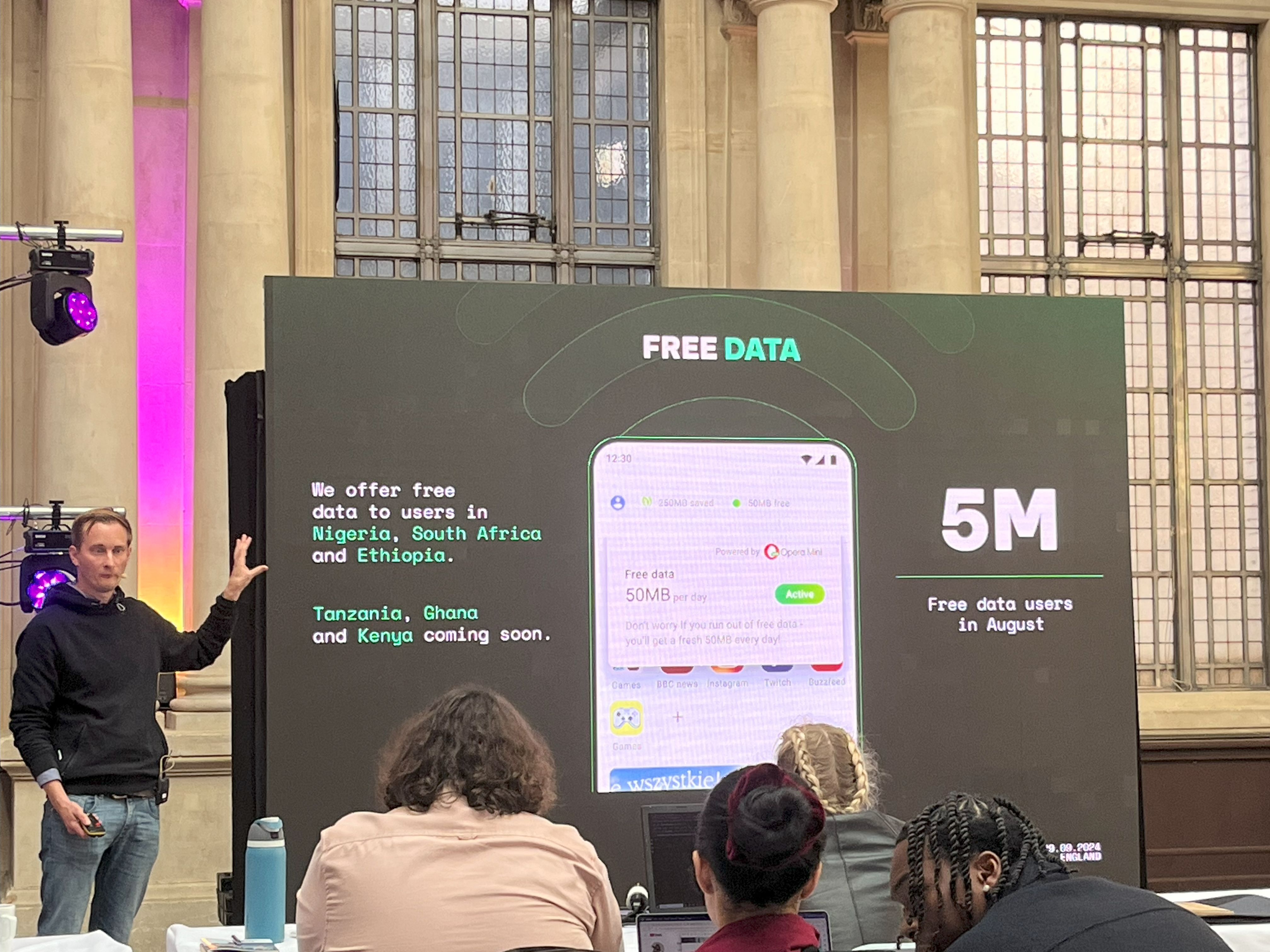
Notably, Opera Mini generates revenue through advertising, particularly via its Speed Dial entries. These shortcuts are crucial, especially for users with feature phones, where typing URLs and searching for content can be cumbersome. The revenue from these Speed Dials is so substantial that Opera can afford to offer free data. In countries like Nigeria, South Africa, and Ethiopia, ongoing campaigns grant users up to 50 megabytes of free data daily, significantly driving user growth. For instance, in Nigeria, launching the free data campaign in 2019 spurred a 30% rise in user numbers.
The success of these campaigns has already drawn around 5 million new users as of August 2024, and expansion plans include rolling out the campaign to Tanzania, Ghana, and Kenya. Nevertheless, users must first discover and install Opera Mini to benefit from these offers.
Opera Mini does have limitations; video playback poses challenges on feature phones, although newer 4G feature phones and the Android version manage better. Major platforms like YouTube being part of Speed Dial entries helps offset some of these limitations.
Interestingly, while companies like Facebook have reduced their support for feature phones, Opera continues to serve this essential market. Beyond Africa, Opera maintains a significant presence in Asian countries such as Bangladesh, India, Indonesia, and Pakistan. In these regions, Opera Mini has a strong user base among older generations who haven’t transitioned to smartphones. Although only 10% of Opera Mini’s installations are on feature phones, the remainder are on smartphones, creating a competitive market with other compressed-data browsers like the UC browser.
In Africa, the user base splits almost evenly between feature phones and smartphones, underlining why Opera remains focused on the continent. Regular updates and enhancements keep Opera Mini relevant, like adding football scores to the start page in 2022, aligning with user interests.
Opera’s commitment to enhancing internet accessibility is clear, and their persistent innovation signifies that even amidst industrialized nations’ indifference, Opera Mini is far from forgotten. This sustained effort ensures that hundreds of millions of users in developing regions can stay connected and informed in the digital age.