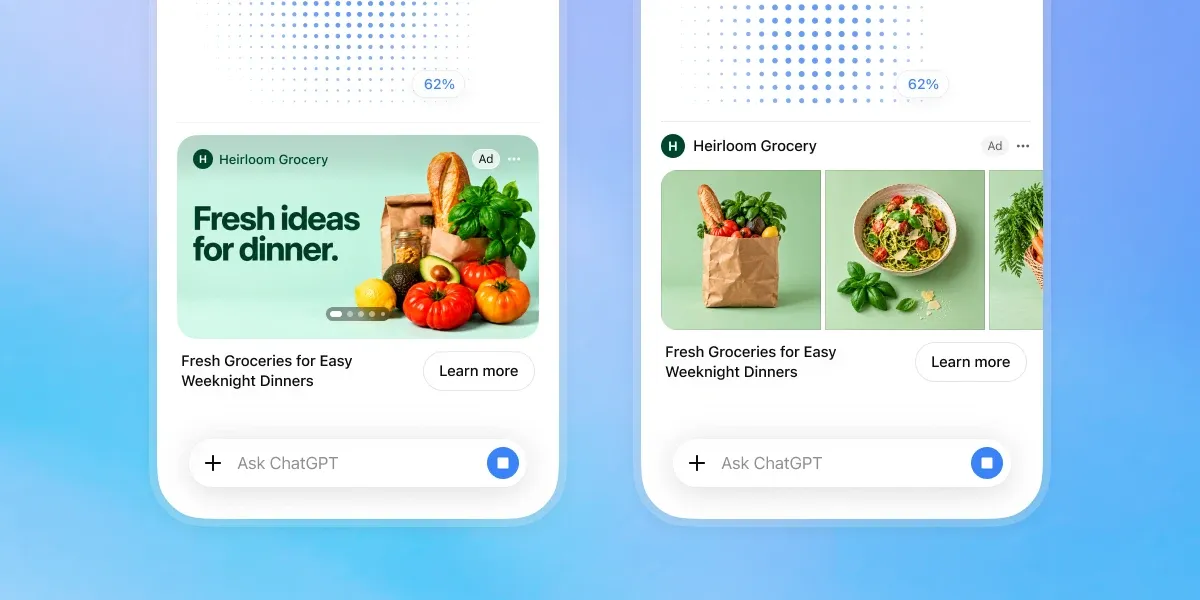
ChatGPT to Introduce Visual Ads Alongside AI-Generated Images in the U.S.
OpenAI is preparing to bring more advertising into ChatGPT, with a new focus on visual display ads that will appear alongside images created through the chatbot. The rollout is expected to begin later this month in the United States, starting with a limited group of advertisers.
According to the company, these new ChatGPT ads will be clearly labeled so users can distinguish them from regular content. OpenAI also says the ads will not influence ChatGPT’s responses, meaning the chatbot’s answers should remain separate from advertising placements.
The move marks another step in OpenAI’s effort to build a stronger ad-supported model for users on free and lower-cost subscription plans. The company introduced advertising earlier this year and later expanded it into India in August. Now, it is moving toward a more visual format designed to help brands promote products and services in a more engaging way.
Visual ads could be especially appealing to advertisers because image generation is one of ChatGPT’s most popular features. By placing ads near AI-generated images, brands may have a better opportunity to reach users when they are already engaged with visual content. If the feature eventually expands worldwide, advertisers could gain access to ChatGPT’s massive audience, which OpenAI says includes around 1.2 billion weekly users.
Still, the addition of more ads may create mixed reactions among users. While advertising can help keep free and affordable access available, it may also make the ChatGPT experience feel more crowded. For some users, this could become another reason to upgrade to a paid plan if ad-free access is available.
OpenAI is also expanding the tools advertisers can use to measure the performance of their campaigns. The company is working with a wider group of measurement and attribution partners, including AppsFlyer, Triple Whale, Adjust, DV Rockerbox, Northbeam, Branch, Singular, Kochava, Airbridge, and Tenjin. It is also adding support from advanced measurement partners such as Fospha, Measured, and INCRMNTAL.
In addition, OpenAI is working with Haus, Measured, and WorkMagic to help advertisers test geo-based ad experiments. These tools could allow brands to better understand how ads perform in different locations and whether campaigns are driving real-world results.
Brand safety and suitability are also becoming a major focus. OpenAI says it is developing evaluation pilots with DoubleVerify and Integral Ad Science to help advertisers better understand the environment where their ads may appear. This could be important for brands that want more control over where and how their campaigns are shown inside AI-powered platforms.
The broader goal is clear: OpenAI wants to make ChatGPT a more attractive platform for advertisers while continuing to support free and lower-cost access for users. As competition grows in the AI assistant market, advertising could become an increasingly important part of how AI platforms generate revenue.
For now, the new visual ChatGPT ads will be limited to the U.S. and a small advertiser test group. But if the rollout proves successful, users in more regions could eventually see ads appear next to AI-generated images as OpenAI continues to expand its advertising business.