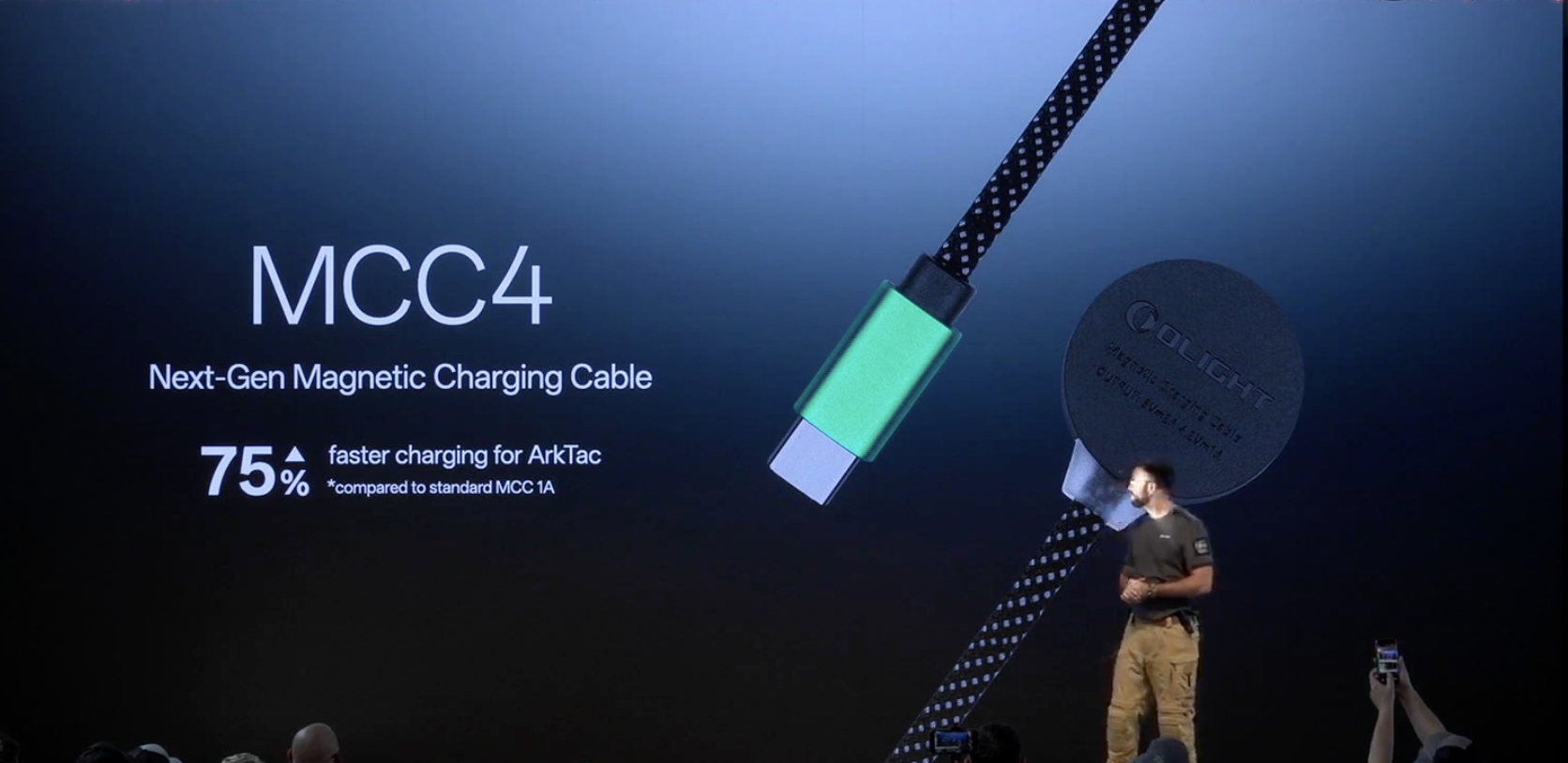
Olight has introduced a new version of its magnetic charging cable, bringing a long-awaited USB-C upgrade to its proprietary MCC charging system. The new cable, called the Olight MCC4, was revealed during the company’s O Fan Day event alongside new flashlight models, including the ArkTac series.
The biggest change with the MCC4 is the move from USB-A to USB-C. Until now, Olight’s magnetic charging cables relied on USB-A, a connector that is becoming less common on modern wall chargers, laptop ports, and power banks. As USB-C continues to become the standard for everyday electronics, the updated MCC4 cable should make charging Olight flashlights more convenient for many users.
Olight’s MCC system is known for its simple magnetic design. Instead of plugging a cable directly into the flashlight, users attach the magnetic charging end to the tailcap or charging point. This makes the process quick, easy, and less prone to wear compared with repeatedly inserting and removing a traditional connector.
According to Olight, the MCC4 does more than simply swap USB-A for USB-C. The company says the cable has an improved electrical design and can charge compatible flashlights up to 75 percent faster than the older 1A MCC cable. That could be a meaningful improvement for users who rely on Olight flashlights for work, outdoor activities, emergency kits, or everyday carry.
The launch also shows that Olight is not moving away from its magnetic charging ecosystem, even though many newer flashlights now support direct USB-C charging. While direct USB-C ports are convenient, Olight appears to see continued value in its magnetic connector, especially for users who prefer a sealed design and quick attachment.
Some questions remain, particularly around compatibility. Previous Olight MCC cables have often worked across multiple flashlight models, although the company has not always encouraged mixing different versions. The introduction of the MCC4 alongside the ArkTac lineup suggests it will support newer models, but users may need to wait for full compatibility details before using it with older lights.
Another unanswered question is whether the MCC4 cable will be sold separately. For now, it has been introduced as part of Olight’s latest product announcements, but separate availability would be important for existing customers who want to upgrade from older USB-A magnetic cables.
The new cable also highlights the need for updated Olight charging accessories. The company previously offered multi-charging solutions, but some older products have been discontinued or still rely on previous MCC connector designs. As more users transition to USB-C power adapters and power banks, demand for modern Olight charging docks and accessories may grow.
The Olight MCC4 USB-C magnetic charging cable is expected to arrive before the end of the year. For flashlight enthusiasts and everyday users already invested in the Olight ecosystem, it could be a small but useful upgrade that makes charging faster, easier, and more compatible with today’s USB-C-focused devices.