NVIDIA and TSMC Take Major Step Toward U.S.-Made AI Chips With GB300 Production in Arizona
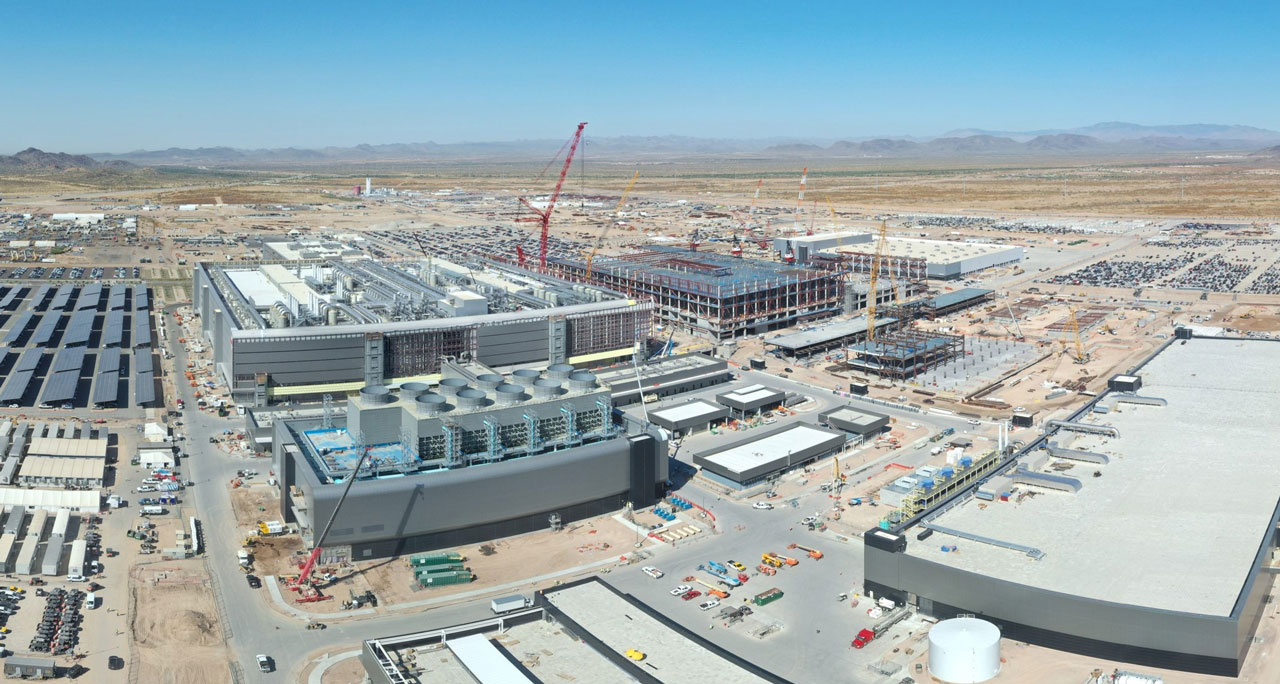
NVIDIA and TSMC have reached an important milestone in the push to bring advanced chip manufacturing to the United States. TSMC has reportedly produced some of the first NVIDIA GB300 AI GPUs at its Fab 21 facility in Arizona, marking a major step forward for domestic semiconductor production.
The chips were fabricated using TSMC’s 4nm process technology, one of the key manufacturing nodes used for high-performance AI hardware. For NVIDIA, the GB300 is part of its powerful AI accelerator lineup designed to support large-scale artificial intelligence workloads, data centers, and next-generation computing infrastructure.
This achievement is especially significant as the U.S. continues to prioritize local chip production to reduce reliance on overseas manufacturing. With demand for AI processors surging worldwide, bringing more of the supply chain to American soil has become a major strategic goal for both technology companies and policymakers.
However, the process is not fully domestic yet. While the NVIDIA GB300 GPUs can now be fabricated in Arizona, they still need to be shipped to Taiwan for CoWoS advanced packaging. CoWoS, short for Chip-on-Wafer-on-Substrate, is a critical packaging technology used for high-performance AI chips. It allows advanced processors and high-bandwidth memory to be integrated efficiently, which is essential for modern AI accelerators.
That means TSMC’s next major challenge is localizing advanced packaging in the United States. Once CoWoS and related packaging capabilities are available in Arizona, the company will be much closer to offering complete end-to-end AI chip manufacturing within the U.S.
The broader ecosystem is already taking shape. Foxconn has established a GB300 AI server manufacturing base in Houston, Texas, while Wistron has set up server assembly operations in Dallas. These developments show that the U.S. is not only aiming to manufacture advanced chips but also to support the full AI server production chain domestically.
TSMC has committed massive investment to its U.S. expansion plans, with total spending expected to reach around $265 billion. This includes additional wafer fabrication capacity and two advanced packaging facilities in Arizona. Together, these projects are expected to create a complete semiconductor manufacturing cluster capable of supporting some of the world’s most advanced AI hardware.
Once TSMC’s CoWoS and SoIC packaging plants are operational in the U.S., the company could potentially handle the full production workflow for NVIDIA’s Blackwell and future Rubin AI chips without relying on overseas packaging facilities. This would be a major breakthrough for U.S. semiconductor independence and AI infrastructure security.
TSMC is also planning to bring even more advanced manufacturing technologies to the United States in the coming years. Its roadmap includes local production of N2, or 2nm-class chips, as well as A16, a 1.6nm-class process, by 2028. These technologies are expected to play a major role in the next generation of AI processors, high-performance computing chips, and energy-efficient semiconductor designs.
The production of NVIDIA GB300 GPUs in Arizona is more than just a manufacturing update. It represents a shift in the global chip supply chain at a time when AI demand, geopolitical uncertainty, and national technology strategies are reshaping the semiconductor industry.
While advanced packaging remains the missing piece, the progress made by NVIDIA and TSMC shows that U.S.-based AI chip manufacturing is moving from long-term ambition to practical reality. If TSMC can successfully bring packaging and future process nodes online in Arizona, the United States could become a far more important hub for the production of advanced AI chips and servers.