Nvidia has etched its name as a central figure in the annual SIGGRAPH conference, which has become a hub for discussions and advancements in computer graphics. The 2024 conference saw Nvidia’s influence everywhere—the company not only sponsored the event but was also integral in presenting scientific papers and educational sessions that meld artificial intelligence (AI) with generative simulation.
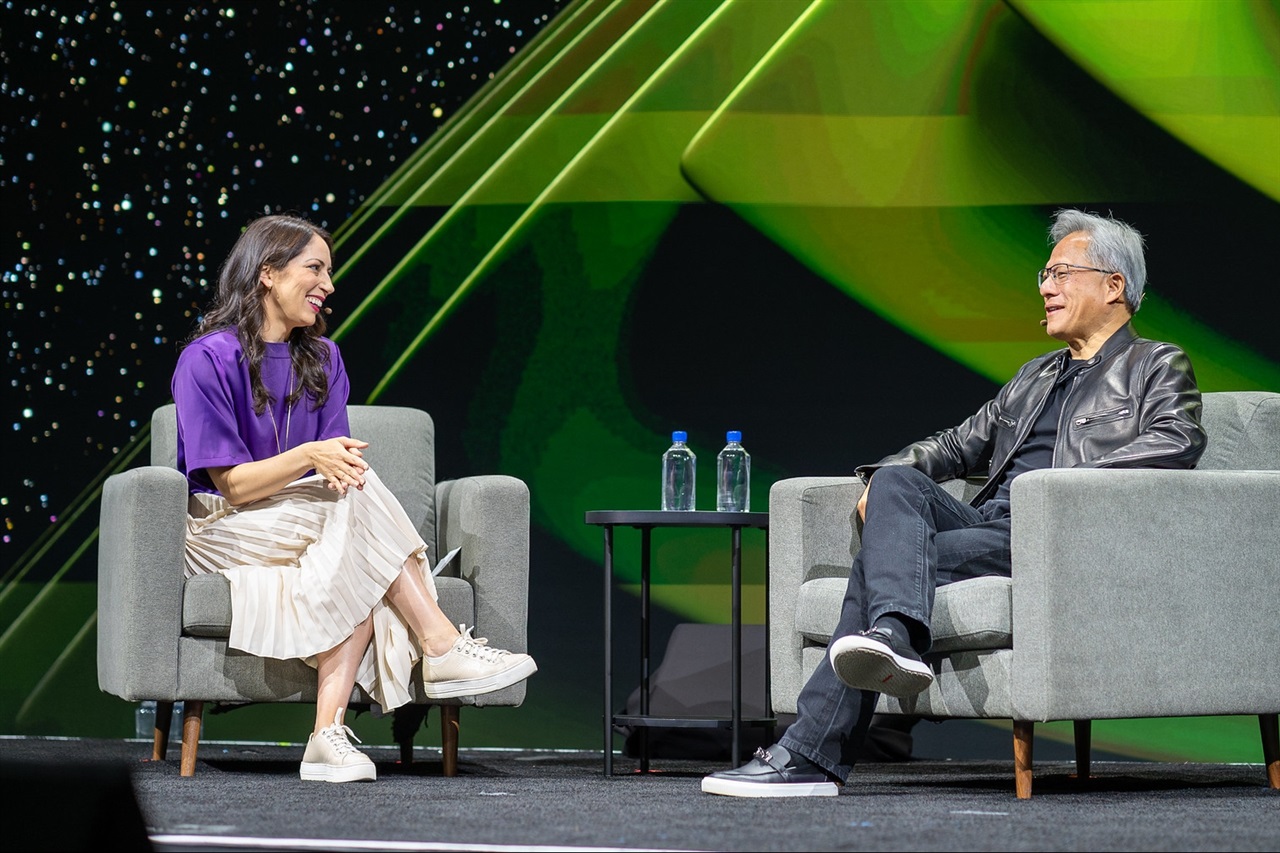
Nvidia’s CEO, Jensen Huang, took the stage for a fireside chat and an open Q&A session where he shed light on recent technological breakthroughs. Huang discussed how the company’s innovations in chip design enhance inference speed and how the employment of synthetic data and learning techniques continues to revolutionize the industry even when traditional data sources plateau.
Nvidia’s strategies appear to be aligning with the capital expenditures of tech giants like Meta, Google, Microsoft, and Amazon, positioning the company as a dominant force in the market. With a nod to the sector’s dynamism, Huang at SIGGRAPH outlined Nvidia’s vision for the future, captured in three waves of AI—the acceleration of computing, the democratization of AI creation, and the advent of “physical AI.” This roadmap characterized the potential for organizations to develop and benefit from AI across various sectors.
Huang’s reference to “physical AI” captured imaginations as it promised a future where computers not only create AI but also simulate and run it in various forms including humanoid robots, underpinning an open approach for robotics developers.
To enable better interoperability across 3D tools, Nvidia has invested in the open-source initiative dubbed OpenUSD, developed in partnership with heavyweights like Pixar, Apple, and Adobe. Universal Scene Description (USD) has been likened to Photoshop’s PSD files for the 3D world, allowing complex data management and non-linear production workflows that promise to streamline creative processes. Huang emphasized the transformative ability of USD to incorporate a wide range of formats, nurturing an increasingly interconnected ecosystem.
Further advancing USD, Nvidia revealed a suite of NIM microservices that essentially teach AI to engage with USD, further enabling the generation and management of 3D scenes and objects. Real-world commitment to these tools is evident in their adoption by corporations like Foxconn and WPP for applications such as digital twin development and content creation pipelines.
Nvidia’s partnerships extend to addressing the shortage of assets for enterprise 3D adoption. Aligning with Shutterstock and Getty Images, Nvidia aims to pave the way for legal and efficient text-to-3D model creation, thereby accelerating the penetration of generative AI across varied creative industries.
The company’s strategic ventures into both hardware and software realms, along with its focus on interoperability and partnerships, underscore a comprehensive ecosystem ambition that stands not only to define Nvidia’s market position but also to shape the future landscape of AI and computing.
About the Author:
Kari Wu, a seasoned figure in the tech industry, currently serves as a Senior Technical Product Manager at Unity Technologies. Her background spans entrepreneurship in augmented and virtual reality, and an extensive multicultural experience that informs her global vision within the tech landscape. Wu holds an MBA and MS in Media Ventures from Boston University and has founded startups like FilmIt, which empowers users to create professional videos without formal training.