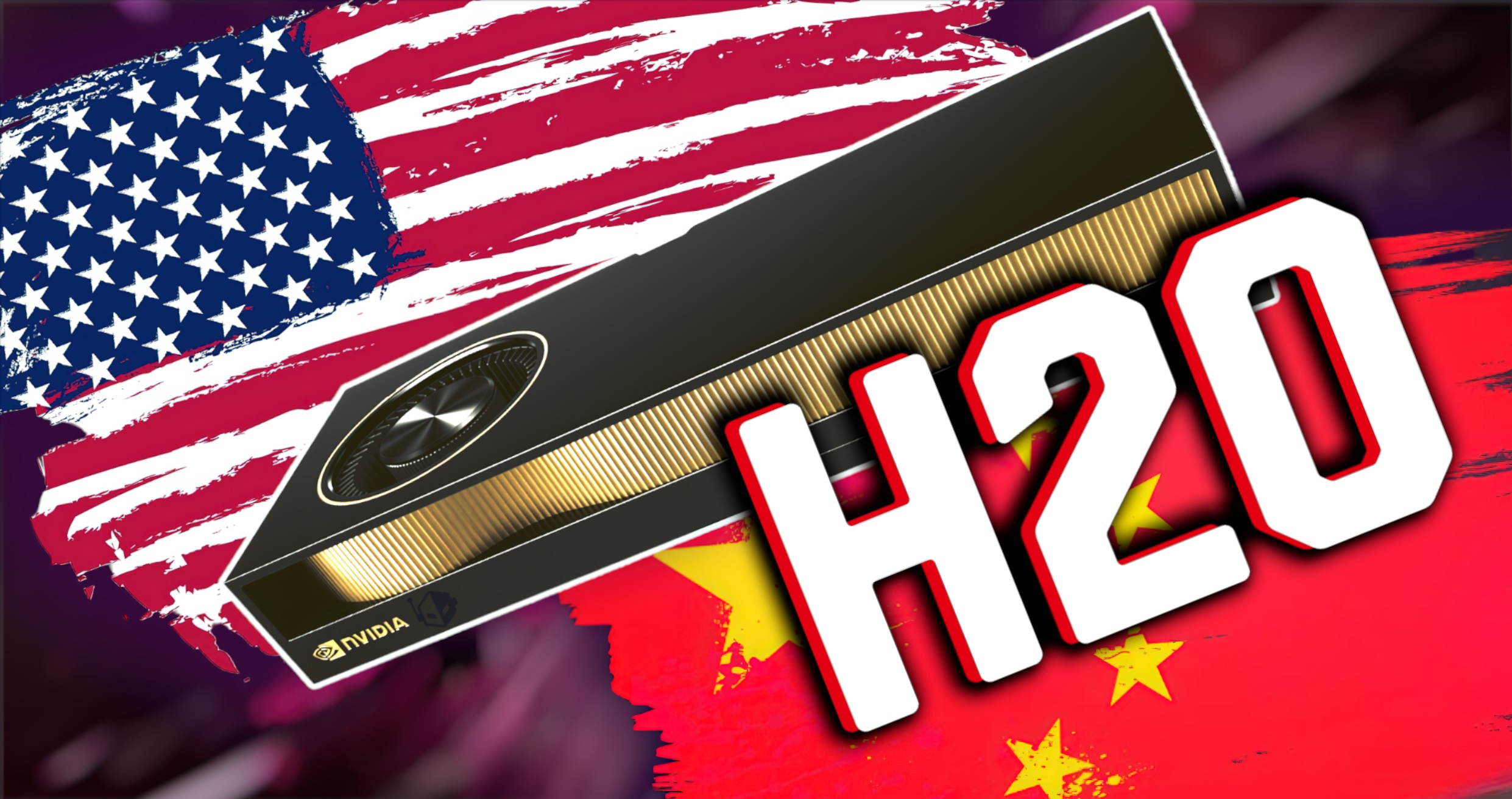
NVIDIA’s H20 AI Accelerators Under Threat as US Considers Expanding Export Ban
NVIDIA’s “China-compliant” H20 AI accelerators might soon fall under the US export ban scrutiny, especially with the company halting new orders from Chinese clients amidst these swirling rumors.
The US government, under the Biden administration, appears to be tightening its grip on exporting advanced AI technology to nations like China. Speculations are rife about a potential ban on NVIDIA’s H20 AI GPUs, a move that has reportedly led NVIDIA to stop accepting new orders from Chinese companies. This development, reported by Taiwan Economic Daily, hints at a possible alignment with forthcoming US trade revisions.
Leading investment bank Jefferies has pointed out that the US is closely reviewing its semiconductor export policies, with discussions possibly culminating in October. Should this ban on the H20 AI GPU come into effect, it’s estimated that NVIDIA could face a revenue loss nearing $12 billion from mainland China—a significant hit to its financial stability in the region.
Previously, the H20 replaced the highly popular H100, capturing immense interest from major tech firms across the region. Thus, a ban could severely impact NVIDIA’s market presence and business operations in China. While this ban isn’t official yet, reports suggest that NVIDIA is actively lobbying against this move. However, past trends indicate that such government decisions are often irreversible once set in motion.
On a broader level, earlier US export control policies haven’t significantly curbed AI advancements in China. Adaptations and workarounds, like the rise of GPU rental services from companies based in countries such as the UAE, have mitigated these restrictions. These companies offer computing power rentals using NVIDIA’s cutting-edge AI accelerators, catering to the demand in China and keeping the AI developments ongoing.
Although the future remains uncertain, these developments underline the complex interplay between technology exports and international trade policies.