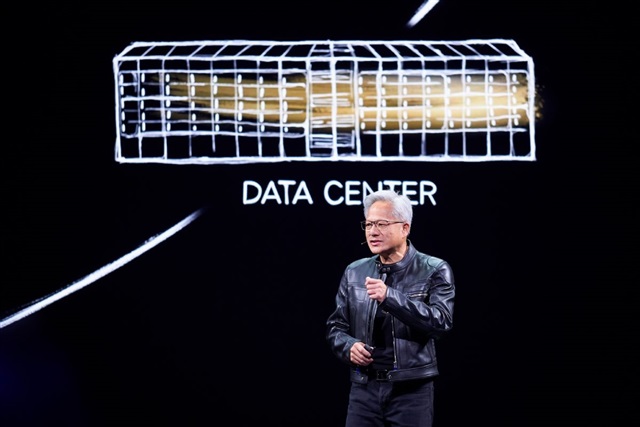
Big Tech can’t quit Nvidia, even as they build their own AI chips. Google, AWS, Meta, and Microsoft continue to pour billions into Nvidia’s AI GPUs to power training and inference at massive scale. At the same time, each is accelerating in-house application‑specific integrated circuit (ASIC) programs to reduce reliance on a single vendor and push down total cost of ownership. Yet, according to supply chain insiders, a set of strategic moves from Nvidia is keeping would‑be rivals at arm’s length and making it difficult for hyperscalers to pivot away quickly.
Why hyperscalers pursue ASICs
– Cost and efficiency: Purpose‑built silicon can deliver better performance per watt for targeted workloads, improving long‑term economics at hyperscale.
– Control and optimization: Custom chips let cloud platforms tune hardware for their specific models, data paths, and services, reducing overhead.
– Supply diversification: Owning more of the silicon stack reduces exposure to availability swings and pricing from external suppliers.
– Competitive differentiation: Proprietary accelerators can be woven into cloud services to create unique performance or cost tiers.
Why they still keep buying Nvidia
– Time to value: AI roadmaps move fast. GPUs deliver general‑purpose acceleration today, allowing teams to ship products while ASICs are still in development.
– Software maturity: The CUDA ecosystem, libraries, compilers, and tooling have been refined over years, reducing risk and speeding deployment.
– Flexibility: GPUs handle a broad spectrum of training and inference tasks, from frontier models to multimodal workloads and fine‑tuning.
– Ecosystem and support: Integration with frameworks, partner solutions, and reference architectures simplifies deployment in production data centers.
The five moves that keep Nvidia ahead
Industry chatter points to five levers Nvidia is pulling to keep custom silicon challengers at bay. Taken together, they raise switching costs, compress execution windows for competitors, and help Nvidia retain design wins even as ASIC projects ramp.
1) Full‑stack software lock‑in
– CUDA and an extensive catalog of AI libraries, graph compilers, and inference optimizers reduce friction from model development to deployment.
– Mature tooling, drivers, and management software stabilize performance at scale and minimize the engineering burden of large rollouts.
– Deep integration with popular AI frameworks and cloud services makes the path of least resistance run through Nvidia hardware.
2) Relentless product cadence
– Fast‑moving roadmaps and generational leaps keep performance leadership in sight, shrinking the window where alternatives can credibly leapfrog.
– Early access programs and co‑engineering with top customers align hardware capabilities to near‑term model requirements.
– Consistent improvements in performance per watt and memory bandwidth push out the breakeven point for bespoke ASICs.
3) End‑to‑end platform integration
– Tight coupling of accelerators with high‑speed interconnects and networking fabric boosts cluster‑level throughput, not just chip‑level specs.
– Reference systems and validated designs streamline deployment and ensure predictable scaling across thousands of nodes.
– Holistic platform tuning—from kernels to switches—delivers real‑world efficiency that is hard to replicate with piecemeal components.
4) Customer co‑design and tailored solutions
– Joint engineering, custom configurations, and solution‑specific optimizations give hyperscalers bespoke performance without starting from scratch.
– Reference blueprints for training and inference clusters reduce time‑to‑production and de‑risk large capital commitments.
– Close alignment on thermal, power, and rack design enables higher density and better utilization in existing data centers.
5) Supply chain scale and allocation strategy
– Early commitments across foundry, advanced packaging, and high‑bandwidth memory help secure scarce capacity.
– Long‑term agreements, bundled systems, and priority allocation reduce uncertainty for customers ramping AI infrastructure.
– Manufacturing and logistics muscle accelerate deliveries and upgrades, critical when demand spikes.
What this means for the AI chip landscape
– Both will grow: Custom ASICs will gain share in steady‑state inference and tightly defined services, where cost and power dominate. Nvidia will remain central for frontier training, rapid experimentation, and heterogeneous workloads.
– Switching will be gradual: Even when ASICs are ready, migrating models, workflows, and operations off a mature software stack takes time. Companies will run mixed fleets for years.
– Economics will decide: The balance hinges on performance per watt, utilization, and developer productivity. If ASICs beat GPUs by wide margins on specific tasks, they’ll carve out meaningful footprints. If Nvidia’s platform advantages offset raw silicon gains, GPUs keep the lead.
– Software portability is pivotal: Tooling that makes it easy to retarget models across accelerators could erode lock‑in. Conversely, deeper platform features that boost efficiency on Nvidia hardware will reinforce stickiness.
What to watch next
– Roadmap velocity on both sides: The pace of next‑gen GPU platforms versus custom ASIC tape‑outs will set the competitive tempo.
– Memory and networking bottlenecks: Advances in HBM supply, packaging, and cluster interconnects may matter as much as peak FLOPS.
– TCO benchmarks at scale: Real‑world cost and utilization data from large deployments will reveal where ASICs truly win—and where GPUs remain indispensable.
– Ecosystem shifts: Compiler and framework progress that lowers porting costs could tip the balance toward heterogeneous fleets.
Bottom line
Hyperscalers are hedging their bets by building custom AI silicon while still scaling out Nvidia GPU capacity. Nvidia’s multi‑pronged strategy—full‑stack software, rapid roadmaps, integrated platforms, customer co‑design, and supply chain scale—continues to make it the default choice for ambitious AI buildouts. Custom ASICs will take on more specialized roles, but for now, the center of gravity in AI infrastructure remains squarely in Nvidia’s orbit.