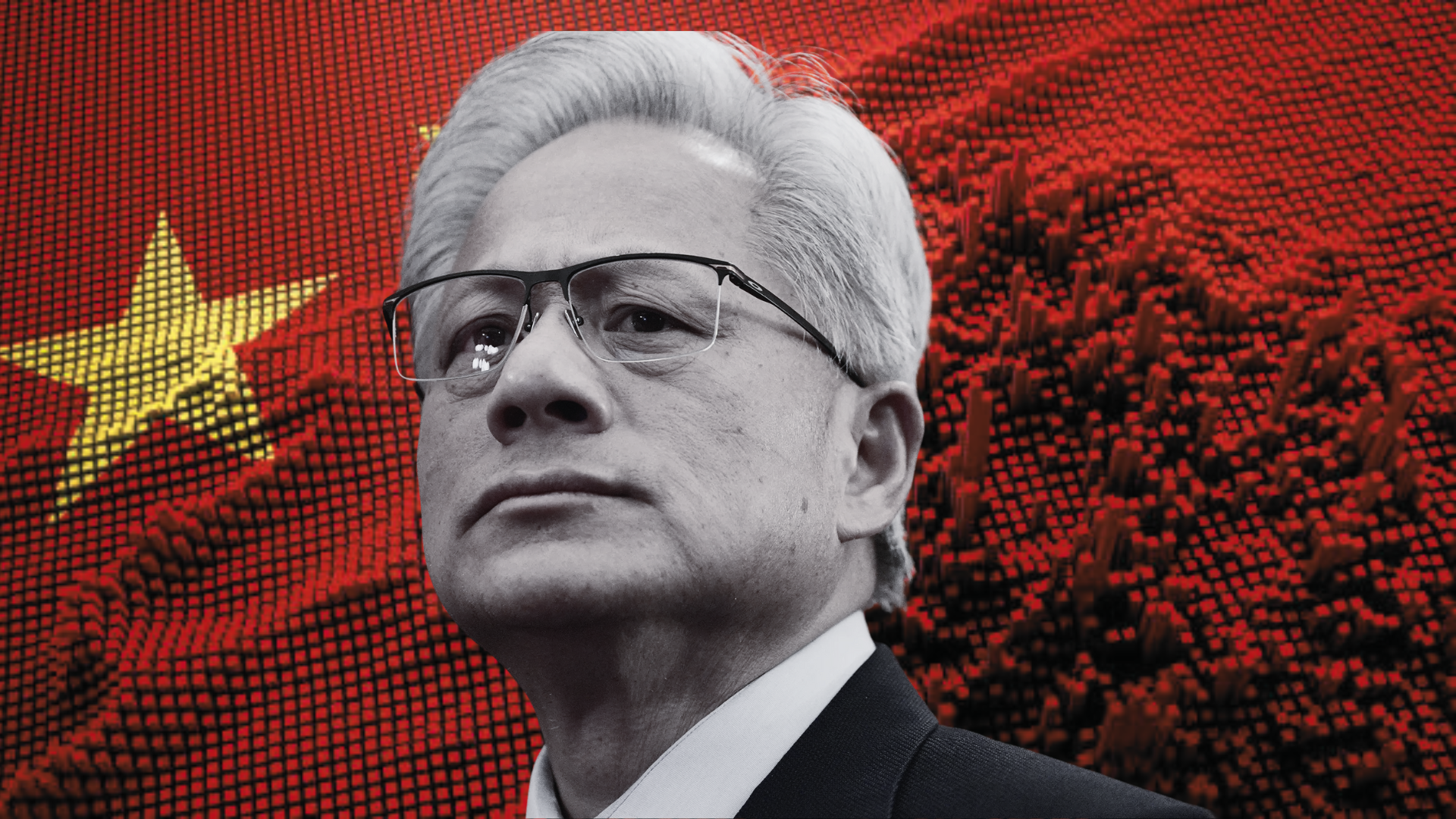
NVIDIA is gearing up for a renewed push in China after CEO Jensen Huang signaled what sounds like a meaningful shift in momentum. After months of uncertainty driven by export controls, regulatory reviews, and changing demand from major Chinese cloud providers, the company says its H200 AI chip is back in production again—and, importantly, that purchase orders from China are already in hand.
According to comments Huang shared in a CNBC interview, NVIDIA has moved from waiting and watching to actively restarting manufacturing. He said the company has received purchase orders and is now firing up the supply chain to meet them. The major takeaway is that NVIDIA’s situation can change quickly: what wasn’t true just a few weeks ago is suddenly back on the table today, and NVIDIA is preparing to deliver.
Why this matters is simple: the H200 is one of NVIDIA’s most in-demand data center AI accelerators, built to serve large-scale AI workloads. But getting these chips into China hasn’t been straightforward. NVIDIA has faced the challenge of navigating approvals and compliance requirements on both sides—U.S. export restrictions as well as China’s regulatory process—creating delays and uncertainty around what could ship, when, and in what volume.
Even so, the latest update suggests NVIDIA is not stepping away from the Chinese market. With production restarted, shipments could begin within weeks if the process stays clear and no new hurdles appear. For businesses tracking AI hardware availability in China, this is an important signal that supply may loosen—at least temporarily—after a period of tight constraints and stalled expectations.
At the same time, NVIDIA is preparing another move aimed at China’s fast-growing AI inference needs. A Reuters report indicates the company is also readying a new solution tied to its partnership with Groq. The idea centers on pairing Groq’s LPUs (Language Processing Units) with NVIDIA’s Hopper-generation platform to better address inference workloads—the part of AI where trained models are actually run at scale to generate outputs in real time.
This pairing is notable because NVIDIA’s next-generation Vera Rubin platform is not expected to be available in China. That limitation is pushing creative alternatives, and combining Groq LPUs with Hopper hardware could be NVIDIA’s way to offer a powerful inference-focused option without relying on Rubin. With AI entering what many describe as an “inflection point” where inference demand is exploding, China’s need for compute is only accelerating—making an inference-optimized solution especially attractive.
Groq chips are expected to reach Chinese customers by May. The report also suggests NVIDIA is not planning to offer a cut-down version for the market, which implies Chinese buyers may get Groq’s third-generation LPUs. If performance and throughput meet expectations, the Groq-plus-Hopper approach could quickly become a go-to option in a region where choices for cutting-edge AI compute are increasingly limited.
Between the restart of H200 production and a new inference-focused play involving Groq, NVIDIA appears to be repositioning itself for a more stable presence in China—one that balances regulatory realities with the market’s surging demand for AI hardware.