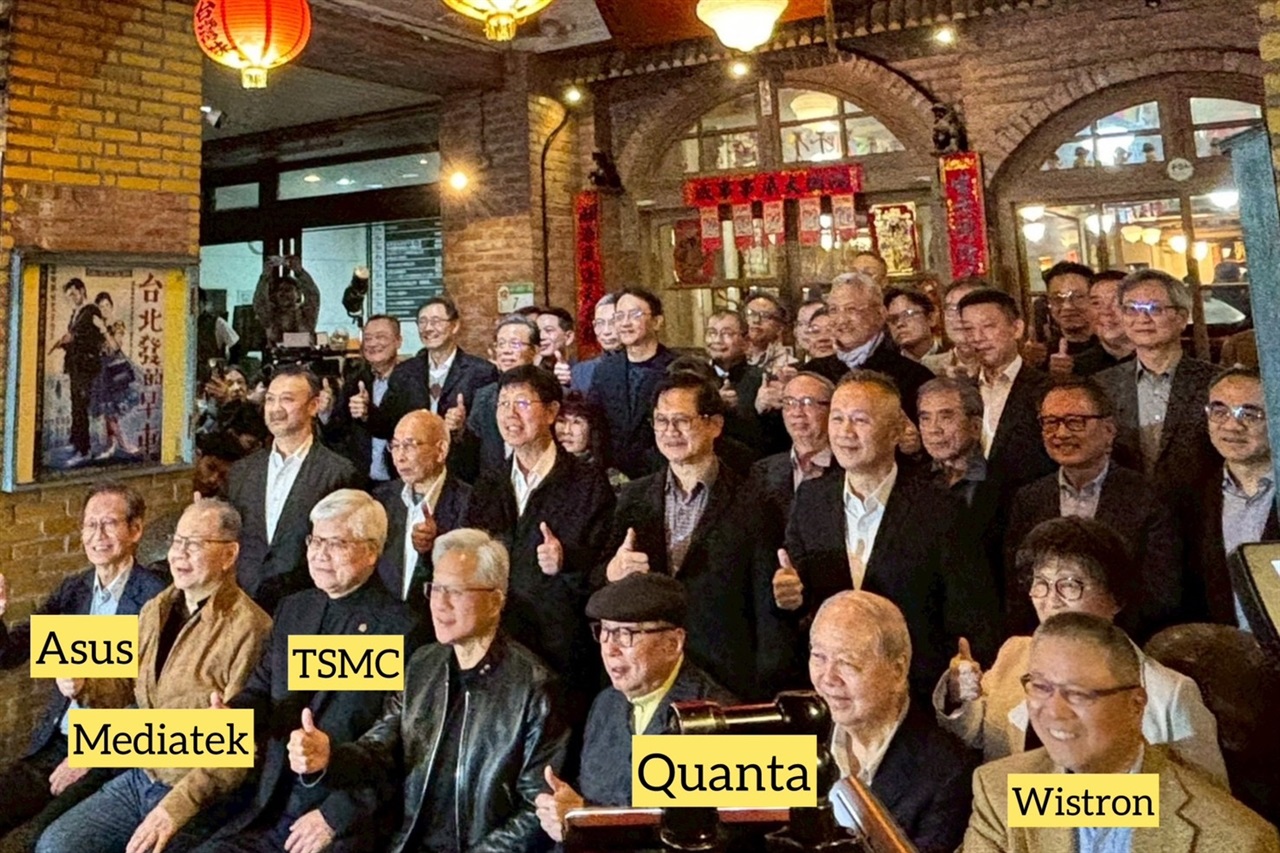
NVIDIA’s CEO Jensen Huang has long been known for thinking several moves ahead, but his latest gathering in Taipei is drawing attention for more than just its big names. With global trade tensions rising and the tech supply chain under heavier scrutiny than ever, Huang reportedly hosted what’s being described as a “trillion-dollar” summit—an invitation-only meeting that brought together influential leaders from across the tech world.
What’s making the event especially intriguing is a surprise attendee: a legendary chairman from a major Chinese printed circuit board (PCB) company. In a room packed with top-tier executives, he was reportedly the only Chinese leader invited into this inner-circle discussion, instantly sparking debate about what it signals for cross-border collaboration, manufacturing strategy, and the future of AI-driven hardware.
Why this summit matters right now
The timing alone makes the story hard to ignore. Trade policies, export controls, and geopolitical pressure are reshaping how advanced chips, servers, and AI infrastructure are built and distributed. NVIDIA sits at the center of this transformation because its GPUs power much of the world’s AI training and data center acceleration. Any high-level meeting led by Huang—especially one described in “trillion-dollar” terms—naturally raises questions about what’s being planned behind closed doors.
Taipei is also a strategic location. Taiwan plays a critical role in the global semiconductor ecosystem, and discussions held there often reflect the realities of manufacturing capacity, supply stability, and future expansion plans.
The surprise guest and what it could signal
The presence of a top Chinese PCB figure stands out because PCBs are fundamental to nearly everything in modern computing—from AI servers and high-performance GPUs to networking hardware and data center systems. While headlines often focus on chips themselves, the broader ecosystem (including boards, substrates, packaging, and advanced manufacturing) is just as essential for scaling AI infrastructure.
Having a Chinese PCB heavyweight in the room suggests the conversation may have extended beyond AI chips and into the less glamorous—but absolutely critical—layers of the supply chain. It also highlights how difficult it is for the global tech industry to fully untangle operations, even amid political pressure. Hardware at this scale depends on specialized expertise, mature production lines, and long-established supplier relationships.
A high-stakes moment for AI hardware and supply chains
As demand for AI computing continues to surge, so does the need for reliable, scalable manufacturing. Companies building the next generation of AI systems aren’t only competing on performance—they’re competing on access: access to production slots, access to advanced components, and access to partners capable of meeting massive volume requirements.
That’s why a leadership summit featuring a rare mix of global tech decision-makers—and an unexpected Chinese executive—feels like more than just a networking event. It points to how the world’s biggest players may be quietly mapping out contingency plans, collaboration pathways, and supply-chain strategies to keep AI growth on track.
While the full agenda and outcomes of the Taipei gathering remain unclear, the guest list alone hints at its importance. In today’s climate, who gets invited into the room can be just as revealing as what gets announced afterward.