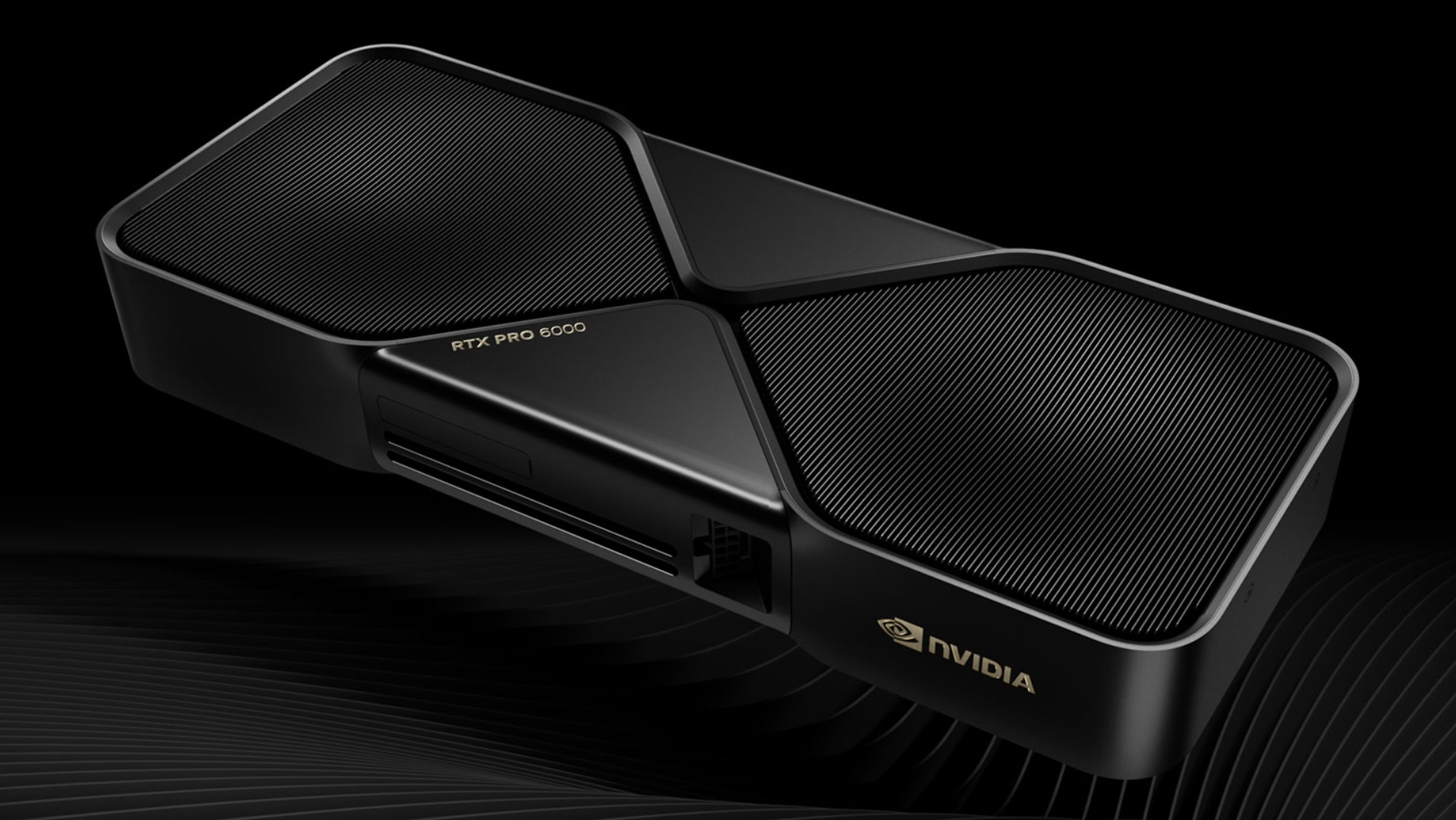
NVIDIA RTX PRO 6000 Blackwell Price Climbs to $13,250 as AI Demand and Memory Shortages Tighten Supply
NVIDIA’s top-tier professional graphics card, the RTX PRO 6000 Blackwell, has become even more expensive, with the latest official marketplace listing placing the GPU at $13,250. The sharp increase highlights the growing pressure on the high-end graphics card market, where limited supply, rising memory costs, and massive demand from artificial intelligence workloads continue to push prices higher.
The RTX PRO 6000 Blackwell is currently one of NVIDIA’s most powerful workstation-class GPUs. Both the standard Workstation Edition and Max-Q versions are now listed at the same elevated price, marking a major jump from earlier launch-period pricing, which was reportedly around $8,000. That means the current price is more than 60% higher than what buyers were seeing only a few months ago.
Even compared to recent pricing levels above $10,000, the new $13,250 listing represents another steep increase. For professionals, studios, AI developers, engineers, and researchers who rely on large amounts of GPU memory, this makes NVIDIA’s flagship professional card significantly harder to justify from a budget standpoint. However, for many high-performance workloads, there are few realistic alternatives with the same combination of VRAM capacity, performance, and software ecosystem support.
A major reason behind the price surge is memory availability. The RTX PRO 6000 Blackwell features a massive 96 GB of GDDR7 memory using a clamshell design. This gives the card one of the largest VRAM capacities ever offered on a discrete graphics board, making it especially attractive for AI development, large-scale rendering, simulation, data science, content creation, and advanced workstation tasks.
GDDR7 memory is still in high demand, and supply remains constrained. When combined with the increasing need for powerful GPUs across the AI industry, availability of premium cards such as the RTX PRO 6000 Blackwell becomes even tighter. As a result, pricing continues to move upward rather than stabilizing.
The consumer graphics card market is facing similar pressure. NVIDIA’s GeForce RTX 5090, currently the company’s fastest gaming GPU, has also seen significant price increases. While the card launched with an official MSRP of $1,999, real-world retail pricing quickly moved far above that level. Recent listings now show many RTX 5090 models priced above $4,000, with some of the lowest available options still sitting around the $4,100 to $4,200 range.
That means the RTX 5090 is now selling for more than double its launch MSRP in many cases. For PC gamers and hardware enthusiasts, this is a frustrating situation. The RTX 5090 was already a premium product at launch, but current market prices make it an extreme luxury purchase.
The reason is not just gaming demand. The RTX 5090 is also being purchased by AI users who want powerful GPU compute performance and a large VRAM pool without moving into even more expensive professional hardware. Although it is designed as a GeForce gaming card, its raw performance makes it attractive for machine learning experiments, local AI models, rendering, and other demanding compute workloads.
This overlap between gaming, workstation, and AI demand has created a difficult market for buyers. Enthusiasts want the fastest graphics cards for high-end gaming, creators need them for rendering and production, and AI developers are buying them for model training and inference. With all of these groups competing for limited stock, prices remain elevated.
For now, NVIDIA’s flagship GPUs continue to command premium prices because they offer a level of performance and memory capacity that competitors struggle to match. The RTX PRO 6000 Blackwell stands out with its 96 GB of GDDR7 VRAM, while the RTX 5090 remains one of the most powerful consumer graphics cards available.
Unfortunately for buyers, there is little sign that pricing will ease in the immediate future. As long as AI demand remains strong and advanced memory supply stays limited, top-end NVIDIA graphics cards are likely to remain expensive. Professionals who need the RTX PRO 6000 Blackwell may have no choice but to pay the higher price, while gamers and enthusiasts looking at the RTX 5090 may need to wait for supply conditions to improve.
The current GPU market shows how much artificial intelligence has reshaped demand for high-performance graphics hardware. What was once mainly a gaming and workstation market is now heavily influenced by AI infrastructure needs. Until production catches up with demand, cutting-edge NVIDIA GPUs will continue to sell at a premium.