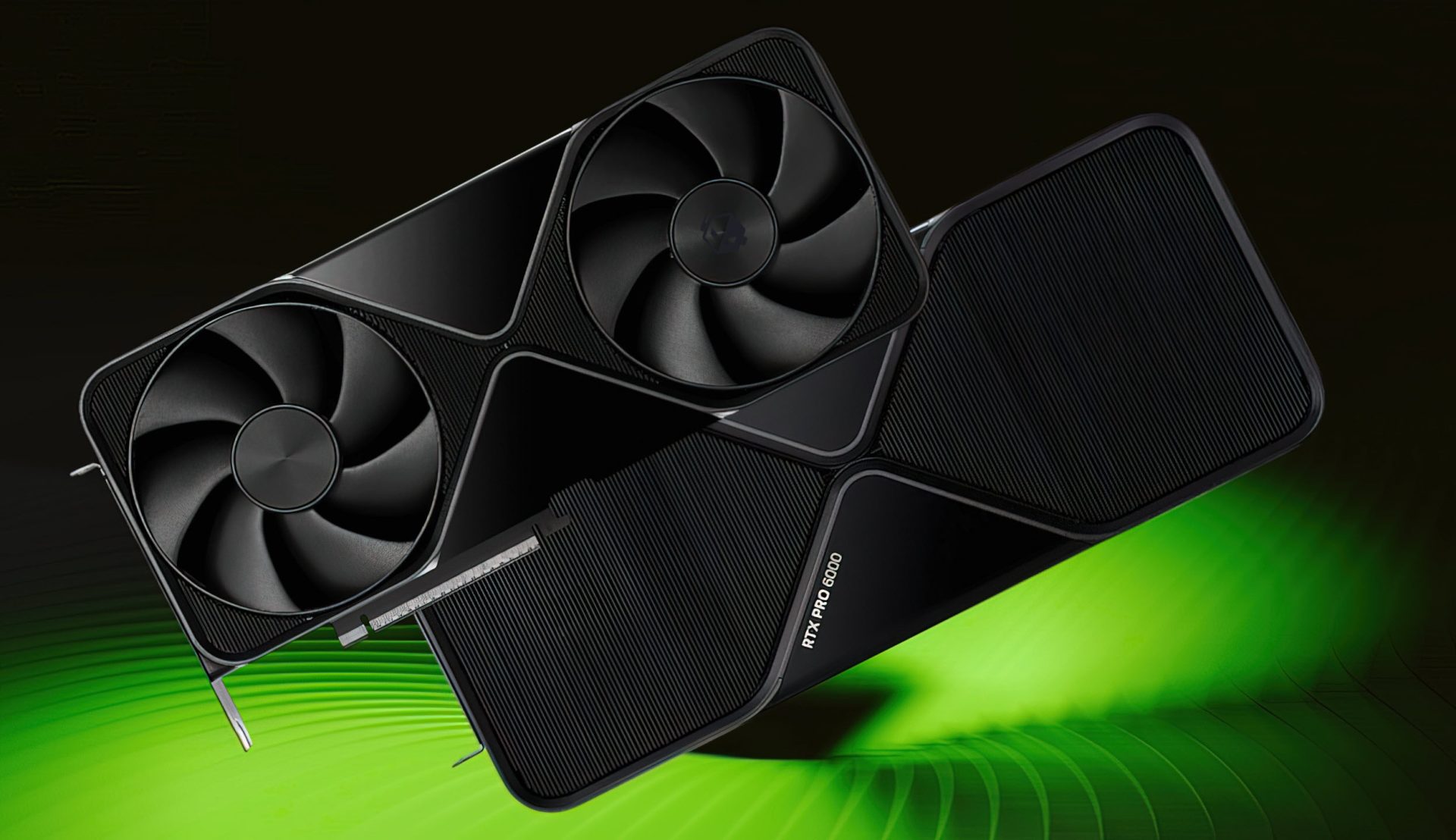
NVIDIA RTX PRO 6000 Blackwell Price Hits $16,000 as Memory Shortages Intensify
NVIDIA’s RTX PRO 6000 Blackwell GPU has reached its highest listed price since launch, with the professional graphics card now appearing at $16,000. The sharp increase highlights the growing pressure across the GPU market as memory shortages continue to push prices higher for both workstation and consumer graphics cards.
The RTX PRO 6000 Blackwell is not a typical graphics card aimed at gamers. It is designed for professional users, AI developers, creators, engineers, and workstation builders who need massive compute power and extremely large memory capacity. Its biggest selling point is its 96 GB of GDDR7 memory, making it one of the most capable GPUs available for demanding AI workloads, large-scale model development, advanced rendering, simulation, and data-heavy professional applications.
That huge memory pool is also a major reason behind the rising price.
When the RTX PRO 6000 Blackwell first launched, it was priced at around $8,000. More recently, it was seen selling for over $13,000, already a major jump from its original launch price. Now, with NVIDIA’s official listing showing $16,000, the card has effectively doubled in price.
This price movement reflects a wider problem in the hardware industry. High-end DRAM components are in short supply, and demand from AI infrastructure, data centers, workstation builders, and premium PC hardware continues to rise. As a result, GPUs with large amounts of fast memory are becoming significantly more expensive.
The RTX PRO 6000 Blackwell is particularly exposed to these market conditions because it uses 96 GB of GDDR7 memory. That is three times the memory capacity of the GeForce RTX 5090, NVIDIA’s fastest gaming GPU, which itself has also seen major price inflation. While the RTX 5090 launched with a $1,999 MSRP, many models are now retailing close to $4,500, more than double the original price.
Given that trend, it was only a matter of time before the RTX PRO 6000 Blackwell saw a similar increase. The difference is that the professional GPU started from a much higher base price, making the final jump far more dramatic for buyers.
At $16,000, the RTX PRO 6000 Blackwell is now positioned as an even more expensive investment for AI workstations and professional systems. For companies working in artificial intelligence, machine learning, 3D visualization, scientific computing, and content production, the GPU’s performance and memory capacity may still justify the cost. However, smaller studios, independent developers, and prosumers may find the new pricing much harder to absorb.
The concern is that prices may not stop here. Memory suppliers have warned that shortages could continue for years, and if demand remains strong, the RTX PRO 6000 Blackwell could potentially move even closer to the $20,000 mark in the future.
The impact is not limited to NVIDIA’s professional lineup. Consumer graphics cards are also being affected by the same memory supply issues. NVIDIA’s GeForce RTX 50 series cards have been climbing above expected pricing, while AMD’s Radeon RX 9000 GPUs have also seen notable price increases. This suggests the entire GPU market is entering a period where higher prices may become normal rather than temporary.
For PC builders, creators, and workstation buyers, the message is clear: high-memory graphics cards are becoming more expensive, and relief may not arrive soon. The RTX PRO 6000 Blackwell’s move to $16,000 is one of the strongest signs yet that the ongoing memory shortage is reshaping GPU pricing across the industry.


