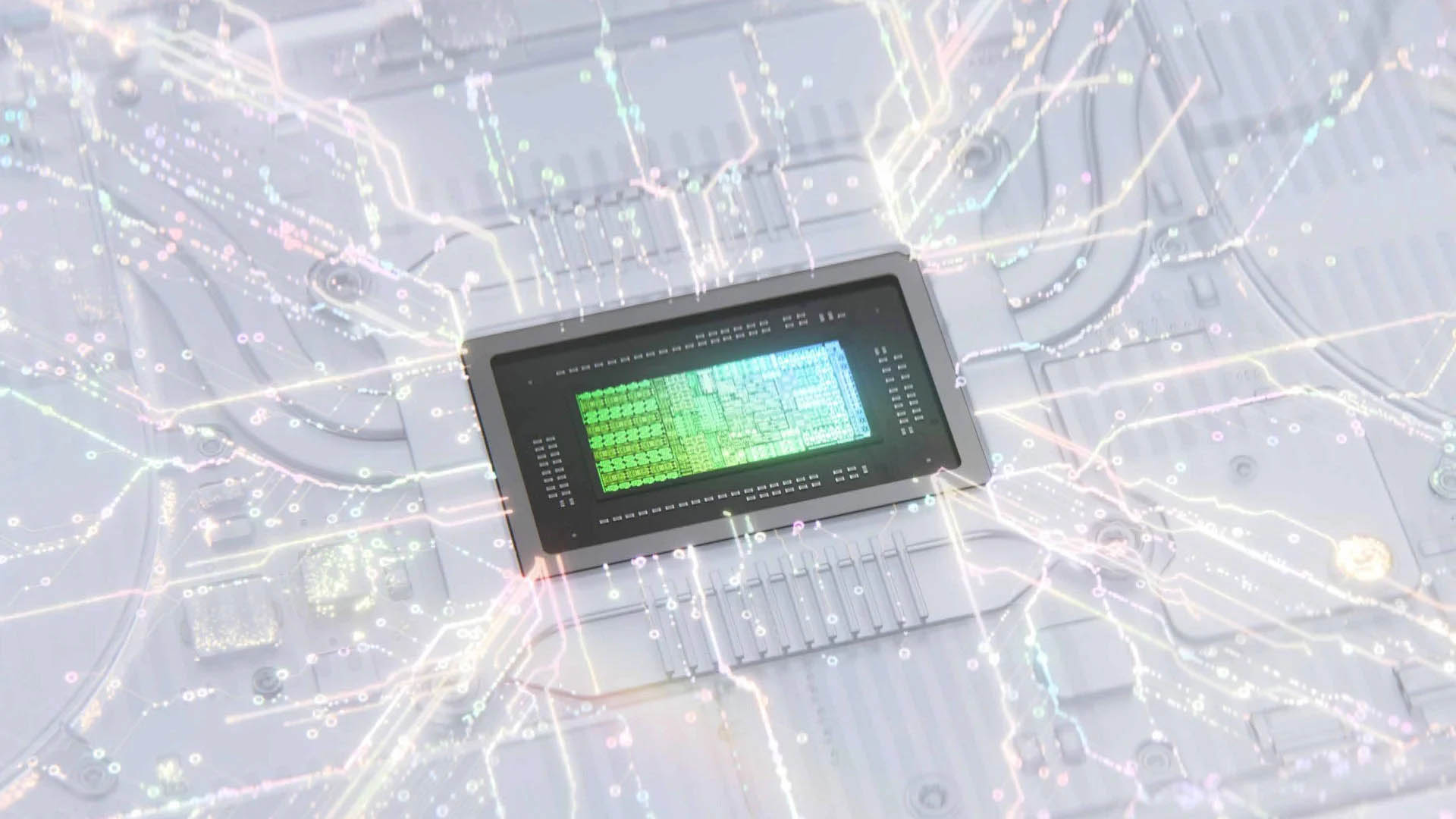
NVIDIA RTX Spark Leak Shows Stronger Geekbench 7 Multi-Core Performance, But Apple’s M4 Max Still Leads
NVIDIA’s upcoming RTX Spark platform is starting to look more competitive than earlier benchmark leaks suggested. Before NVIDIA officially introduced the RTX Spark, the ARM-based chip known as N1X appeared in Geekbench 6 results with underwhelming single-core and multi-core performance, falling behind Apple’s older M3 Max chip. A newer leak, however, paints a more promising picture.
Fresh Geekbench 7 results show that RTX Spark has made noticeable progress, especially in multi-core performance. While it still trails Apple’s latest M4 Max in key areas, the gap is much smaller than before.
Two RTX Spark laptops appear in Geekbench 7 with 64GB unified memory
Two RTX Spark-powered laptops have surfaced in the Geekbench 7 database, both configured with 64GB of unified memory. The listings suggest that NVIDIA is testing at least two CPU variants: an 18-core model and a higher-end 20-core version.
The 20-core RTX Spark system is listed under the name “OEMQAJ 766_MIS Product Name DV,” while the 18-core model appears as “OEMQAJ OEMQAJ Product.” Both machines were reportedly running in a “Balanced” power profile, meaning the chips may not have been operating at their absolute maximum performance potential.
That detail matters, because final retail hardware, improved power tuning, and more mature drivers could influence performance once RTX Spark devices officially arrive.
RTX Spark 20-core CPU benchmark results
The stronger RTX Spark model, featuring a 20-core CPU, achieved the following Geekbench 7 scores:
Single-core score: 2,570
Multi-core score: 23,126
These numbers show a clear improvement compared to earlier results, particularly in multi-core workloads. However, single-core performance remains an area where NVIDIA’s ARM-based chip appears to lag behind Apple Silicon.
RTX Spark 18-core CPU benchmark results
The 18-core RTX Spark version posted slightly lower results:
Single-core score: 2,541
Multi-core score: 21,776
Compared with the 20-core model, the performance difference is fairly modest in single-core testing but more noticeable in multi-core workloads. The 20-core chip is about 1.14 percent faster in single-core performance and roughly 6.2 percent faster in multi-core performance.
Apple M4 Max still holds the lead
For comparison, Apple’s 14-core M4 Max scored:
Single-core score: 3,404
Multi-core score: 25,957
This means the 20-core RTX Spark is around 11 percent slower than the M4 Max in multi-core performance. That is a respectable result considering Apple’s strong position in high-performance ARM-based laptop processors.
However, the single-core gap is much larger. The RTX Spark’s 20-core CPU trails the M4 Max by around 24.5 percent in single-core performance. This suggests Apple still has a major advantage in tasks that depend heavily on single-threaded speed, such as app responsiveness, certain creative workflows, and some productivity workloads.
The bigger story may be the Blackwell GPU
Although the CPU results are interesting, the RTX Spark’s biggest attraction may be its graphics performance. NVIDIA developed RTX Spark in collaboration with MediaTek, combining ARM-based CPU technology with NVIDIA’s graphics expertise.
The platform is expected to feature a Blackwell-based GPU, which could make RTX Spark devices especially appealing for AI workloads, GPU-accelerated productivity, content creation, and potentially gaming.
According to driver-related information for Windows 11 on ARM64, the 18-core and 20-core RTX Spark models may also differ in GPU configuration. The 18-core version is expected to include 5,120 CUDA cores, while the higher-end 20-core model may feature 6,144 CUDA cores.
That CUDA core count is particularly interesting because it matches the number found in certain desktop-class NVIDIA graphics cards, including the RTX 5070 and RTX 3080. However, core count alone does not guarantee identical performance. Clock speeds, memory bandwidth, power limits, cooling, architecture differences, and driver maturity will all play major roles in real-world results.
Why these RTX Spark benchmarks matter
The leaked Geekbench 7 results suggest that NVIDIA’s RTX Spark platform may be far more competitive than early Geekbench 6 numbers implied. While Apple’s M4 Max remains ahead in both single-core and multi-core CPU performance, NVIDIA appears to be closing the gap in multi-threaded workloads.
The real question is whether RTX Spark can offer a balanced package that combines solid ARM CPU performance with powerful Blackwell graphics. If NVIDIA can deliver strong GPU acceleration, efficient power consumption, and reliable Windows on ARM support, RTX Spark laptops could become a serious option for creators, developers, AI users, and performance-focused professionals.
For now, these results should still be treated as early benchmark leaks. The tested systems may be prototypes, and software drivers may not be final. Performance could change by the time RTX Spark laptops reach consumers.
Still, the latest leak gives NVIDIA a more encouraging start. RTX Spark may not beat Apple’s M4 Max in CPU performance yet, but its multi-core showing is close enough to make the upcoming platform worth watching.


