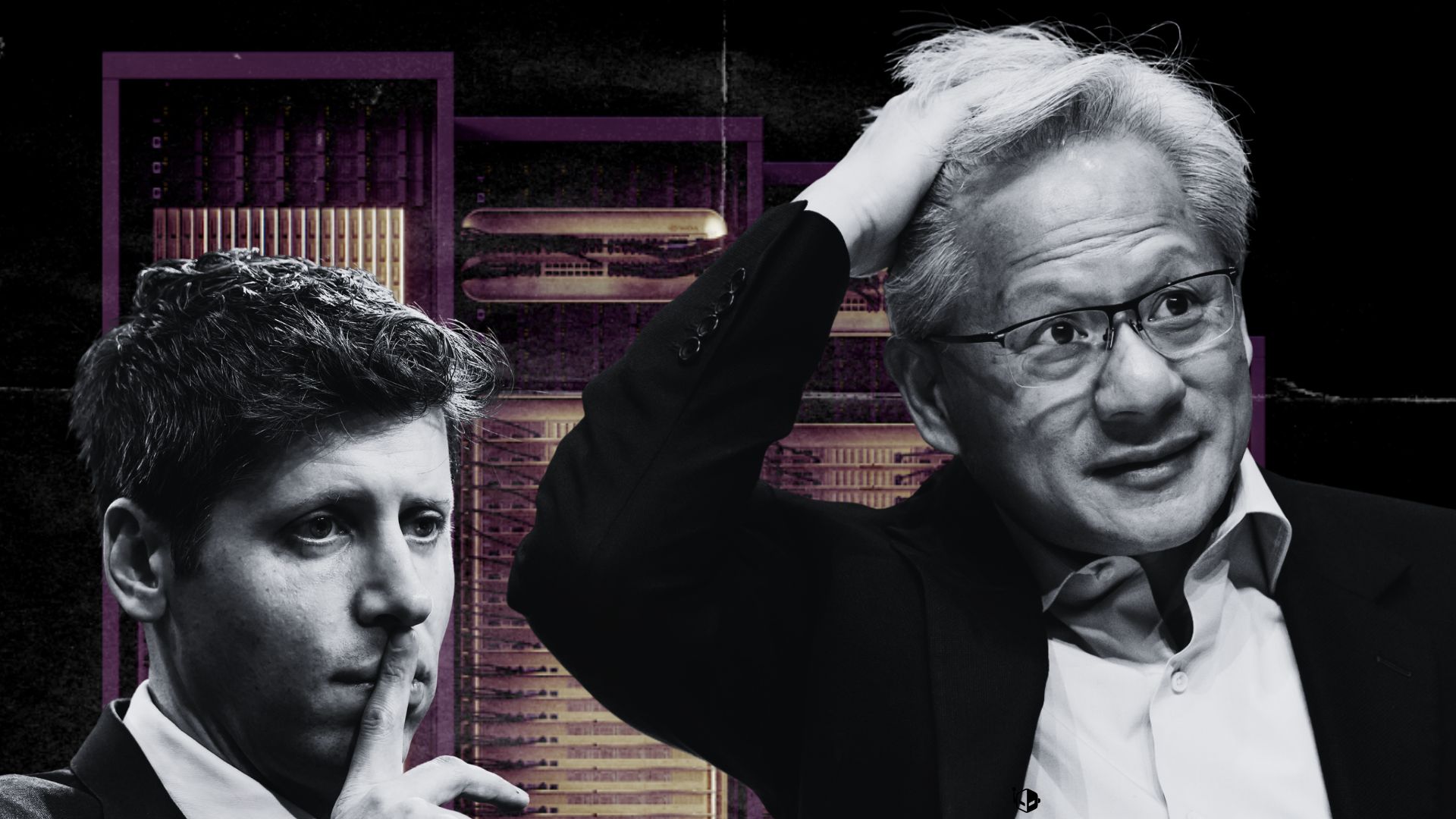
NVIDIA’s blockbuster plan to back OpenAI with an eye-popping $100 billion commitment was supposed to be one of the most defining AI partnerships in the industry. Months after the announcement, though, the agreement reportedly still isn’t finalized—and new chatter suggests NVIDIA CEO Jensen Huang is increasingly skeptical about how OpenAI is being run.
The deal, described as providing “multi-gigawatt” levels of compute power, would represent one of the largest commitments ever directed toward OpenAI. It also carried major symbolic weight: OpenAI was seen as an early customer for NVIDIA’s next-generation platforms, and the arrangement signaled the start of NVIDIA’s broader push to invest heavily across frontier AI. Now, that initial excitement appears to be cooling.
A report from The Wall Street Journal claims NVIDIA has not yet reached a final agreement with OpenAI. More notably, Huang has reportedly voiced private concerns about what he sees as a lack of discipline in OpenAI’s business approach. That’s a significant shift in tone for a partnership that, on paper, looked like a straightforward win-win: OpenAI gets massive compute capacity, and NVIDIA secures a cornerstone customer while deepening its role at the center of the AI boom.
Adding to the uncertainty is the fact that NVIDIA has already characterized its OpenAI arrangement as non-binding in a prior filing, meaning there’s no guarantee it will move forward. In other words, even with public expectations of a massive commitment, the reality is that the deal may still be fluid—and potentially vulnerable to changing strategy on either side.
So what’s driving the doubts? The criticism about “discipline” is open to interpretation, but the competitive landscape offers some clues. In the fast-moving AI market, momentum can shift quickly—especially in the applications layer, where developers and businesses decide which models and ecosystems they want to build on. OpenAI’s GPT-based platform, once the default center of gravity for mainstream generative AI, appears to be facing stronger pressure from rivals. Competitors like Anthropic and Google are gaining attention with rapid progress and increasingly compelling product ecosystems, making the race for real-world adoption more intense.
OpenAI also finds itself navigating tougher business questions, including reports that it’s exploring advertising inside its chatbot experience. Even considering ads underscores how expensive it is to operate large-scale AI systems—and how urgently AI labs need durable monetization plans to justify astronomical infrastructure costs.
At the same time, OpenAI is reportedly preparing for an IPO, which tends to amplify scrutiny around revenue stability, product direction, and operational execution. That context may help explain why NVIDIA appears cautious. For a hardware and infrastructure leader like NVIDIA, committing at extreme scale isn’t only about demand today—it’s about confidence that a partner’s roadmap, market position, and business fundamentals will hold up long enough for those commitments to pay off.
For now, the key takeaway is simple: despite earlier headlines suggesting the partnership was a done deal, NVIDIA’s arrangement with OpenAI is reportedly still not locked in. With competition accelerating and expectations rising, NVIDIA seems to be watching closely to see whether OpenAI’s plans—and its ability to execute—will match the scale of the investment being discussed.