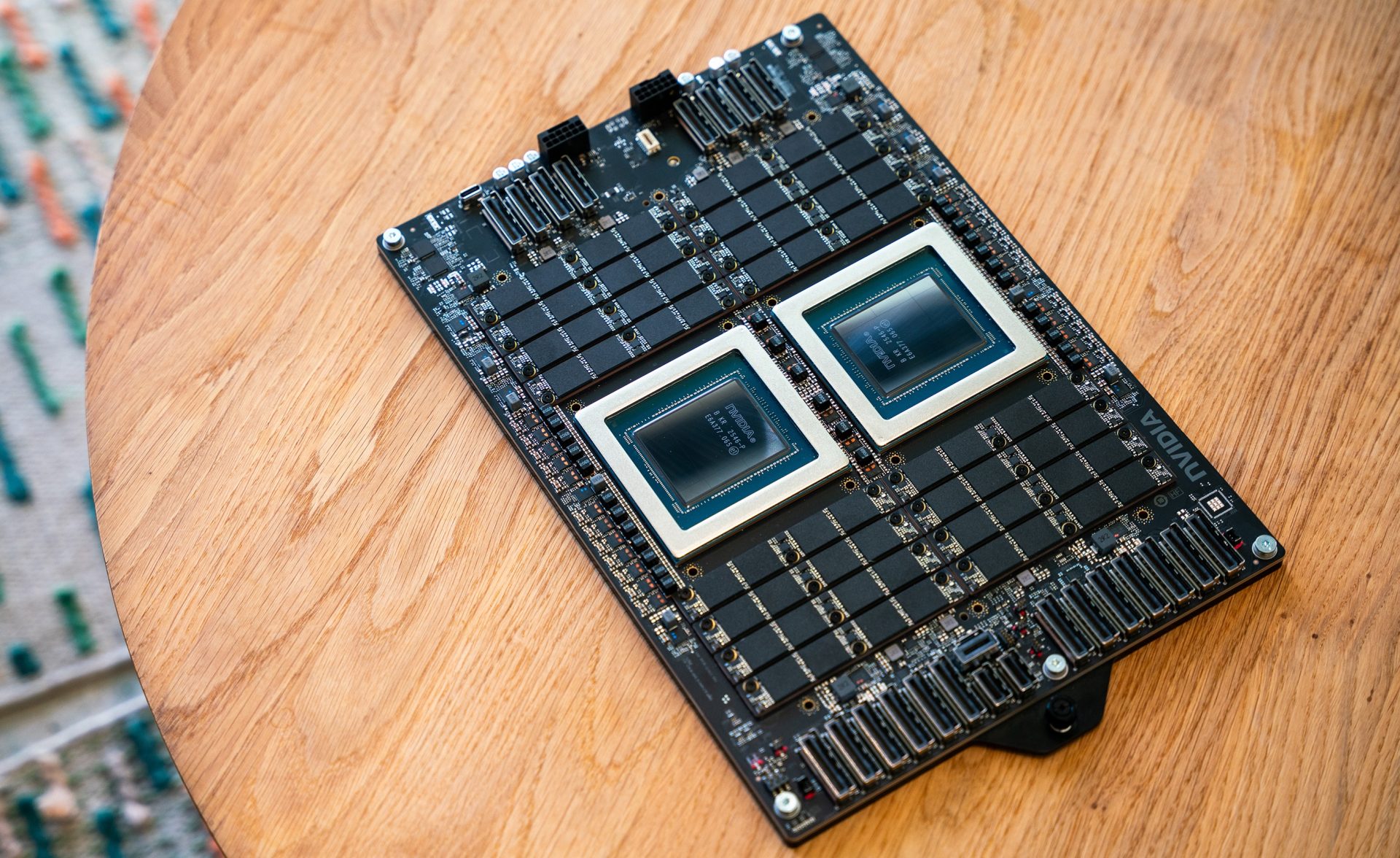
NVIDIA Vera CPU Beats Intel Xeon 6 in DuckDB TPC-H Database Benchmark
NVIDIA’s Vera CPU is starting to look like far more than just a companion chip for AI platforms. In a recent round of database testing, the 88-core Vera processor delivered noticeably stronger performance than a high-end 96-core Intel Xeon 6 CPU in the TPC-H benchmark, a well-known test focused on decision-support database workloads.
What makes these results especially interesting is that this was not an AI benchmark. Instead, the test measured traditional database and query performance using DuckDB across the full TPC-H workload. That means Vera was evaluated in a real-world style analytics scenario involving complex queries, large datasets, and business-oriented database operations.
The comparison placed NVIDIA’s 88-core Vera CPU against Intel’s 96-core Xeon 6 processor. Despite having fewer cores, Vera came out ahead by roughly 46% to 48% across the tested DuckDB versions.
The test systems were configured closely to keep the comparison fair. The Intel Xeon 6 platform featured 96 cores with Hyper-Threading, 768 GB of memory, over 3 TB of NVMe SSD storage, and Ubuntu 26.04. NVIDIA’s Vera CPU used 88 cores with Spatial Multi-Threading, 768 GB of LPDDR5x memory, over 3 TB of NVMe SSD storage, and the same Ubuntu 26.04 operating system.
Two DuckDB versions were used for the benchmark: DuckDB 1.5.5 and DuckDB 2.0.0 Alpha. The first warm-up run was excluded, and three measured runs were completed to calculate the median TPC-H composite score.
In DuckDB 1.5.5, the Intel Xeon 6 system achieved a median score of 1,673,422.48, while NVIDIA Vera reached 2,482,589.73. In DuckDB 2.0.0 Alpha, Intel improved to 2,109,782.19, but Vera still pushed further ahead with a median score of 3,073,292.99.
These numbers show two important things. First, NVIDIA Vera delivered significantly higher query throughput than the Intel Xeon 6 platform in this workload. Second, the newer DuckDB 2.0.0 Alpha build improved performance on both chips, offering a 24% to 26% uplift compared to DuckDB 1.5.5. That suggests future DuckDB users may see meaningful database performance gains regardless of the CPU platform they use.
The TPC-H benchmark is designed to measure decision-support performance. It includes a set of complex business queries and concurrent data modifications that reflect common enterprise analytics tasks. The benchmark focuses on how well a system can process large volumes of data, handle complex queries, and deliver answers to critical business questions.
Because of that, Vera’s strong showing matters. NVIDIA is often associated with AI accelerators and GPU computing, but this result highlights the company’s growing reach into traditional enterprise workloads. Database analytics, query processing, and high-performance computing are areas where CPU performance still plays a major role.
The fact that Vera achieved these results with fewer cores than the Xeon 6 makes the outcome even more notable. With 88 cores, Spatial Multi-Threading, and LPDDR5x memory, Vera managed to outperform a 96-core x86 competitor using the same storage capacity and operating system.
For businesses focused on analytics, decision-support systems, and large-scale database workloads, these early results suggest NVIDIA Vera could become a serious option in the server CPU market. Its advantage does not appear limited to AI-driven environments. Instead, Vera is showing strength in conventional enterprise computing tasks where fast query execution and high throughput are essential.
While more independent testing will be needed across additional workloads, this TPC-H benchmark gives a strong first look at Vera’s potential. NVIDIA’s CPU strategy appears to be expanding beyond acceleration and into broader data center performance, challenging established x86 platforms in areas where they have traditionally dominated.
If these results hold across more real-world deployments, NVIDIA Vera could become a major competitor for database servers, analytics platforms, and enterprise systems that demand high performance per workload.