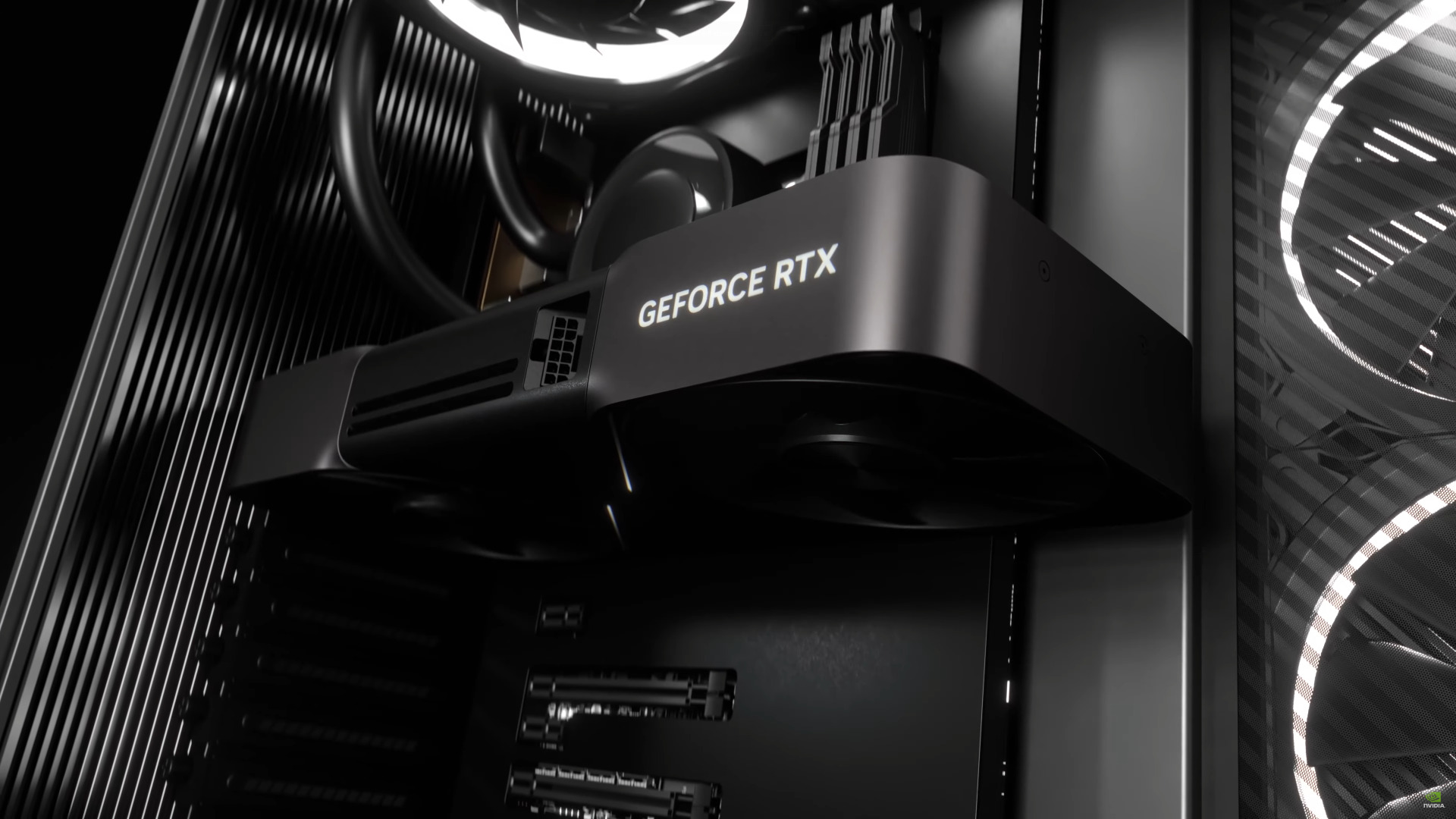
NVIDIA gaming graphics cards are now in the spotlight after researchers demonstrated that the long-running “Rowhammer” vulnerability can be adapted to target GDDR memory, the type of VRAM used across modern GPUs. Rowhammer has been around for more than a decade and is best known as a hardware-level attack technique that abuses electrical interference to induce memory bit flips. Until recently, it was mainly discussed in the context of system memory like DDR RAM. The new development is that similar techniques can be used against GPU memory, potentially expanding the risk surface for PCs that rely heavily on graphics hardware.
What makes this research attention-grabbing for PC gamers and GPU-powered workstations is the claim that Rowhammer-style manipulation can corrupt GPU page tables. In practical terms, that can allow code running without elevated privileges (such as an unprivileged CUDA workload) to gain broader read and write access inside GPU memory. From there, researchers describe the possibility of chaining the attack further by taking advantage of additional memory-safety weaknesses in the graphics driver, potentially escalating from GPU-level access to CPU-side compromise. In the worst-case scenario described, the end result could be a full system takeover with root-level control.
Testing cited in the report suggests that NVIDIA’s Ampere generation is among the affected targets, including consumer hardware such as the GeForce RTX 3060 and professional workstation products like the RTX A6000. That said, it’s important to keep the real-world risk in perspective. These attacks are complex, require careful conditions to work reliably, and there has not been a wave of consumer-focused incidents using GPU-based Rowhammer techniques to steal data or compromise gaming PCs.
Where this kind of vulnerability becomes more concerning is in shared, high-value environments—especially enterprise and cloud deployments that run GPU-accelerated workloads for AI, rendering, or compute tasks. In theory, if an attacker can run code on the same physical GPU infrastructure as other users, a successful Rowhammer-style approach could create an opportunity for cross-tenant impact depending on configuration, isolation controls, and whether the attack chain can be completed.
If the core thesis holds—that Rowhammer can be applied to GDDR VRAM—then the potential scope is broad, because GDDR memory is foundational to virtually all mainstream gaming GPUs. At the same time, because this hasn’t historically been a widely exploited path on consumer graphics cards, it’s difficult to quantify how many everyday users are meaningfully at risk today. For most gamers, this is a reminder that hardware security issues don’t stop at the CPU and RAM—and that GPU memory, drivers, and compute features can also play a role in the system’s overall security posture.