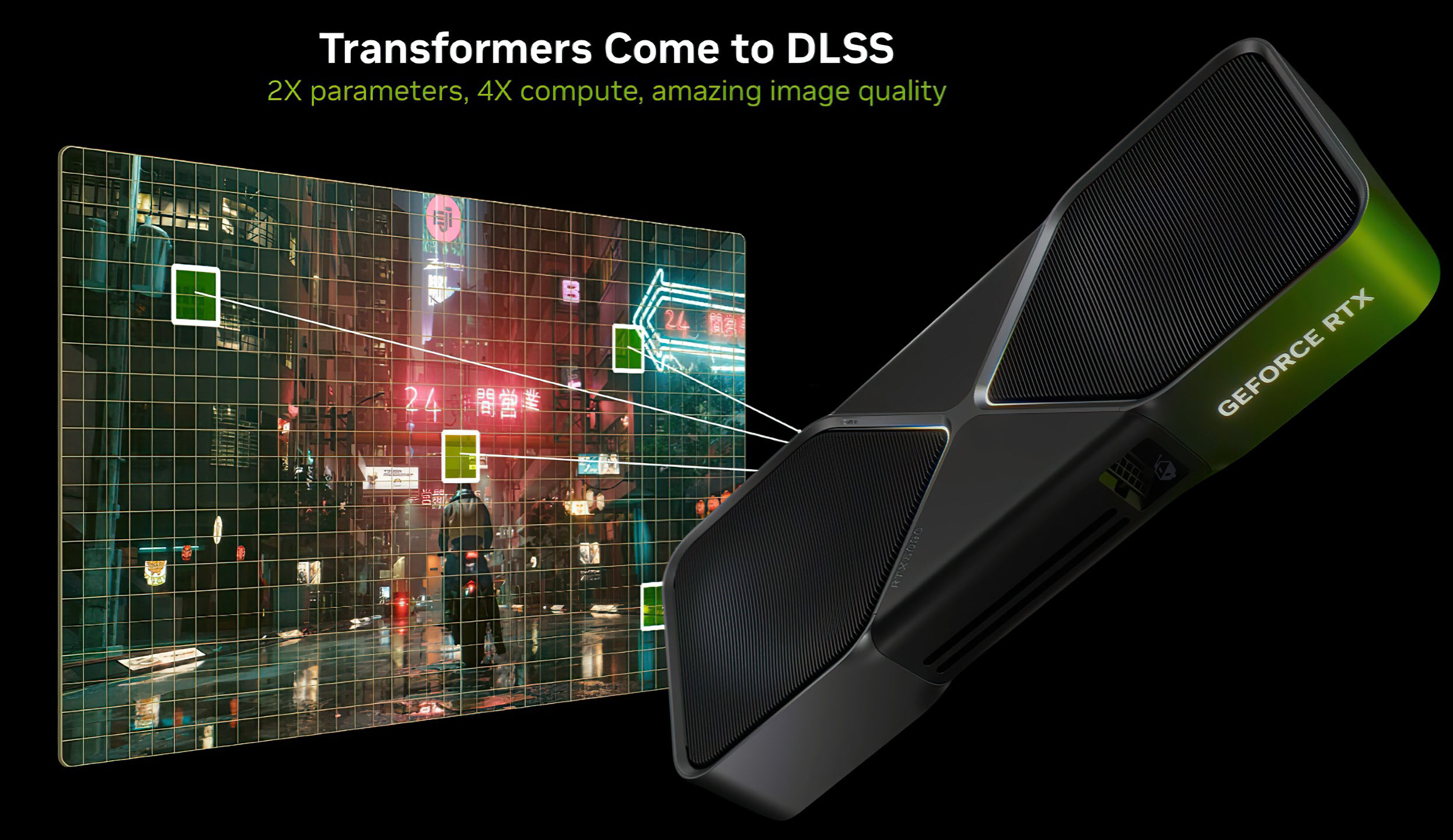
NVIDIA is pushing the boundaries of visual technology with the introduction of its new DLSS Transformer Model, part of their latest DLSS 4 release. This cutting-edge model is set to revolutionize the way graphics are processed across all RTX GPUs, including the 20, 30, 40, and the upcoming 50 series.
Traditionally, NVIDIA has relied on Convolutional Neural Networks (CNNs) to enhance the resolution by adding more pixels to existing frames. While this approach has been successful, it’s now being replaced by the more advanced DLSS Transformer Model, promising superior visual quality.
The new Transformer Model is not limited to the latest hardware. Although Multi-Frame Generation features are exclusive to RTX 50 series GPUs, all previous RTX generations will benefit from the enhanced DLSS Ray Reconstruction and Super Resolution capabilities. This means gamers using the RTX 20 and 30 series can also experience the visual improvements.
The DLSS Transformer Model works by using a vision transformer that assesses each pixel’s importance within a frame. This assessment happens continuously across multiple frames, allowing for intricate pixel details and superior visual output. The model operates with twice as many parameters as the traditional CNN, resulting in significant improvements such as reduced ghosting, enhanced stability, and smoother edges during gameplay.
NVIDIA showcased these enhancements in high-demand titles, demonstrating how the DLSS Transformer Model enhances Ray Reconstruction far beyond what the CNN could achieve. For instance, in games like Alan Wake 2, the model displays remarkable stability and clarity, even in fast-moving scenes. Details such as fan blades and cable outlines are rendered with unprecedented precision, reducing the ghosting effects that previously plagued such scenarios.
Beyond visual upgrades, DLSS 4 also offers performance boosts and lowers latency. NVIDIA’s Reflex technology is integrated into the DLSS 4, further optimizing the gaming experience. The upcoming Reflex 2 is expected to roll out soon for the RTX 50 series, promising even greater improvements in latency, while also supporting earlier GPU models.
In summary, NVIDIA’s DLSS Transformer Model marks a significant leap forward in graphics technology, offering enhanced visual fidelity across a wide range of RTX GPUs. This advancement ensures that gamers can enjoy immersive and stable visuals, along with performance improvements and reduced latency, setting a new standard for future gaming experiences.