Nvidia DLSS 4.5 Ray Reconstruction promises cleaner ray tracing and smoother visuals for RTX gamers
Nvidia has officially introduced DLSS 4.5 Ray Reconstruction, a major update to its AI-driven graphics technology that aims to make ray-traced and path-traced games look sharper, cleaner, and more stable. The new feature is designed for all GeForce RTX GPUs and is expected to roll out fully in August.
The upgrade builds on Nvidia’s existing DLSS 4.5 technology, but the focus here is image reconstruction for demanding lighting effects. Ray tracing can produce stunning reflections, shadows, and global illumination, but it also creates a huge workload for GPUs. To keep performance playable, games often sample fewer rays and rely on denoising techniques to fill in the missing detail. Nvidia’s new Ray Reconstruction model uses AI to do that job more intelligently.
Instead of depending on traditional hand-tuned denoisers, DLSS 4.5 Ray Reconstruction uses a second-generation transformer AI model trained on Nvidia supercomputers. This model is designed to better understand how a scene should look, then rebuild missing or noisy pixels with greater accuracy. According to Nvidia, the result is improved lighting precision, cleaner reflections, reduced ghosting, and better stability when objects or camera movement are in motion.
Nvidia says the new model offers 35 percent more compute capability and processes 20 percent more parameters compared with the previous version, while keeping performance at a similar level. That means players should see visual improvements without a major performance penalty. Upscaling quality is also said to be improved, which could make DLSS 4.5 especially valuable in graphically demanding titles using heavy ray tracing or path tracing.
Another important part of the update is the expanded training dataset. Nvidia claims the larger dataset helps the AI model better recognize useful game-engine information and reconstruct images closer to the developer’s intended look. Game developers will also get more control over temporal accumulation, giving them better tools to fine-tune motion clarity, lighting effects, and visual stability for each title.
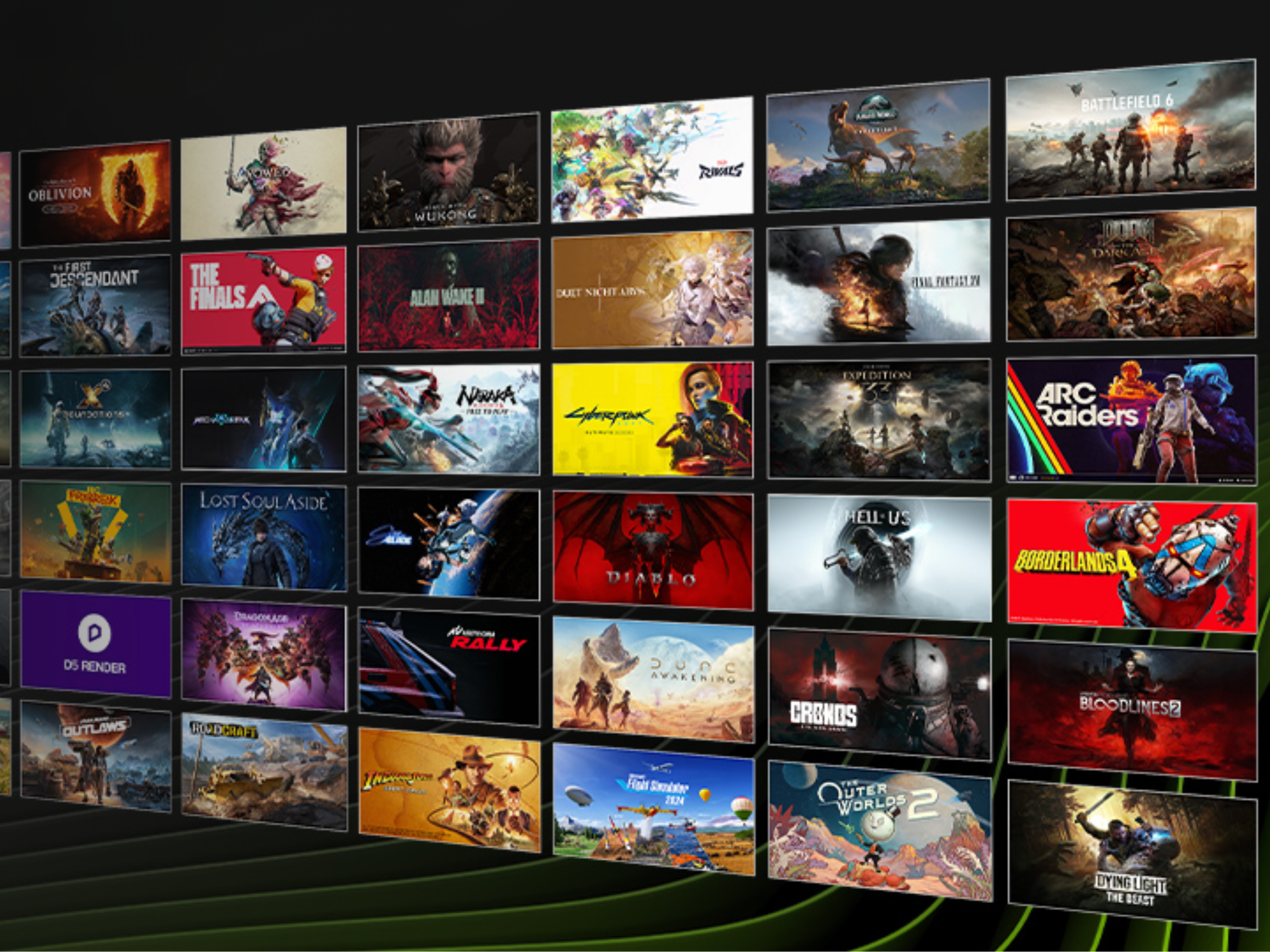
At launch, 27 games are set to support DLSS 4.5 Ray Reconstruction. The supported list includes Alan Wake 2, Enlisted, Neverness to Everness, Avatar: Frontiers of Pandora, Everspace 2, Portal with RTX, Backrooms: Escape Together, F1 25, Pragmata, Call of Duty: Black Ops 7, FBC: Firebreak, Resident Evil Requiem, Crimson Desert, Half-Life 2 with RTX, Samson, Cyberpunk 2077, Hogwarts Legacy, Star Wars Outlaws, Death Relives, Incursion Red River, Subliminal, Directive 8020, Indiana Jones and the Great Circle, Sword of Justice, DOOM: The Dark Ages, Naraka: Bladepoint, and The First Descendant.
Nvidia has already shown how the upgraded AI model can improve several games. In Indiana Jones and the Great Circle, DLSS 4.5 Ray Reconstruction reportedly reduces ghosting in snowy environments and creates cleaner particle effects. Pragmata is said to benefit from more responsive lighting and fewer visual artifacts. Alan Wake 2, a game already known for its advanced lighting and atmospheric visuals, should see better clarity and stability in scenes with CRT-style static and complex visual noise.
The update is not limited to games. Blender 5.3 is also expected to add DLSS 4.5 Ray Reconstruction as a viewport denoiser later this year. That could make the technology useful for creators working with 3D scenes, allowing cleaner previews while modeling, lighting, or rendering.
Nvidia also confirmed wider DLSS 4.5 support for more upcoming and existing games, including Marvel Rivals, Phantom Blade Zero, Squad, Gothic 1 Remake, Cinder City, Duet Night Abyss, and Where Winds Meet.
Interestingly, Nvidia did not mention DLSS 5 during this announcement, despite expectations that a next-generation version could appear soon. For now, DLSS 4.5 Ray Reconstruction appears to be the company’s next big step in AI-powered graphics, reinforcing the idea that artificial intelligence will continue to play a central role in the future of PC gaming visuals.
For GeForce RTX owners, the update could be an important one. If Nvidia’s claims hold up in real-world gameplay, DLSS 4.5 Ray Reconstruction may deliver a noticeable improvement in ray-traced image quality while preserving the performance benefits that made DLSS popular in the first place.