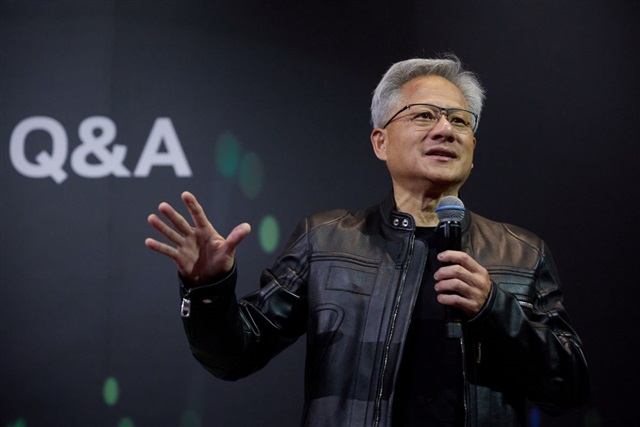
On March 10, 2026, Nvidia CEO Jensen Huang shared a detailed personal article laying out how he believes the artificial intelligence industry is evolving—and where it’s headed next. His core message is clear: AI shouldn’t be viewed as a single model, a single chatbot, or one standout application. Instead, it’s becoming a full-scale computing platform and a new kind of infrastructure that will shape how companies build products, run operations, and deliver digital services.
Huang’s explanation focuses on the development logic behind today’s AI boom. In his view, the biggest shift happening right now is that AI is moving from “something you try” to “something you engineer.” That means businesses can’t treat AI like a one-off experiment or a feature bolted onto existing software. To get real results, AI needs a robust foundation—data pipelines, training and inference systems, specialized hardware, scalable networking, and tools that keep models reliable, secure, and cost-effective over time.
A major theme of his article is that the AI industry is entering an infrastructure era. Just as cloud computing reshaped the internet economy, AI infrastructure is poised to reshape nearly every sector, from healthcare and finance to manufacturing, transportation, media, and retail. The practical implication is that the “winners” won’t only be those who have the best model; they’ll also be the ones who can build or access the best AI stack—compute, software, deployment, and continuous improvement.
He also emphasizes the idea that AI is not a finished product. Models evolve, workloads change, and user expectations rise quickly. That’s why planning for AI requires thinking long-term—designing systems that can scale, adapt, and stay efficient as demand grows. In the same way companies once planned for data centers or cloud migration, they now need a strategy for AI compute and deployment, including how AI will be served to users in real time and at enterprise scale.
With Nvidia’s annual GTC event approaching, the timing of Huang’s piece signals what the company wants the industry to focus on next: not just impressive demos, but the real-world foundation that makes AI useful, repeatable, and economically viable. Rather than framing AI as a race for a single breakthrough model, he frames it as a broader transformation—one where AI becomes an essential layer of modern computing infrastructure.
For readers trying to understand where AI is going in 2026 and beyond, the takeaway is simple: the conversation is shifting from “What can this model do?” to “How do we build AI systems that can run everywhere, serve millions of users, stay safe, and remain affordable?” Huang’s article argues that answering those questions will define the next chapter of the AI industry—and the companies that invest in AI infrastructure early will be best positioned to lead.