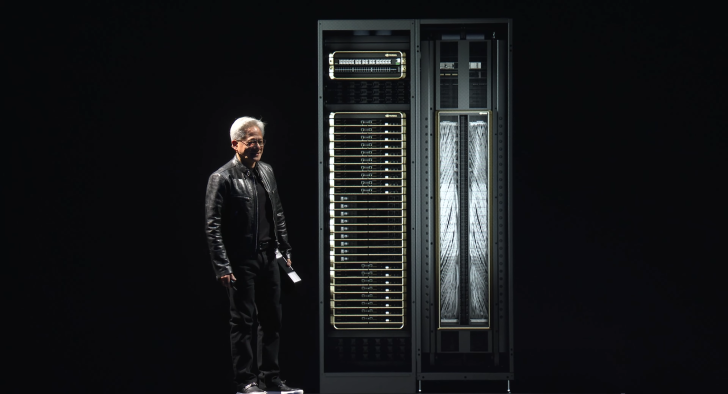
NVIDIA’s venture into the Blackwell AI server arena is off to a rocky start, as the company grapples with significant supply chain hurdles. Despite earlier promises to iron out issues, the latest reports suggest that NVIDIA’s next-gen AI servers are facing overheating problems and architectural flaws that may dampen their launch success.
NVIDIA’s cutting-edge Blackwell AI servers, initially slated for widespread availability in the fourth quarter of 2024, were anticipated to revolutionize the industry. However, design flaws have led to higher operational temperatures than expected. Although NVIDIA claimed to have rectified these issues, recent insights indicate that the problems persist, causing the servers to malfunction.
The crux of the issue appears to be a faulty chip connection system, which has led to widespread interruptions in server operations. This has not gone unnoticed by major industry players like Microsoft, Amazon, Google, and Meta, who have significantly scaled back their Blackwell investments. With combined orders originally exceeding $10 billion, these companies have shifted focus to more reliable, previous-generation hardware.
The impact of these supply chain challenges and technical glitches is considerable for NVIDIA’s AI infrastructure, as prolonged issues could severely affect the company’s financial outcomes. Earlier speculation pointed towards issues with TSMC’s advanced packaging technology, known as CoWoS, being at the root of the problem. NVIDIA attempted to address this by modifying the GPU design at TSMC, but success remains elusive.
Until the issues with Blackwell are effectively addressed, many customers are reverting to the older, yet dependable, Hopper generation servers. It’s uncertain how much this will affect NVIDIA’s revenue, but the ongoing complications could jeopardize the long-term success of the Blackwell series and pose significant challenges for the company moving forward.